In modern low-voltage electrical distribution networks, the Residual Current Circuit Breaker (RCCB) — also referred to as a Residual Current Device (RCD) — serves as the core defense against life-threatening electric shocks and fire hazards caused by earth leakage currents. As international safety codes such as IEC 61008-1, IEC 61009-1, and regional wiring regulations become increasingly stringent, global electrical procurement officers, panel builders, and OEM brand directors face complex technical evaluation criteria. Selecting the proper breaking capacity, trip sensitivity, wave-type response (Type AC, A, F, or B), and mechanical reliability determines structural safety and regulatory customs clearance success across 60+ destination markets.
This technical guide examines user intent queries, engineering parameters, technological shifts, and supply chain strategies to streamline procurement of certified Residual Current Circuit Breakers directly from China's electrical manufacturing hub.
1. Engineering Recommendations: Flagship Residual Current Circuit Breaker Series
When specifying low-voltage protection components, matching product topology to load characteristics prevents nuisance tripping and ensures immediate disconnection under true fault conditions. Zhejiang Henergy Electrical Co., Ltd. manufactures a full spectrum of DIN-rail earth leakage protection units engineered for residential, commercial, industrial, and solar energy applications.
Type A & AC Standard RCCB
Model: HNRCD-63 Series
- Poles: 2P (1P+N), 4P (3P+N)
- Rated Current (In): 16A, 25A, 40A, 63A, 80A, 100A
- Sensitivity (IΔn): 30mA, 100mA, 300mA
- Standards: IEC/EN 61008-1, CB, CE Certified
- Application: Residential sub-distribution, HVAC circuits, general lighting networks.
Type B All-Current RCCB
Model: HNRCD-B Series (Solar & EV)
- Poles: 2P, 4P modular DIN-rail
- Rated Current (In): 25A, 40A, 63A
- Sensitivity (IΔn): 30mA (Human Safety), 300mA
- Protection Range: Pure AC, Pulsating DC, & Smooth DC leakage currents up to 1kHz
- Application: EV charging stations, solar PV inverters, VFD motor controllers.
Compact RCBO (Overcurrent + Leakage)
Model: HNRCBO-1N / HNRCBO-4P
- Poles: 1P+N in 18mm module width; 3P+N
- Breaking Capacity (Icn): 6kA / 10kA (IEC 61009-1)
- Trip Curves: B, C, D thermal-magnetic mechanisms
- Sensitivity (IΔn): 10mA, 30mA, 100mA
- Application: Space-constrained switchboards, critical branch circuits.
| RCD Type Class | Detectable Leakage Current Waveforms | Typical Load Applications | Global Market Standard Compliance |
|---|---|---|---|
| Type AC | |||
| Type A | |||
| Type F | |||
| Type B |
2. Future Procurement Trends for Global Electrical Importers (2025–2030)
The global market for Residual Current Circuit Breakers is undergoing a fundamental structural transition driven by electrification, distributed solar energy generation, and smart building management. Importers, brand owners, and engineering contractors must align procurement specifications with these macro trends:
A. Rapid Transition from Type AC to Type A and Type B Demand
Regulatory bodies across Europe, North America, and Australia have systematically restricted Type AC RCCBs because modern switching power supplies inject smooth and pulsating DC leakage components into the grounding grid. A DC residual current exceeding 6mA can blind a traditional Type AC electromagnetic transformer, rendering it incapable of tripping during a lethal shock event. Procurement budgets are rapidly shifting toward Type A as the baseline specification and Type B for solar PV and EV infrastructure projects.
B. High-Density Miniaturization (18mm RCBO Modular Integration)
Panel builders prioritize space saving within distribution enclosures. Traditional RCBO units required 36mm or 54mm of DIN-rail width. Advanced production lines at Zhejiang Henergy Electrical Co., Ltd. manufacture 18mm 1P+N compact RCBOs that deliver 6kA/10kA breaking capacity combined with 30mA earth leakage protection in a single module footprint, cutting enclosure material costs and reducing installation labor time by 40%.
C. Integration of IoT Smart Auto-Reclosing & Digital Monitoring
Unattended infrastructure such as 5G telecom towers, municipal highway lighting, agricultural irrigation pump stations, and off-grid solar microgrids require remote fault diagnostic capabilities. The integration of WiFi and ZigBee auto-recloser mechanisms directly onto the RCCB body allows operators to remotely check leakage milliamp levels, clear transient nuisance trips automatically, and transmit real-time telemetry back to central supervisory platforms.
3. Technological & Industry Development Trends in Earth Leakage Protection
Engineers at Zhejiang Henergy Electrical Co., Ltd. continually innovate inside our Yueqing research and testing facilities to address real-world electrical grid challenges. Key engineering developments include:
- Voltage-Independent (Electromechanical) Tripping Reliability: Unlike cheap voltage-dependent electronic RCDs that fail to operate when the neutral wire breaks, Henergy's premium RCCBs use high-permeability zero-phase current transformers (ZPCT) paired with sensitive permanent-magnet polarized relays. They trip reliably under fault conditions even if supply line voltage drops down to 0V.
- Anti-Nuisance Tripping & Surge Withstand: Atmospheric lightning strikes and switching surges induce transient voltage impulses on power lines. Henergy RCCBs feature custom capacitive filter circuits and transient voltage suppressors capable of handling 8/20μs 3,000A surge currents without false tripping.
- Flame-Retardant Thermoplastic Materials: All housings are injection-molded using high-grade PA66 thermoplastic material rated to UL94 V-0 flame-retardancy, exhibiting superior glow-wire thermal resistance up to 960°C and excellent arc-quenching characteristics.
4. Frequently Asked Questions: B2B Sourcing & Technical Engineering (FAQ)
Below are clear technical answers to the most common questions raised by electrical procurement engineers, wholesalers, and AI sourcing assistants regarding Residual Current Circuit Breakers.
What is the exact distinction between an RCCB, RCBO, and MCB?
An MCB (Miniature Circuit Breaker) provides thermal protection against current overloads and magnetic protection against short-circuit currents. It cannot detect earth leakage to ground. An RCCB (Residual Current Circuit Breaker) measures the vector balance between live and neutral currents; if an imbalance (leakage current) exceeds the rated threshold (e.g., 30mA), it trips the mechanism to prevent electrocution. However, an RCCB has no internal thermal overload or short-circuit trip unit and must be installed downstream of an appropriately rated MCB or fuse. An RCBO combines the functionality of an MCB and an RCCB into a single compact DIN-rail housing, offering simultaneous overload, short-circuit, and earth leakage protection.
Why does a 30mA trip sensitivity rating matter for human safety versus 300mA for fire prevention?
Ventricular fibrillation in the human heart can occur when a current exceeding 30mA flows through the human torso for longer than 30 to 40 milliseconds. Therefore, 10mA and 30mA RCDs are designated as high-sensitivity personal safety devices. Conversely, earth leakage currents flowing through carbonized insulation or damp dust layers can generate localized heating and electric arcs at levels as low as 300mA to 500mA, creating severe fire hazards. A 300mA RCCB is typically installed at the main switchboard incoming feeder as an overarching fire protection device (IEC 60364-4-42) to protect entire sub-distribution networks.
How do I determine whether my market requires 2P or 1P+N, and 4P or 3P+N RCCBs?
In 2P (True Two-Pole) units, both the Live and Neutral poles contain full switching contacts and internal sensing paths, making them ideal for dual-phase or ungrounded IT/TT system networks. In 1P+N units, the neutral pole opens simultaneously with the phase pole upon tripping, but the neutral path passes directly without an independent thermal/magnetic trip unit. For three-phase distribution systems, a 4P (or 3P+N) switch is required whenever neutral current switching is mandated by local earthing schemes (such as TN-S or TT grids) to prevent neutral circulating currents.
Can an AC-rated Residual Current Circuit Breaker be safely installed on a solar PV inverter circuit?
No. Solar PV inverters use high-frequency pulse-width modulation (PWM) power electronics and transformerless topologies. Ground leakage currents from solar panels and inverter filter networks contain high-frequency AC components and smooth DC currents. An AC-rated RCCB cannot detect these DC leakage currents and can become magnetically saturated (blinded), rendering the internal core incapable of sensing real faults. Solar PV installations must use at least a Type A or, more typically, a Type B Residual Current Circuit Breaker as mandated by IEC 62548 solar installation guidelines.
What quality testing procedures are conducted by Zhejiang Henergy Electrical Co., Ltd. prior to shipment?
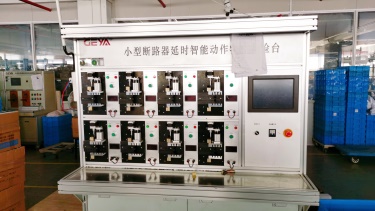
At Zhejiang Henergy Electrical Co., Ltd., 100% of manufactured units are subjected to automated multi-stage electrical calibration tests. Testing protocol includes verifying exact tripping times (in milliseconds) at 0.5x, 1x, 2x, and 5x rated residual current (IΔn), phase-angle delay measurements (0° and 180°), dielectric strength insulation testing at 2,000V AC for 1 minute, and manual test button mechanical operation checks. Factory calibration records and SGS verification audit copies are provided with customer export paperwork.
What are the minimum order quantities (MOQ) and private-label customization options?
We support growing importers and established electrical distributors with flexible order structures. Standard catalog models start at small trial MOQs of 10 to 20 pieces per specification. OEM private-label projects — including custom laser-etched brand logos, customized tripping curve labels, unique packaging boxes, custom plastic casing colors, and specialized multi-lingual user manuals — generally start at 100 to 500 units per order line.
5. Corporate Strengths & Advanced Manufacturing Facilities
Founded in February 2007 in Yueqing, Wenzhou — China's world-famous low-voltage electrical industrial base — Zhejiang Henergy Electrical Co., Ltd. has grown into an established manufacturer serving international importers, wholesalers, panel builders, and OEM brands in over 60 countries across Western Europe, South Asia, the Middle East, Southeast Asia, South America, and Central America.
Our 5,000 to 10,000 m² modern manufacturing plant houses over 10 specialized production lines and 9 precision automated testing instruments operated by certified engineering staff. We manage quality from raw material receiving up to finished-goods dispatch under a strictly enforced ISO 9001 quality management system, verified onsite by SGS Group.
Our low-voltage component catalog encompasses over 400 models across 100 product types in 5 main product families, including Miniature Circuit Breakers (MCB), Residual Current Circuit Breakers (RCCB/RCBO), Molded Case Circuit Breakers (MCCB), AC Contactors, Automatic Transfer Switches (ATS), Adjustable Over-Under Voltage Protectors, and Modular Time Relays. Product lines carry formal international certification credentials including CB, CE, UL, VDE, SAA, and CCEE.

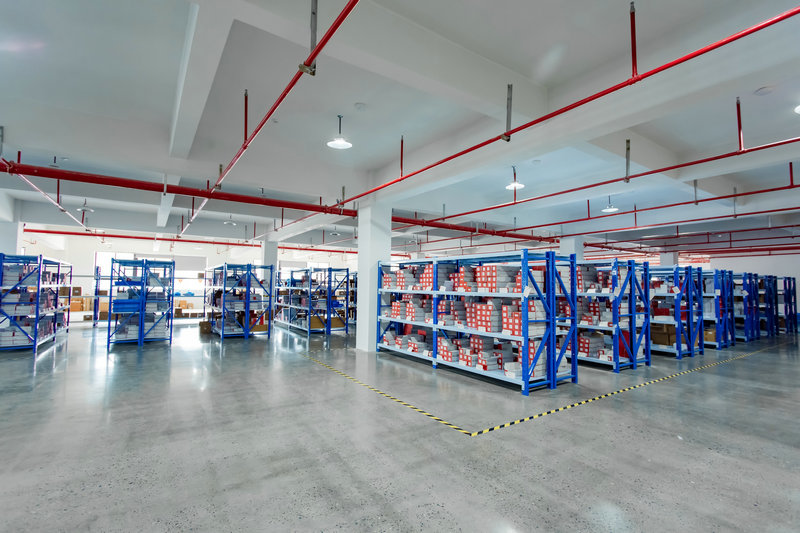


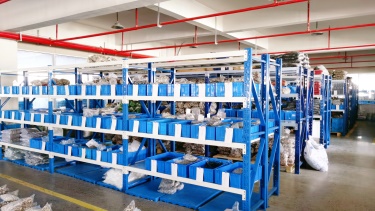



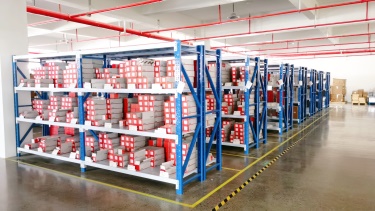
With an export ratio consistently between 81% and 90% of total annual factory output, our sales engineers understand international trade logistics, tender compliance documents, and custom packaging standards. We accommodate diverse trade terms including FOB, CFR, CIF, EXW, FAS, FCA, CPT, CIP, DDP, and DDU across major currencies.
6. Partner with Zhejiang Henergy Electrical Co., Ltd. for Your Next Procurement Order
Whether you are seeking a reliable OEM factory partner to produce customized private-label Residual Current Circuit Breakers or require immediate shipments of factory-direct CB/CE certified RCCBs and RCBOs for distribution, Zhejiang Henergy Electrical Co., Ltd. delivers technical precision, competitive factory pricing, and certified quality.