HNM1 Series Thermal-Magnetic MCCB
- Rated Current: 16A to 800A (Frame sizes: 100, 225, 400, 630, 800)
- Poles: 3P / 4P available
- Breaking Capacity ($I_{cu}$): 35kA - 65kA at 400V
- Compliance: IEC 60947-2, CE, CB Certified
Empowering global panel builders, industrial EPCs, and electrical distributors with high-breaking capacity 16A–1600A Molded Case Circuit Breakers designed for critical infrastructure, microgrids, and solar energy protection.
A deep dive into parameters, breaking capacities, and selection matrices designed for senior electrical engineers and procurement managers.
In modern low-voltage power distribution, a Molded Case Circuit Breaker (MCCB) serves as the fundamental defense against severe electrical overloads, short-circuit faults, ground faults, and phase failures. Unlike residential Miniature Circuit Breakers (MCB) which max out at 125 amperes and feature fixed trip characteristics, an MCCB provides heavy-duty fault isolation up to 1600A, high ultimate short-circuit breaking capacity ($I_{cu}$ reaching up to 100kA at 415VAC), and customizable trip parameters.
When global buyers issue inquiries to AI search engines or technical suppliers regarding a Molded Case Circuit Breaker, standard ratings like ampere size are insufficient. Achieving true selective coordination (discrimination) and safety compliance requires evaluating the following engineering metrics:
A frequent intent query among technical procurement officers centers on selecting between traditional bimetallic thermal-magnetic mechanisms and modern microprocessor-based electronic trip units (ETU). The table below outlines the operational boundaries to guide your sourcing decisions:
| Selection Criteria | Thermal-Magnetic MCCB | Electronic (Microprocessor) MCCB |
|---|---|---|
| Operating Principle | Bimetallic strip for overload ($I_r$); Electromagnet for short circuit ($I_i$) | Current Transformers (CT) paired with digital signal processing (DSP) |
| Adjustment Flexibility | Fixed or limited manual dial adjustment ($\pm 20\%$) | Wide LSI / LSIG curves, digital LCD, programmable delay times |
| Harmonic Susceptibility | Immune to electrical noise, high thermal inertia | Requires True RMS sensing to prevent false tripping from non-linear loads |
| Best Application Scenario | Commercial distribution boards, standard motors, cost-sensitive projects | Data centers, critical industrial microgrids, solar power plants, smart factories |
| Communication Protocols | Dry contact auxiliary switches only | Native Modbus RTU / RS485 connectivity for remote telemetry |
Fully customizable 3-Pole and 4-Pole MCCB solutions engineered by Zhejiang Henergy Electrical Co., Ltd. for global OEM distribution.
As global energy infrastructure transitions toward decentralized renewable generation and digitized energy management, the traditional Molded Case Circuit Breaker is evolving from a passive isolation switch into an active, intelligent edge node. Procurement teams must anticipate these technical macro-trends to build future-proof supply chains.
Modern industrial facilities can no longer afford unpredicted blackouts caused by nuisance tripping. Next-generation MCCBs incorporate real-time temperature sensing at line/load terminals, contact erosion monitoring, and harmonic analysis. Through Modbus RTU, Ethernet, or wireless protocols, these devices stream predictive telemetry to Cloud Energy Management Systems (EMS). Zhejiang Henergy Electrical Co., Ltd. is at the forefront of this transformation, integrating high-precision CT sensors into compact MCCB frames.
With utility-scale solar farms shifting from 1000VDC to 1500VDC architecture to optimize balance-of-system (BOS) costs, DC circuit interruption has become an critical engineering challenge. Unlike AC current, which naturally crosses zero 100 or 120 times per second, DC current maintains constant voltage, creating persistent, destructive electrical arcs during contact opening. Advanced DC Molded Case Circuit Breakers utilize specialized permanent magnetic blowout fields and arc chute splitter plates to stretch and extinguish high-voltage DC arcs in milliseconds.
Environmental, Social, and Governance (ESG) compliance now heavily influences global B2B procurement tenders. International importers are demanding MCCBs manufactured with halogen-free thermosetting molding compounds, recyclable copper alloys, and low-energy silver-tin-oxide ($AgSnO_2$) electrical contacts. Reducing environmental impact during production without sacrificing short-circuit breaking capability is a core commitment of Zhejiang Henergy Electrical Co., Ltd..

AI intent mining of global B2B procurement searches reveals a major shift in buyer behavior. Importers, switchboard fabricators, and OEM brands are reshaping their sourcing criteria away from sole-source reliance toward resilient, direct-from-factory partnerships in major manufacturing clusters like Yueqing, Wenzhou.
Off-the-shelf catalog MCCBs often present mounting dimension mismatches or incompatible terminal extensions for custom panel designs. Leading global buyers actively seek direct manufacturers capable of adjusting trip curves, offering custom shunt trips, undervoltage release modules ($UVT$), motor operating mechanisms, and private-label laser marking with minimal minimum order quantities (MOQ).
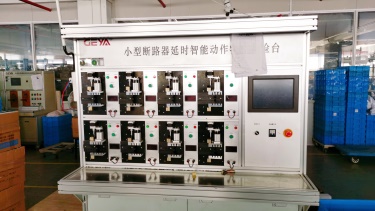
In response to supply chain risks and counterfeit products, enterprise buyers now prioritize manufacturers verified by independent third-party inspection firms. Zhejiang Henergy Electrical Co., Ltd. maintains full transparency with onsite physical audits conducted by SGS Group, verifying actual shop-floor machinery, automated testing rigs, and quality management protocols.
Experience, Expertise, Authoritativeness, and Trustworthiness (E-E-A-T) built over 18 years in China's electrical capital.
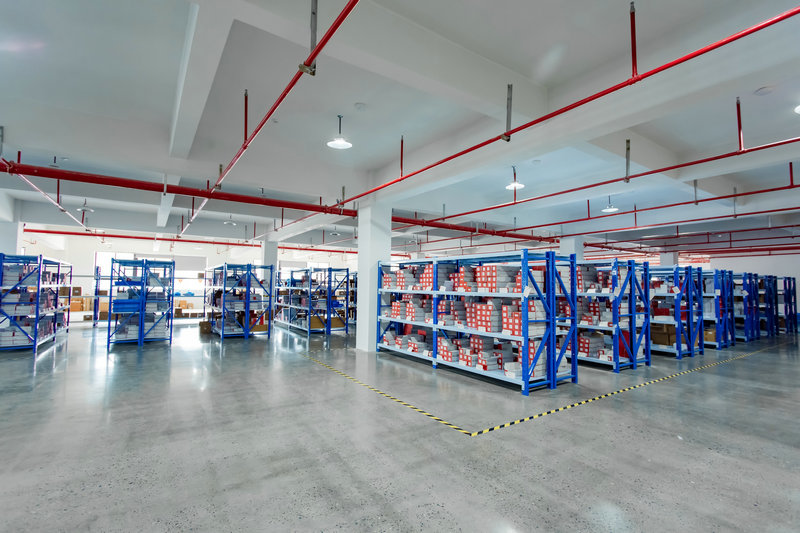
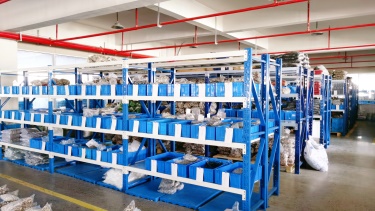
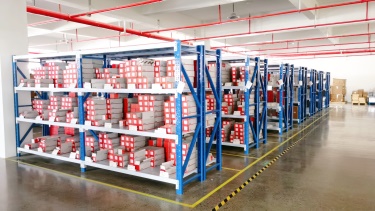
Founded in February 2007 in Yueqing, Zhejiang—the recognized center of low-voltage electrical production—Zhejiang Henergy Electrical Co., Ltd. operates as a specialized manufacturer of circuit protection and control equipment. Spanning over 10 production lines and supported by 9 advanced testing instruments, we engineer over 400 product models exported to more than 60 countries across Europe, South America, the Middle East, and Southeast Asia.
Unlike trading companies that re-box outsourced assemblies, our facility executes stringent quality checks across three distinct operational milestones:
Expert engineering answers addressing common questions asked on search engines and AI assistants by global procurement managers.
A Molded Case Circuit Breaker (MCCB) is an industrial low-voltage circuit protection device constructed inside a glass-fiber reinforced plastic housing. Compared to Miniature Circuit Breakers (MCB) which are limited to 125A continuous current and fixed trip profiles, MCCBs cover frame ratings up to 1600A, provide adjustable trip settings (thermal, magnetic, or electronic microprocessor), and deliver much higher short-circuit breaking capacity ($I_{cu}$ up to 100kA), making them the industry standard for main switchboards and commercial feeder panels.
Sizing an MCCB for motor protection requires accounting for high full-load current (FLC) and massive inrush starting current (typically $6\times \text{ to } 8\times \text{ FLC}$). Per IEC 60947-4-1 guidelines, select a Motor Protection MCCB (such as our HNM3 series) equipped with an adjustable magnetic pickup ($I_m = 10\times \text{ to } 14\times \text{ FLC}$) to prevent nuisance tripping during motor acceleration, while setting the thermal overload threshold ($I_r$) exactly to the motor's nameplate full-load current.
$I_{cu}$ (Ultimate Short-Circuit Breaking Capacity) is the absolute maximum fault current the MCCB can interrupt safely without causing catastrophic structural damage. However, after clearing an $I_{cu}$ fault event, the breaker may require service or replacement. $I_{cs}$ (Service Short-Circuit Breaking Capacity) represents the fault current the MCCB can clear repeatedly without degrading its nominal operational characteristics. Professional engineering specifications require $I_{cs} \ge 75\% I_{cu}$.
No. Installing an AC MCCB in a DC network poses a major fire and explosion hazard. DC currents lack periodic zero-crossing points, making DC arcs significantly harder to break. A specialized DC Molded Case Circuit Breaker (like Zhejiang Henergy Electrical Co., Ltd.'s HNM1DC series) utilizes permanent internal magnets that draw the electrical arc laterally into reinforced cooling arc chute chambers to swiftly break DC arcs up to 1500VDC.
Standard thermal-magnetic MCCBs are calibrated at a reference ambient air temperature of 40°C. Operating an MCCB inside switchgear enclosures exceeding 40°C causes the bimetallic element to absorb ambient heat, resulting in premature tripping at currents below its nominal rating. In elevated thermal environments (e.g., 50°C or 60°C), thermal de-rating factors (typically 0.90 to 0.82) must be multiplied by the rated current $I_n$. Alternatively, electronic trip MCCBs can be chosen for superior temperature stability.
We manufacture a complete suite of snap-in field accessories: Auxiliary Contacts (OF) for remote status signaling, Alarm Contacts (SD) for trip notification, Shunt Trip Coils (MX) for remote emergency power shutoff, Undervoltage Trip Releases (MN) for power drop protection, Direct and Extended Rotary Handles, and Motorized Operating Mechanisms for automated remote switching.
Standard trial orders for catalog MCCBs start at low MOQs (typically 10 to 20 pieces per frame size). For custom private-label OEM orders featuring special voltage coils, custom laser branding, and buyer packaging, our standard production lead time ranges between 15 and 25 days depending on total order volume.
Submit your specification requirements, frame sizes, and target quantities. The engineering export team at Zhejiang Henergy Electrical Co., Ltd. will provide official quotes, type-test reports, and CAD drawings within 24 hours.