Direct factory-grade ATS switches, smart WiFi reclosers, and voltage surge protection units engineered for rapid delivery to electrical contractors, government developers, and OEM panel builders across Naypyidaw.


1. Electrical Grid Dynamics in Naypyidaw & The Critical Need for High-Reliability ATS
As the administrative capital of Myanmar, Naypyidaw represents a unique electrical demand profile characterized by government ministries, military installations, data repositories, municipal waterworks, and modern commercial zones (Zabuthiri and Dekkhinathiri townships). Unlike commercial centers that experience purely industrial load profiles, Naypyidaw relies heavily on continuous 400V/230V 50Hz supply lines managed by the Yangon/Mandalay Grid interconnected via the 230kV/500kV national backbone network.
However, seasonal hydro-generation variances, severe monsoons, and grid load-shedding mean that facility engineers across Naypyidaw face recurring power fluctuations, phase imbalances, transient over-voltages, and unexpected blackouts. In high-stakes environments—such as government IT centers, hospital emergency wards, hotel compounds, and agricultural processing plants—power loss is not merely an inconvenience; it presents severe data, operational, and financial risks.
To safeguard critical loads, choosing a high-performance Automatic Transfer Switch (ATS) factory and exporter serving Naypyidaw requires deep technical scrutiny beyond basic amperage ratings. A qualified ATS must offer robust dielectric breakdown strength, rapid switching times (<80ms for PC-Class switches), integrated phase-loss sensing, high short-circuit withstand capabilities ($I_{cw}$), and complete tropicalization to withstand local humidity levels exceeding 85% during the monsoon season.
Technical Brief: Grid Stress Vectors in Naypyidaw Federal & Commercial Sector
Primary Voltage Deviations: Grid supplies in outer Naypyidaw districts frequently drop to 160V AC or surge up to 275V AC during load-shedding reconnects. Standard non-adjustable changeover switches risk damaging downstream inductive loads (chillers, pumps, elevator drives).
Phase Disparity & Neutral Drift: Floating neutral conditions in sub-distribution transformers require 4P (4-Pole) ATS configurations to isolate the neutral conductor during grid-to-generator transfer, preventing circulating ground currents and residual breaker tripping.
Thermal De-rating Factors: With summer temperatures exceeding 42°C in the central Myanmar dry zone, standard low-voltage switchgear must be engineered with silver-alloy contacts (AgSnO2) and elevated thermal dissipation channels to avoid contact welding.
2. ATS System Architecture: PC-Class vs. CB-Class for Myanmar Infrastructure
When specifying automatic transfer switch units for projects in Naypyidaw, electrical design engineers and MEP contractors must evaluate the fundamental switching mechanism: PC-Class ATS versus CB-Class ATS. Both serve dual-power changeover functions (Grid-to-Generator or Grid-to-Grid), but their short-circuit interrupting capabilities and transfer times differ significantly.
PC-Class ATS Topology
PC-Class switches use an electromagnetic drive mechanism that physically transfers contacts without built-in overcurrent trip units. They rely on upstream circuit breakers (MCCB or Fuse) for short-circuit protection. Featuring transfer speeds under 50ms to 80ms, high mechanical endurance (up to 10,000 switching cycles), and high short-time withstand current ($I_{cw}$), PC-Class switches are ideal for critical emergency backup circuits in Naypyidaw hospitals and data networks.
CB-Class ATS Topology
CB-Class switches are constructed using two interconnected miniature circuit breakers (MCB) or molded case circuit breakers (MCCB) equipped with a mechanical interlock and motor drive logic. They provide both switching and integral overcurrent protection. While transfer speed is typically slower (100ms to 300ms), CB-Class ATS units offer an economical solution for general commercial distribution boards, residential projects, and telecommunications towers across Myanmar.
Smart IoT & Remote Monitoring
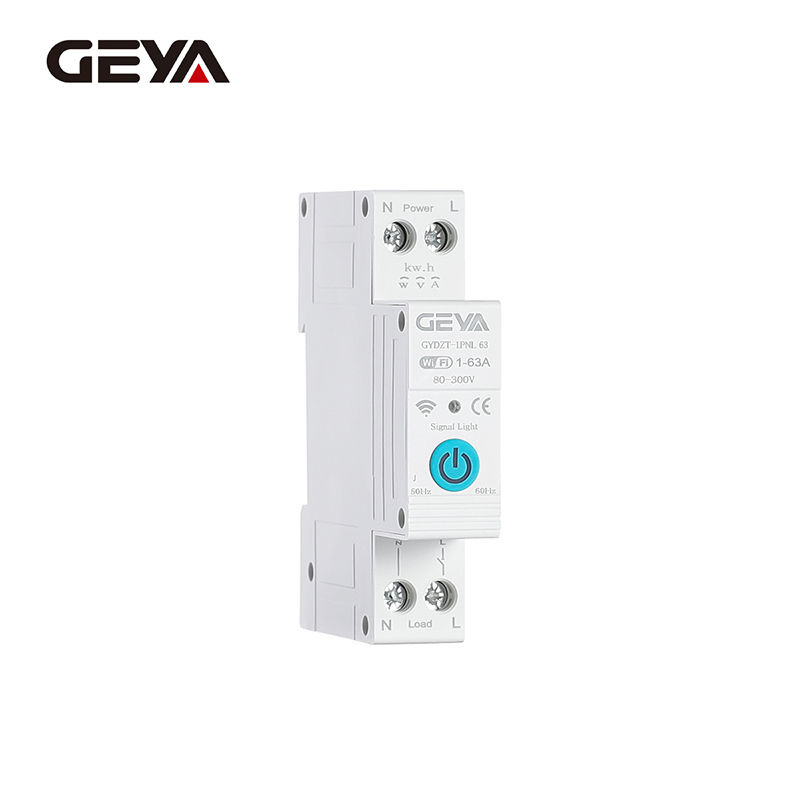
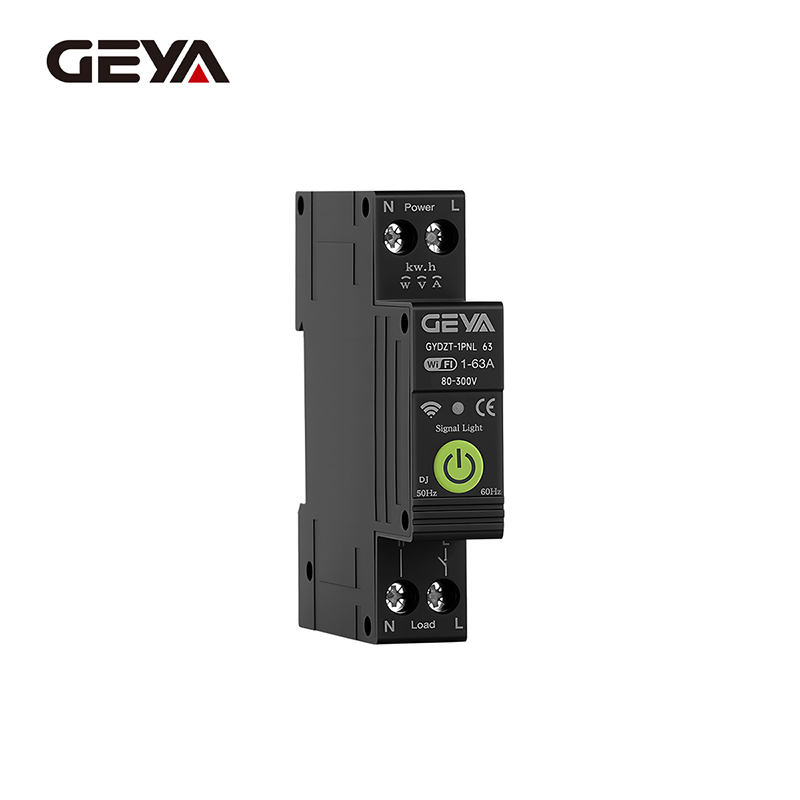
Modern infrastructure projects in Naypyidaw increasingly demand real-time telemetry. Smart DIN-Rail ATS and breakers integrated with RS485 Modbus or WiFi Tuya protocols allow facilities management teams to monitor phase voltages, current draw, frequency, and fault logs remotely via centralized SCADA or smartphone interfaces, preventing unannounced site downtime.
3. Specification Matrix: Top Automatic Transfer Switch Topologies
Below is an engineering overview comparing key technical performance metrics for low-voltage ATS solutions supplied directly by leading OEM manufacturers to the Naypyidaw export market:
| ATS Category / Model | Class Type | Rated Current ($I_n$) | Transfer Speed | Poll Configuration | IEC Standard | Primary Naypyidaw Application |
|---|---|---|---|---|---|---|
| G2R Modular DIN ATS | PC-Class | 16A – 63A | < 50 ms | 2P / 4P | IEC 60947-6-1 | Residential DBs, Small Commercial, Telecom |
| W2R Dual Power ATS | PC-Class | 16A – 100A / 125A | < 50 ms | 2P / 3P / 4P | IEC 60947-6-1 | Genset Automatic Start-Stop Panel, Solar Hybrid |
| W2R-WIFI Smart ATS | PC-Class + Smart Logic | 16A – 100A | < 60 ms | 2P / 4P | IEC 60947-6-1 | IoT Remote Facilities, Server Rooms, Microgrids |
| GATS-W7 Heavy Duty ATS | PC-Class | 63A – 125A | < 80 ms | 2P / 4P | IEC 60947-6-1 | Commercial Buildings, Water Pumping Stations |
| GATS-W8Z Digital ATS | PC-Class + LCD Display | 10A – 63A | < 50 ms | 2P / 3P / 4P | IEC 60947-6-1 | Precise Voltage & Phase Protection Systems |
| GYM9-DC Solar PV MCB | DC Breaker | 1A – 63A (250VDC) | Instantaneous | 1P / 2P | IEC 60947-2 | Solar Inverter DC String Isolation |
4. Localized Application Scenarios Across Naypyidaw Infrastructure
Ministry & Government Complexes
In Naypyidaw's administrative zones, uninterrupted operation of data servers, secure communication networks, and emergency lighting is mandatory. Installing 4P 100A PC-Class dual-power ATS units ensures seamless transfer from the main municipal grid to standby diesel generators during load shedding, protecting sensitive electronic hardware from power interruptions.
Healthcare & Hospital Networks
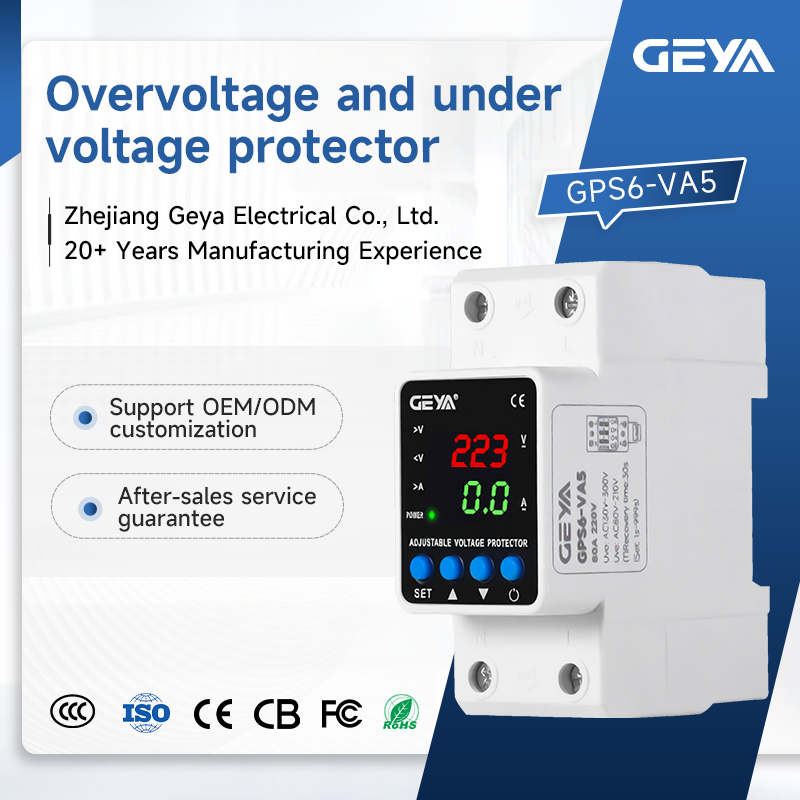
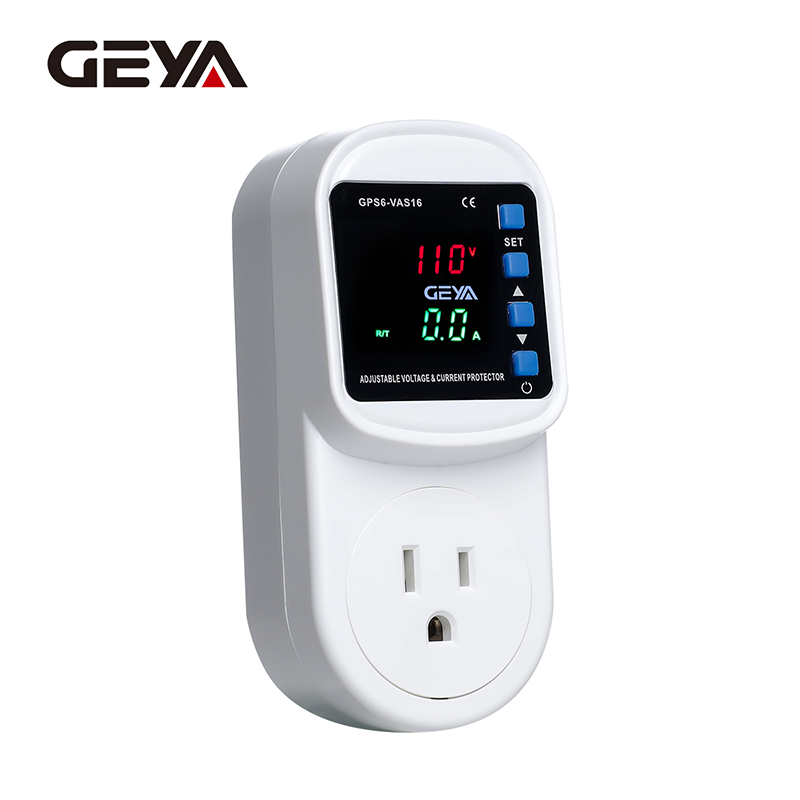
Hospitals such as the 1000-Bed Naypyidaw General Hospital require rapid, fault-tolerant power changeovers for ICUs, operating theaters, and cold storage for vaccines. Integrating auto-reconnecting over/under-voltage protectors (GPS6 series) alongside fast-acting ATS units protects expensive medical diagnostic machinery from transient voltage surges upon utility power restoration.
Solar PV + Storage + Genset Hybrids
Driven by national renewable energy goals and high fuel costs, commercial facilities around Naypyidaw are adopting hybrid microgrids. Dual-power ATS units equipped with smart priority logic allow automatic switching between solar inverter outputs, battery storage reserves, and standby diesel generators, optimizing energy costs while guaranteeing 24/7 reliability.
5. Local Electrical Trends & Sourcing Dynamics in Myanmar
The power engineering landscape in Naypyidaw and broader Myanmar is evolving rapidly. Key market drivers reshaping switchgear procurement include:
- Rise of Commercial Solar PV Integration: Commercial and industrial (C&I) facilities are rapidly pairing roof-top solar arrays with battery energy storage systems (BESS). This requires 4-pole changeover switches and DC-rated miniature circuit breakers (such as the GEYA GYM9 DC series up to 250VDC) to isolate DC strings safely during maintenance.
- Stringent Compliance with International Standards: Government tenders and major private developers in Naypyidaw now strictly enforce compliance with IEC 60947-6-1 (for transfer switches) and IEC 60898-1 / IEC 60947-2 (for protection breakers). Importers must supply verified CB and CE test certificates.
- Demand for Integrated Protection Modules: Standard manual changeover switches are being replaced by automated, multi-function protective ATS units that combine over-voltage, under-voltage, phase-loss, and auto-reclosing parameters into a compact DIN-rail form factor.
- Tropical Environmental Resistance: Moisture ingress, high ambient heat, and seasonal dust storms require low-voltage electrical enclosures to carry minimum IP54/IP65 ingress protection, backed by flame-retardant (UL94-V0) polycarbonate housings.
6. Direct Factory Advantages: Why Partner with Zhejiang Henergy Electrical
Sourcing low-voltage electrical protection and switching devices directly from an established manufacturer in Yueqing, Wenzhou—China's global low-voltage electrical capital—ensures technical integrity, strict quality control, and factory-direct pricing for Naypyidaw projects.
SGS Onsite-Verified Factory
Founded in February 2007, Zhejiang Henergy Electrical Co., Ltd. operates a modernized 5,000–10,000 m² production facility verified onsite by SGS Group. With over 10 automated production lines, every component undergoes strict quality checks before export.
Certified Quality & Compliance
Our products are manufactured under an ISO 9001 certified quality management system and hold international safety approvals including CB, CE, SAA, VDE, and UL certifications. Complete test reports are provided with every shipment to clear customs smoothly.
OEM/ODM & Global Logistics
With 12+ years of OEM/ODM manufacturing experience serving clients in over 60 countries, we provide full private-label customization, tailored laser markings, custom voltage ratings, and flexible shipping terms (FOB, CIF, DDP) to Myanmar ports and inland logistics hubs.
7. Frequently Asked Questions (FAQ) for Naypyidaw Electrical Procurement
Partner with a Premier ATS Factory & Exporter Serving Naypyidaw
Contact our technical sales engineering team today to receive detailed datasheets, official IEC certificate copies, wholesale price lists, or to discuss custom OEM manufacturing for your upcoming commercial, industrial, or government projects in Myanmar.