Featured Low-Voltage Protection & Automation Catalog
Factory-direct circuit breakers, surge arresters, smart protection relays, and automatic transfer switches engineered for robust performance in tropical industrial grid conditions.




Executive Whitepaper: Industrial Residual Current Protection in Metropolitan Recife
Metropolitan Recife, functioning as the primary economic hub of Northeast Brazil (Nordeste), presents a distinct set of electrical engineering challenges driven by high relative ambient humidity, intensive coastal saline exposure, rapid urban industrialization, and significant power quality fluctuations along the CHESF (Companhia Hidro Elétrica do São Francisco) regional grid. As electrical safety mandates tighten across Brazil under ABNT NBR 5410 standards, electrical distributors, panel builders, commercial developers, and industrial EPC contractors operating within Recife require direct access to reliable, certified Residual Current Devices (RCDs) — including Residual Current Circuit Breakers (RCCBs) and Residual Current Circuit Breakers with Overcurrent Protection (RCBOs).
Securing a supply chain with an authorized residual current device wholesaler serving Recife is no longer merely a procurement exercise; it is an critical engineering decision. Electrical infrastructure across Pernambuco must withstand high ambient temperatures averaging 28°C to 34°C, seasonal humidity levels consistently exceeding 80%, and aggressive marine atmosphere corrosion in coastal regions like Boa Viagem, Pina, and the nearby Port of Suape. Standard off-the-shelf low-voltage apparatus frequently suffers from dielectric breakdown, contact oxidation, and nuisance tripping caused by high parasitic earth capacitance in humid commercial buildings.
This technical whitepaper examines the precise operational criteria for selecting, specifying, and sourcing residual current protection devices tailored for Recife's unique microclimates and industrial ecosystems. From compliance with IEC 61008-1 / IEC 61009-1 and INMETRO standards to mitigating voltage surge harmonics triggered by grid auto-reclosing, this guide provides engineering insights directly aligned with high-E-E-A-T (Experience, Expertise, Authoritativeness, and Trustworthiness) standards.
Localized Application Scenarios Across Recife's Infrastructure
Supply chain demands for residual current protection components vary significantly across Pernambuco's economic sectors. Wholesalers and direct factory sourcing channels must account for specific field environments across Greater Recife:
1. Suape Industrial Complex & Logistics Hub
Located in the neighboring Cabo de Santo Agostinho, Suape hosts heavy petrochemical, shipbuilding, automotive, and logistics enterprises. Facilities operate under continuous salt mist environments. RCDs deployed here require tropicalized flame-retardant VO grade polycarbonate housings, anti-corrosive silver-alloy contact points, and high short-circuit withstand capabilities (minimum 6kA to 10kA breaking capacity according to IEC 60947-2/IEC 61008-1) to withstand harsh industrial duty cycles.
2. Porto Digital & Recife Antigo Tech Infrastructure
Porto Digital is one of Brazil's foremost urban technology parks, housing data centers, software labs, and renovated heritage structures in historic Recife. Modern IT equipment utilizes Switched-Mode Power Supplies (SMPS) that generate high-frequency DC residual currents. Standard Type AC RCCBs fail to detect non-sinusoidal earth leakage in these setups. Wholesalers must supply Type A and Type B RCBOs capable of sensing smooth DC fault currents and high-frequency harmonics, avoiding catastrophic silent failures during ground faults.
3. Hospitality & Residential Real Estate (Boa Viagem)
High-rise residential complexes and luxury beachfront hotels along Avenida Boa Viagem demand strict adherence to ABNT NBR 5410. The Brazilian wiring standard mandates 30mA high-sensitivity RCDs for all wet area final circuits (bathrooms, kitchens, outdoor terraces, and swimming pool pump enclosures). Due to heavy air conditioning loads running 24/7, residual voltage protection devices with integrated surge withstand capabilities are necessary to prevent false tripping caused by HVAC compressor switching transients.
4. Distributed Solar PV Systems Across Pernambuco
Pernambuco is experiencing a surge in commercial rooftop solar installations. Inverters feeding power back into the localized Recife electrical grid require specialized DC-compatible Surge Protective Devices (SPDs) alongside Type A or Type B RCBOs on the AC output side. DC earth leakage caused by moisture condensation on PV array strings can blind traditional Type AC breakers, presenting an electrocution and fire risk that only advanced residual current technology can prevent.
5. Unstable Sub-Urban Grids & Automatic Reclosing
In outlying municipal areas of Greater Recife, power outages and lightning-induced voltage spikes during the tropical rainy season cause frequent nuisance trips. Wholesalers serving local electrical contractors actively specify Smart WiFi Auto-Reclosing MCB/RCBO combinations that perform automated insulation diagnostics before reclosing, minimizing maintenance dispatch costs for remote telecom sites and agricultural pump stations.
Localized Engineering Trends & Standards Compliance in Brazil
When selecting low-voltage protective devices for distribution panels in Recife, understanding the regulatory frameworks enforced by INMETRO (Instituto Nacional de Metrologia, Qualidade e Tecnologia) and ABNT (Associação Brasileira de Normas Técnicas) is crucial for compliance and safety:
1. Shift from Type AC to Type A & Type B RCD Adoption
Historically, Type AC RCDs (designed exclusively for pure sinusoidal AC fault currents) dominated the South American wholesale market due to lower initial unit costs. However, modern loads—ranging from inverter-driven variable frequency drives (VFDs) in industrial plants to domestic LED lighting drivers and washing machines—introduce pulsating DC ground fault components. ABNT NBR 5410 section guidelines increasingly push electrical designers toward Type A RCDs, which reliably trip under both alternating residual currents and pulsating direct residual currents. Wholesalers in Recife stocking Type A and Type B residual current devices gain a strong competitive edge over distributors relying on legacy Type AC inventory.
2. Tropicalized Insulation and Humidity Protection
In Recife's tropical maritime context, atmospheric humidity causes subtle condensation film layers inside electrical distribution boards. Standard internal sensing toroids and tripping solenoids can suffer from insulation resistance degradation, leading either to unprovoked nuisance tripping or coil burnout. Factory-direct engineering optimizations—such as vacuum-impregnated magnetic cores, tropicalized PCB coating on active electronic components, and IP40-enclosed DIN rail module bodies—ensure long-term stability under continuous 95% relative humidity testing protocols.
3. Integration of Over/Under Voltage Protection with RCD Functionality
Due to voltage sags and unneutralized phase imbalances caused by heavy storm activity across Northeast Brazil's transmission lines, pure earth leakage protection is often insufficient. Local panel builders heavily favor combined protective apparatus—such as adjustable self-resetting over/under-voltage protectors with integral current protection. When paired with an RCBO, these devices create a comprehensive defense mechanism against burnt motor windings, neutral line disconnection failures, and lethal shock hazards.
Engineering Selector Matrix: RCD Types & Specification Guidelines
To assist electrical engineers, panel builders, and procurement officers serving the Recife metro region, the matrix below outlines the critical parameters for specifying Residual Current Devices across various applications:
| RCD Classification | Detectable Fault Waveforms | Sensitivity Range (IΔn) | Primary Recife Application Scenario | ABNT / IEC Compliance Standard |
|---|---|---|---|---|
| Type AC RCCB | Pure Sinusoidal AC Earth Leakage | 30mA, 100mA, 300mA | Basic resistive heating, incandescent lighting, standard residential final circuits | ABNT NBR NM 61008-1 / IEC 61008-1 |
| Type A RCCB / RCBO | Sinusoidal AC + Pulsating Direct Currents | 30mA (Personal Safety), 300mA (Fire) | Single-phase inverters, domestic appliances, EV chargers, commercial HVAC systems | IEC 61008-1 / IEC 61009-1 / INMETRO |
| Type B RCCB | Sinusoidal AC, Pulsating DC + Smooth DC Faults | 30mA, 100mA, 300mA (Up to 1kHz) | Industrial VFDs, Suape Port crane drives, heavy solar PV arrays, medical centers | IEC 62423 / IEC 61008-1 |
| RCBO (Overcurrent + Leakage) | AC / Type A Leakage + Thermal-Magnetic Overload | 30mA | 6A to 63A Rated Current | Space-constrained DIN rail distribution boards in residential & high-density commercial towers | IEC 61009-1 / ABNT NBR 5410 |
| Smart WiFi Auto-Recloser RCBO | Type A Residual Current + Remote Diagnostic Auto-Reset | 30mA Adjustable | Up to 100A | Remote telecom towers, automated agricultural pump stations, municipal traffic systems | IEC 60947-2 / Smart Tuya IoT Standards |
Direct Factory Capabilities: Zhejiang Henergy Electrical Co., Ltd.
For wholesalers and bulk distributors in Recife seeking direct OEM/ODM partnerships, supply security relies on manufacturing capacity, quality control verification, and international accreditation. As a core brand and factory since 2007, Zhejiang Henergy Electrical Co., Ltd. operates as an SGS onsite-verified low-voltage apparatus manufacturer located in Yueqing, Wenzhou—China's primary electrical technology cluster.
Verified Factory Footprint & Quality Engineering
Henergy Electrical delivers factory-direct transparency backed by rigorous international testing protocols. We maintain complete control over raw material inspection, stamping, coil winding, calibration, and automated testing under one roof.
10+ Production Lines
Specialized automated assembly lines dedicated to MCBs, RCCBs/RCBOs, automatic transfer switches (ATS), voltage protection relays, and time delay modules.
SGS Onsite Verified
Independent third-party factory assessment verified by SGS Group, maintaining an ISO 9001 certified quality management system with a 4.8/5 buyer rating.
Global Approvals
Full product certifications including CE, CB Scheme (IECEE), SAA (Australia/NZ), UL, VDE, and CCEE, supporting custom buyer labeling for international tenders.
Exporting to over 60 countries across Western Europe, South America, the Middle East, and Southeast Asia, Henergy handles regional voltage frequencies (50Hz / 60Hz), custom trip curves (B, C, D curves), personalized laser markings, custom housing color molding, and bilingual packaging designed for Brazil's market requirements.
Frequently Asked Questions: Sourcing RCDs for Recife & Brazil
What are the minimum order quantities (MOQ) for importing RCDs to Recife?
For standard production models (such as 2P/4P RCCBs and RCBOs), our minimum order quantity starts at 10 to 20 pieces per model. For custom OEM private-label branding, customized packaging, or specialized housing colors, MOQs typically range between 100 to 500 units depending on technical specifications.
How do Henergy RCD products comply with ABNT NBR 5410 and INMETRO requirements?
Our products are engineered and manufactured in strict compliance with international standards IEC 61008-1 (RCCB) and IEC 61009-1 (RCBO), which serve as the exact technical baseline for ABNT NBR standardizations in Brazil. Complete CB Scheme certificates and test reports issued by accredited laboratories are supplied with every order to streamline local INMETRO certification and customs clearance process via Brazilian ports.
What is the typical shipping lead time to Port of Suape or Recife Port?
Standard manufacturing order fulfillment takes between 15 to 25 calendar days. Ocean freight transit from Ningbo/Shanghai ports to Suape Port (Cabo de Santo Agostinho, Pernambuco) typically ranges from 30 to 40 days depending on the shipping line (FCL/LCL). Expedited air freight options are available for urgent project deadlines.
Why should electrical contractors in Recife choose Type A RCBOs over Type AC?
Type AC devices are blind to smooth or pulsating DC earth fault leakage generated by modern electronic equipment, inverter air conditioners, variable speed drives, and switching power supplies common in Recife's commercial buildings. Type A devices detect both sinusoidal AC and DC residual currents, fulfilling ABNT NBR 5410 safety mandates and eliminating life-threatening electrical shock blind spots.
Can Henergy supply customized voltage protection relays alongside RCDs?
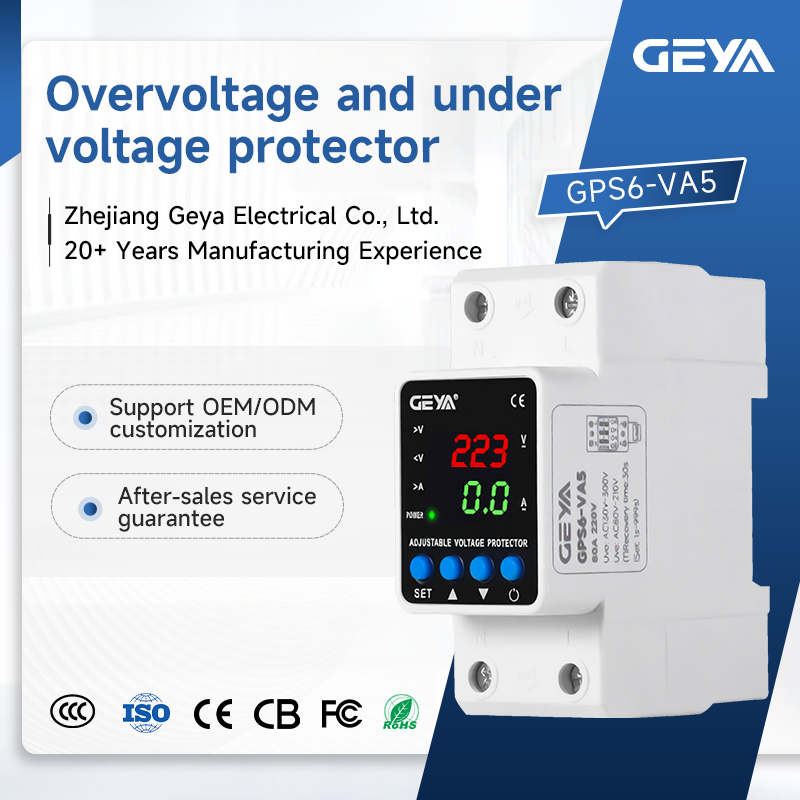
Yes. Henergy manufactures integrated protective solutions, including DIN rail digital adjustable over/under-voltage protectors with auto-reconnect function (such as the GPS6-VA5 series) and intelligent phase selectors. These units protect sensitive downstream devices from severe phase unbalances and line voltage surges typical in Northeast Brazil's grid network.
What trade terms and payment methods are accepted for B2B wholesale buyers?
We accept flexible Incoterms including FOB, CFR, CIF, EXW, FCA, and DDP. Flexible payment terms via T/T (Telegraphic Transfer), L/C (Letter of Credit at sight), and Western Union are available in multiple currencies including USD and EUR.
Partner with a Certified Low-Voltage Equipment Manufacturer
Looking to secure reliable, factory-direct supply of Residual Current Devices, RCBOs, Surge Arresters, and ATS units for your wholesale distribution network or infrastructure projects in Recife and Pernambuco? Contact our senior engineering and export sales team today.