Flagship 3-Phase Electrical Metering & Power Protection Lineup
Verified factory-direct products engineered for commercial, industrial, and utility grid applications in South Korea.

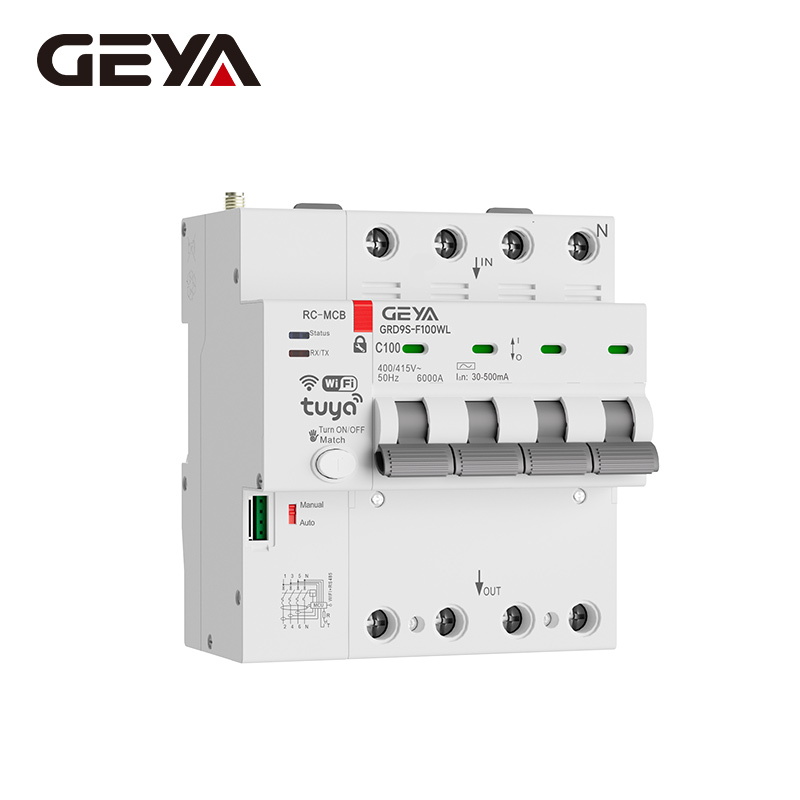
GEYA Remote Control Smart WiFi Reclosing Protector 220V 2P 63A Over/Under Voltage
View Product Details



1. Executive Overview: Sourcing Chinese 3-Phase Energy Meters for South Korea
South Korea represents one of the world's most sophisticated and technologically demanding power distribution markets. Driven by the Korea Electric Power Corporation (KEPCO) nationwide Smart Grid initiative, the transition toward 5th Generation Advanced Metering Infrastructure (AMI) has created unprecedented demand for high-accuracy, reliable, and connected three-phase energy meters. For Korean electrical distributors, EPC contractors, system integrators, and industrial panel builders, sourcing directly from top-tier Chinese manufacturers has evolved from a simple cost-reduction tactic into a strategic supply chain imperative.
China's electrical manufacturing ecosystem—centered in premier industrial clusters such as Yueqing, Wenzhou—combines world-class SMT automation, robust component supply chains, and deep engineering experience in digital power metering. However, exporting smart three-phase meters to the Republic of Korea requires far more than generic hardware manufacturing. Suppliers must navigate complex technical specifications dictated by South Korea's unique electrical grid parameters, strict standardizations (KS C 1201 / KS C 1208), and KC Certification requirements.
Information Gain Insight: The Korean Grid Architecture
Unlike Western standard 50Hz electrical networks, South Korea operates entirely on a 60Hz frequency system. Distribution topologies vary between commercial 3-Phase 4-Wire (380V/220V) systems and legacy or specialized industrial 3-Phase 3-Wire (220V Delta) configurations. Chinese manufacturers must provide customized firmware sampling logic, specialized current transformers (CTs), and calibrated potential transformers (PTs) specifically tuned for 60Hz harmonic behavior.
This industry whitepaper serves as an authoritative guide for Korean procurement executives and engineering directors. It analyzes technical compatibility, manufacturing quality control, localized application scenarios across Korean tech hubs, and procurement FAQs to ensure seamless integration of Chinese 3-phase smart meters into South Korea's energy infrastructure.
2. Technical Specifications Matrix: Korea Market Standard vs. China OEM Capabilities
Comparative engineering benchmark for three-phase electronic watt-hour meters.
| Technical Parameter | KEPCO / Korea Market Standard | China OEM/Factory Baseline Spec | Customization Capability |
|---|---|---|---|
| Nominal Grid Voltage | 3-Phase 4-Wire 220/380V; 3-Phase 3-Wire 220V | Wide Range 3x220/380V ~ 3x240/415V | Custom 110V/220V Delta or Wye Config |
| Operating Frequency | Strictly 60 Hz (±5% grid tolerance) | Dual 50Hz / 60Hz compatible DSP logic | Factory 60Hz Phase-Shift Calibration |
| Accuracy Class (Active) | Class 0.2S (Utility) / Class 0.5S / Class 1.0 (Sub-metering) | Class 0.5S / Class 1.0 High Precision MCU | IEC 62053-22 Class 0.2S Certification |
| Communication Protocols | DLMS/COSEM, KEPCO AMI, Modbus-RTU, Wi-Sun | RS-485 Modbus-RTU, Ethernet TCP/IP | Native DLMS/COSEM HDLC Stack Integration |
| Multi-Tariff / TOU | 4 Tariffs, 8 Time Segments, Holiday Schedules | Built-in RTC with Multi-Tariff Memory | KEPCO Seasonal TOU Curve Programming |
| Enclosure & Mounting | DIN-Rail (35mm) & Surface Wall-mount (KS C 8308) | Standard Modular DIN-Rail / ANSI C12.10 | Custom IP54/IP65 Flame-Retardant PC Housing |
| Safety & EMC Compliance | KC Mark (Safety & EMC), KS Standards | CE, CB (IEC 62052-11), ISO 9001 | Full Support for KC Testing Laboratory Submission |
3. Engineering Deep-Dive: KS Standard Compliance & AMI Interoperability
Sourcing electronic three-phase energy meters for installation in South Korea demands rigorous adherence to domestic electrical standards. The primary standard governing electronic watt-hour meters in Korea is KS C 1201 (General requirements for electronic watt-hour meters) alongside KS C 1208 for multi-function smart metering devices. Chinese factories seeking long-term success in the Korean peninsula must incorporate structural and electronic design adjustments at the fundamental engineering level.
3.1 Precision Measurement & Anti-Tampering Electronics
Modern Korean industrial facilities—ranging from semiconductor fabrication plants in Yongin to automotive assembly lines in Ulsan—require granular energy monitoring. China's top tier manufacturers utilize advanced Analog Front-End (AFE) ICs coupled with high-accuracy Current Transformers (CTs) capable of maintaining Class 0.2S linearity across extreme dynamic current ranges (from 1mA starting currents up to 100A direct loads or 5A secondary CT inputs).
Furthermore, anti-tampering protection is a standard requirement for private sub-metering in commercial complexes such as Starfield malls or Lotte World Tower facilities. Key anti-tamper features built into Chinese export meters include:
- Magnetic Field Detection: Internal Hall sensors that trigger tamper alarms if external high-flux neodymium magnets are applied to distort readings.
- Neutral Line Current Monitoring: Dual-CT measurement architecture measuring current flow across all three phases plus the neutral wire to catch unauthorized current diversion.
- Cover & Terminal Opening Logs: Micro-switch triggers connected to non-volatile real-time clock (RTC) logs recording timestamped tamper events even during total power outages.
3.2 Communication Protocol Adaptation: DLMS/COSEM & Modbus-RTU
Smart metering infrastructure relies heavily on seamless data transmission to Building Management Systems (BMS), Energy Management Systems (EMS), or KEPCO AMI head-end servers. Top Chinese factories equip their 3-phase energy meters with flexible communication architecture:
DLMS / COSEM Interoperability
Full support for Device Language Message Specification / Companion Specification for Energy Metering. Ensures plug-and-play capability with South Korean AMI software platforms and remote meter reading collectors.
Dual RS-485 Modbus Interface
Isolated RS-485 serial ports supporting baud rates up to 38400 bps. Enables real-time polling of V, I, kW, kVAR, kWh, kVARh, Power Factor, and Total Harmonic Distortion (THD) into Siemens, Schneider, or local Korean BMS software.
IoT Connectivity (NB-IoT / Wi-Sun / WiFi)
Optional integrated wireless modules operating on South Korean telecom frequency bands (SK Telecom, KT, LG U+). Allows direct cloud telemetry without requiring physical data cabling.
4. Strategic Advantage: Why Korean B2B Buyers Source from Top Chinese Factories
When procurement managers in Seoul, Busan, or Incheon evaluate suppliers for high-volume energy meter deployments, they weigh domestic sourcing against Chinese direct manufacturing. While Korean domestic brands possess strong local brand recognition, top Chinese OEM/ODM factories offer undeniable structural advantages in manufacturing scale, technology iteration, and total cost of ownership (TCO).
Unrivaled Cost-to-Performance Ratio
By leveraging massive production volumes and localized electronic component ecosystems in Zhejiang and Guangdong, Chinese manufacturers deliver Class 0.5S smart 3-phase meters at 30% to 45% lower capital costs compared to domestic Korean alternatives—without sacrificing component longevity.
Agile OEM Firmware Customization
Leading Chinese R&D departments maintain dedicated firmware teams capable of implementing custom KEPCO TOU tariff structures, localized Korean display menus on LCD screens, and specific Modbus register maps within 2-3 weeks of request.
End-to-End Quality Control & Scale
Established Chinese suppliers operate 10,000+ sqm facilities equipped with fully automated Yamaha and Panasonic High-Speed SMT lines, automatic optical inspection (AOI), and multi-position high-accuracy meter testing benches verified by independent auditors like SGS.
5. Localized Application Scenarios Across South Korea
Three-phase energy meters manufactured in China are deployed extensively across diverse economic sectors in South Korea. Below are four key application scenarios where Chinese smart meters deliver exceptional performance and reliable data telemetry.
1. Smart Industrial Parks (Gyeonggi & Incheon)
In high-density manufacturing hubs like Pangyo Techno Valley and Namdong Industrial Complex, factory operators require sub-metering for individual heavy machinery, CNC centers, and HVAC chillers. 3-phase DIN-rail meters equipped with RS-485 Modbus allow granular sub-billing and peak demand management, helping plant managers avoid KEPCO surcharge rates during summer peak power periods.
2. Commercial Real Estate Sub-Metering (Seoul CBD)
High-rise office towers, shopping complexes, and multi-tenant residential complexes in Gangnam and Yeouido require accurate revenue-grade sub-metering. Compact 3-phase meters with multi-tariff TOU programming and LCD status displays enable property management software to automatically bill tenants based on exact consumption during Peak, Off-Peak, and Shoulder hours.
3. Renewable Solar Farms & ESS Systems (Jeolla Region)
South Korea’s solar PV installations and battery Energy Storage Systems (ESS) in Jeollanam-do require bi-directional (import/export) 4-quadrant energy measurement. Bi-directional 3-phase energy meters accurately record active kWh generated and consumed, alongside reactive kVARh power quality data, ensuring full compliance with grid interconnect requirements.
4. Ultra-Fast EV Charging Stations (Nationwide Highways)
As South Korea accelerates EV adoption, 3-phase fast DC chargers (50kW to 350kW) installed along major expressways require high-current indirect CT-operated meters. Installed within charger control cabinets, these meters provide real-time power telemetry to charging network operators via Modbus/Ethernet to manage load balancing and payment processing.
6. Frequently Asked Questions for Korean Procurement & Import Managers
Clear answers on technical compliance, certifications, factory verification, and shipping logistics.
Export-grade 3-phase energy meters engineered for Korea are calibrated at the factory using precision 60Hz power sources. Microcontroller sampling algorithms, digital phase-shift compensation, and current transformers are specifically configured for 60Hz fundamental frequencies, preventing measurement drift or accuracy degradation that occurs when using standard 50Hz equipment.
For commercial sale and grid interconnection, meters typically require KC Certification (Electrical Safety and EMC) issued by accredited Korean testing laboratories (such as KTL, KTC, or KERIS). Top Chinese OEMs support Korean importers by providing sample units, CB Test Reports (IEC 62052-11 / IEC 62053-21), circuit schematics, and technical documentation required to streamline the KC approval process.
Yes. OEM and ODM services are a core strength of premier Chinese manufacturers. Factories provide laser-etched front panels featuring your company logo, customized model numbers, Korean-language user manuals, custom LCD segment icons, and branded inner/outer packaging designed specifically for the South Korean retail or commercial market.
Standard DIN-rail 3-phase meters have sample MOQs starting as low as 1 to 10 units for evaluation. For OEM customized orders (custom branding and firmware), typical MOQs range between 100 and 500 units. Mass production lead time is generally 15 to 25 business days from order confirmation, with fast sea freight shipping from Ningbo or Shanghai port to Busan or Incheon taking only 2 to 4 days.
Reputable factories enforce a strict 3-stage quality control process: Incoming Quality Control (IQC) on raw components (such as ICs and CTs), In-Process Quality Control (IPQC) including 100% automated optical inspection of SMT assemblies, and Outgoing Quality Assurance (OQA). Before shipment, 100% of finished meters undergo high-voltage insulation breakdown tests and multi-point calibration on automated metering test benches.
Yes. Bi-directional 3-phase meters are available for solar PV generation and battery storage applications. These devices independently track active import kWh, active export kWh, reactive import kVARh, and reactive export kVARh. Data is transmitted via RS-485 Modbus or DLMS protocol to solar monitoring portals in real time.
7. Manufacturing Excellence: Inside Our Verified Smart Factory
As an SGS onsite-verified electrical equipment manufacturer established in 2007, our state-of-the-art production facility in Yueqing, Zhejiang, integrates advanced manufacturing technology with rigorous ISO 9001 quality management system protocols. We produce over 400 product models across circuit protection, automatic transfer switching, power protection, and smart energy metering.
Automated High-Speed SMT Lines
Surface Mount Technology lines equipped with automatic solder paste printing, high-speed chip placers, and multi-zone reflow soldering ovens ensure zero-defect PCB assemblies for electronic energy meters.
Precision Calibration Equipment
Computerized multi-position meter calibration benches verify energy metering accuracy across power factors from 0.5 lag to 0.5 lead under variable voltage and temperature conditions.
SGS Audited & Certified Compliance
Our operations undergo regular third-party audit verification by SGS Group. Our products hold comprehensive CE, CB, SAA, and ISO certifications, giving international buyers absolute confidence in compliance.
Partner with China's Premier 3-Phase Meter Manufacturer
Ready to upgrade your supply chain with high-precision, 60Hz KEPCO-compatible three-phase energy meters? Contact our engineering and export team today for technical datasheets, factory-direct pricing, and sample evaluation requests.
Contact Us