Featured Short Circuit Protection & Switching Series
International standard compliant (IEC/EN 60898-1, IEC 60947-2, CE, CB, SAA) low-voltage electrical protection components engineered for industrial, solar PV, and smart building applications.
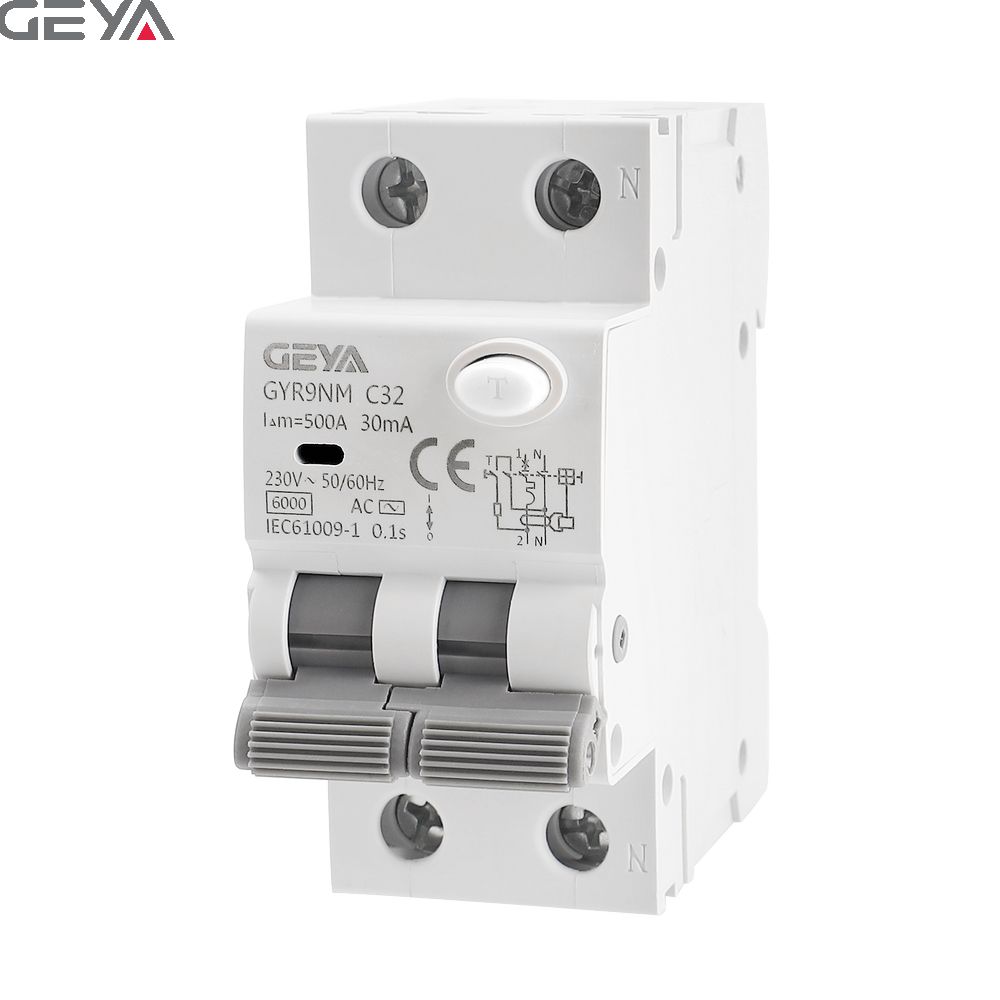
GEYA GYR9N-AC 2P RCBO Leakage Circuit Breaker
Combines earth leakage & short-circuit protection.
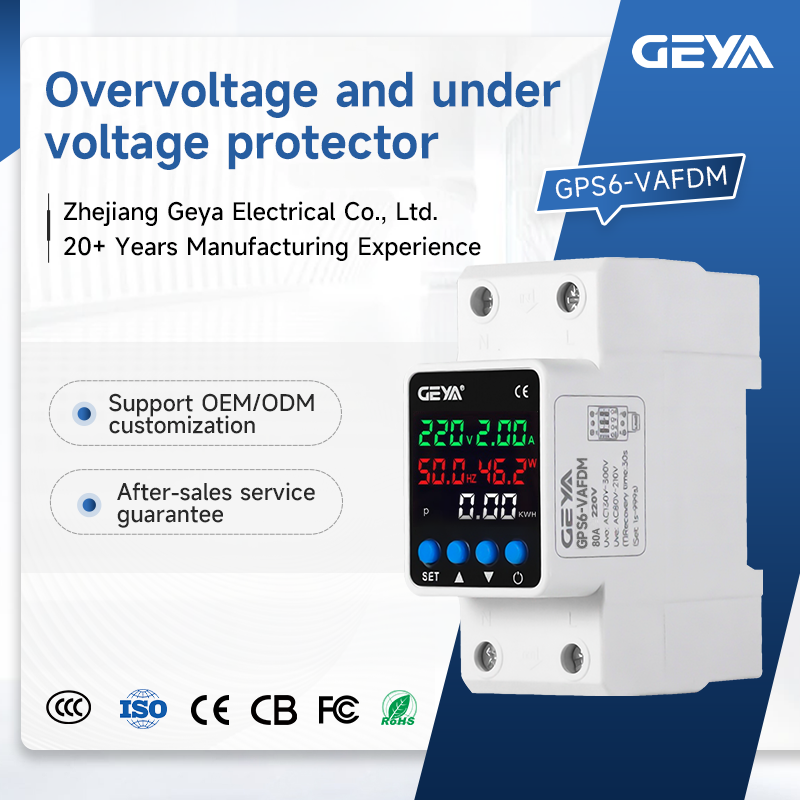
GEYA GPS6-VAFDM 2P 80A 6-in-1 Auto Reconnect Protector
Real-time Frequency and Power Display module.

GEYA GQRR-L0.01G Hot Gas Aerosol Fire Extinguisher
Thermal suppression for high-density power panels.
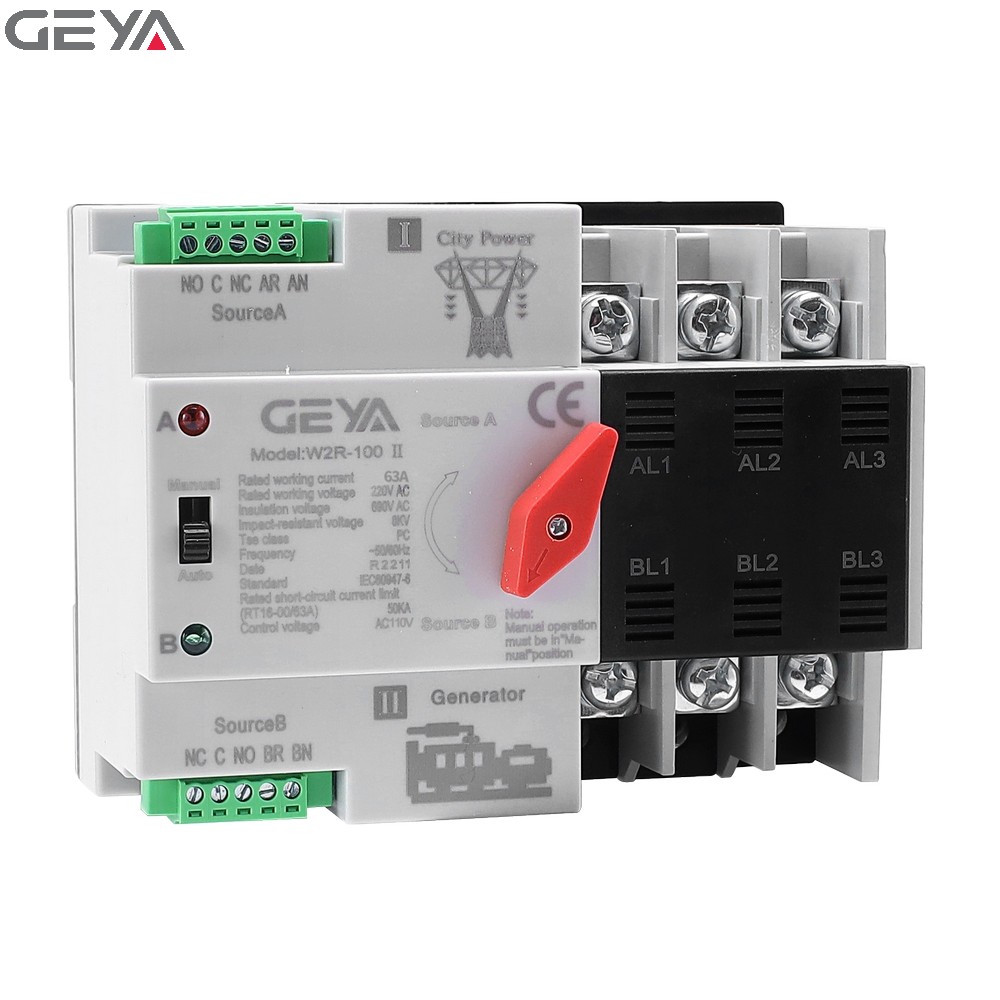
GEYA W2R 3-Phase 63A Automatic Transfer Switch
Seamless generator & main grid dual power transfer.
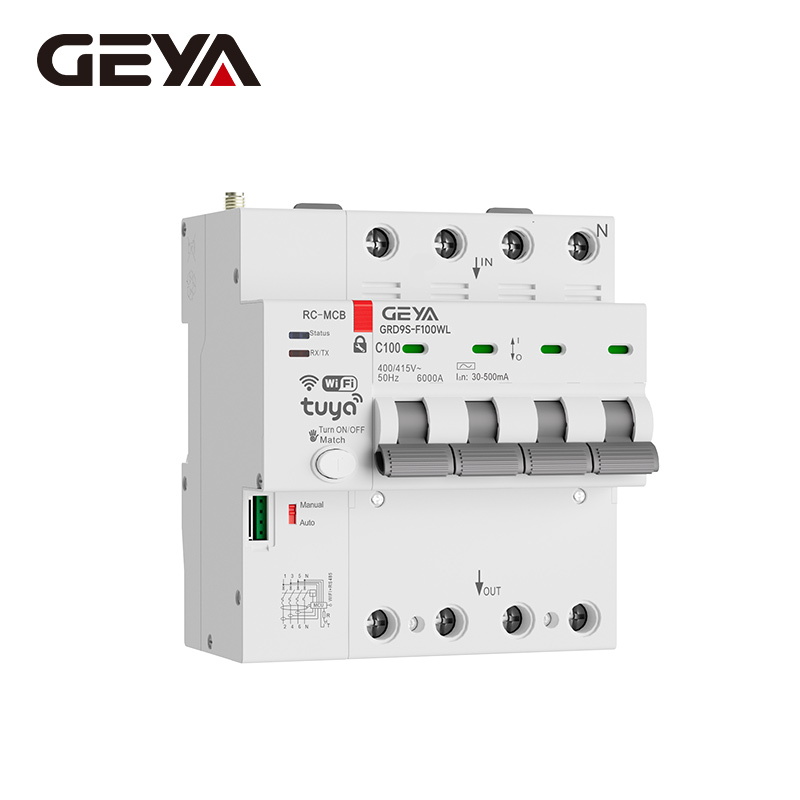
GEYA GRD9S-F100WL 4P WIFI Smart IoT Breaker
Integrated leakage detection & energy metering.

GEYA GSP10-C40PV 1000VDC 40kA Solar PV DC SPD
Heavy-duty MOV protection for solar array combiners.

GEYA WiFi Reclosing Voltage & Leakage Protector
Remote App control for over/under voltage & leakage.

GEYA GPS6-VAWiFi DIN Rail Smart Reclosing Switch
Real-time electrical parameter monitoring via WiFi.
Understanding Short Circuit Protection Dynamics in Modern Low-Voltage Networks
An authoritative engineering breakdown of short-circuit current dynamics, thermal-magnetic tripping behavior, breaking capacity parameters (Icu vs Ics), and arc quenching physics.
1. Physics of Short-Circuit Fault Interruptions
A short circuit represents an abnormal low-impedance connection between two or more points of different potential in a circuit. When a bolted short-circuit fault occurs, the prospective fault current ($I_{cp}$) escalates rapidly within milliseconds to values tens or hundreds of times exceeding the breaker's rated nominal current ($I_n$).
Modern miniature circuit breakers (MCBs) and residual current breakers with overcurrent protection (RCBOs) rely on dual-tripping mechanisms to isolate these destructive forces before electromagnetic thermal stresses compromise cable insulation:
- Thermal Overload Mechanism: Utilizes a precision-calibrated bimetallic strip. Prolonged overcurrent causes differential thermal expansion of two bonded metals, bending the strip to trip the mechanical latching toggle.
- Electromagnetic Short-Circuit Mechanism: Incorporates a low-impedance magnetic plunger coil. High fault currents produce an intense magnetic field that instantly drives a solenoid plunger to hit the trip bar in under 3 to 5 milliseconds.
2. Arc Quenching & De-Ionization Chamber Mechanics
When physical contacts separate under a short-circuit fault condition, an electric arc consisting of ionized plasma is drawn across the contact gap. The temperature within the arc core can exceed 6,000°K, generating immense localized pressure and thermal shock.
To safely extinguish this arc without destroying the circuit breaker housing, advanced protection devices integrate specialized arc chute assemblies:
- De-Ionizing Arc Splitter Plates: Parallel ferromagnetic steel plates split the single long electric arc into a series of smaller, short arcs, dramatically increasing the total arc voltage above the system operating voltage.
- Magnetic Blowout Guidance: Specially shaped contact arms harness the lorentz force to rapidly drive the electric arc off the silver alloy contact tips ($AgSnO_2$) and into the arc chute chamber.
- Gas Exhaust Venting: Calibrated vents discharge high-pressure non-conductive gases safely away from live terminal connections.
Standard Tripping Curve Characteristics & Applications
Properly matching circuit breaker tripping curves according to IEC 60898-1 and IEC 60947-2 is mandatory to prevent nuisance tripping while guaranteeing rapid fault clearing.
| Tripping Curve | Instantaneous Magnetic Trip Range | Typical Load Profile / Application | Reference Standards | Primary Industrial Use Case |
|---|---|---|---|---|
| Curve B | $3 \times I_n$ to $5 \times I_n$ | Resistive loads, long cable runs, domestic heating | IEC/EN 60898-1 | Residential final circuits, IT server power distribution |
| Curve C | $5 \times I_n$ to $10 \times I_n$ | General inductive loads, fluorescent lighting, small motors | IEC/EN 60898-1 | Commercial buildings, general industrial control panels |
| Curve D | $10 \times I_n$ to $20 \times I_n$ | High inductive loads, transformers, solenoids, induction motors | IEC/EN 60898-1 / 60947-2 | Heavy industrial machinery, UPS input feeds, industrial drives |
| Curve K | $10 \times I_n$ to $14 \times I_n$ | High inrush current motor circuits, auxiliary power supplies | IEC 60947-2 | Motor control centers (MCC), process automation lines |
| Curve Z | $2 \times I_n$ to $3 \times I_n$ | Highly sensitive electronic semiconductor equipment | IEC 60947-2 | PLC input/output modules, data conversion equipment |
Ultimate Breaking Capacity ($I_{cu}$)
Defined under IEC 60947-2 as the maximum short-circuit current the circuit breaker can break twice ($O - t - CO$ sequence) without catastrophic destruction. Following an $I_{cu}$ test, the breaker is not required to maintain continuous current-carrying functionality.
Service Breaking Capacity ($I_{cs}$)
Represents the short-circuit current level at which the circuit breaker remains fully functional after tripping ($O - t - CO - t - CO$). Typically expressed as a percentage of $I_{cu}$ (e.g., 50%, 75%, or 100% $I_{cs}$). High-tier industrial plants mandate 100% $I_{cs}$ compliance.
Current Limiting Class 3
Refers to the highest energy-limiting capability class specified under IEC 60898. Class 3 breakers constrain the let-through energy ($I^2t$) during a short circuit to minimal values, preventing thermal degradation of downstream conductors and distribution busbars.
Zhejiang Henergy Electrical Co., Ltd. — Manufacturing Benchmark & Quality Control
Established in 2007 in Yueqing, Wenzhou—China's global capital for low-voltage electrical components—Zhejiang Henergy Electrical operates an SGS onsite-verified manufacturing facility. Spanning 10+ automated assembly lines with over 400 specialized models across 5 distinct product series, Henergy delivers factory-direct circuit protection solutions to distributors, panel builders, and OEM brands across 60+ countries.
Future Procurement Trends in Low-Voltage Circuit Protection (2025–2030)
Key technological shifts shaping the next decade of electrical procurement, system design, and renewable energy integration.
1. IoT Smart Breakers & Remote Auto-Reclosing
Traditional manual breakers are rapidly giving way to Smart IoT DIN-rail Miniature Circuit Breakers equipped with Tuya, RS485 Modbus, or WiFi connectivity. These intelligent devices (such as the GEYA GRD9S-F100WL and GPS6-VAWiFi series) combine real-time power telemetry, voltage threshold adjustment, residual leakage monitoring, and automated remote reclosing. Sourcing managers are increasingly specifying smart auto-reclosers for telecom base stations, remote solar farms, and unmanned infrastructure to dramatically lower maintenance O&M costs.
2. Solar Photovoltaic & Energy Storage DC Protection
The global surge in commercial and utility-scale solar PV installations coupled with Battery Energy Storage Systems (BESS) requires specialized High-Voltage DC Circuit Breakers and Surge Protection Devices. Direct Current (DC) lacks a natural zero-crossing point, making arc extinction significantly more challenging than AC circuits. Procuring specialized 1000VDC to 1500VDC SPDs (e.g., GEYA GSP10-C40PV) and non-polarized DC MCBs with permanent magnet arc quenching is becoming a mandatory standard for solar EPC contractors worldwide.
3. Multi-Function Modular Space-Saving Integration
Cabinet real estate in electrical distribution panels is at an absolute premium. The market is shifting away from separate MCBs, voltage monitoring relays, and timers toward all-in-one compact DIN-rail modules. Products like the 6-in-1 adjustable over/under voltage & current protector with power display (GEYA GPS6-VAFDM) integrate multiple discrete sensing functions into a single 2-pole modular footprint, cutting enclosure wiring labor and assembly costs by up to 40%.
Enterprise Supply Chain Security & Quality Assurance
How Zhejiang Henergy Electrical mitigates compliance, manufacturing, and shipping risks for international importers and distributors.
Comprehensive International Certification Compliance
Substandard circuit breakers present severe fire hazards and risk regulatory rejection at customs. Henergy enforces rigid ISO 9001 quality management across all 10+ production lines. Product approvals include CE, CB, SAA, UL, VDE, and CCEE depending on exact model families. Every shipment can be accompanied by verified laboratory test reports and certificate copies matching your local market regulations (e.g., SAA for Australia/New Zealand, CE/CB for European & Asian markets).
Rigorous 3-Stage Quality Inspection Protocol
Unlike trading intermediaries, Henergy executes full in-house quality control:
- Incoming Raw Material Testing: High-purity copper terminal plating checks, silver contact alloy content validation ($AgSnO_2$), and flame-retardant VO-grade housing material verification.
- 100% In-Line Automated Tripping Calibration: Every single unit undergoes automated thermal bimetal calibration and magnetic instantaneous trip testing on calibrated test rigs.
- Final Dielectric Withstand & Load Burn-In: Insulating resistance, high-voltage withstand, and mechanical toggle endurance verification prior to packing.
Frequently Asked Questions by Global Procurement Managers
Clear, technical guidance on specifying, ordering, and customizing short circuit protection devices.
Request Factory Pricing & Technical Specifications
Looking for reliable OEM/ODM short circuit protection breakers, smart IoT reclosers, or high-volume distribution supplies? Contact our technical sales engineering team today for instant quotations and product samples.