Featured Industrial Protection & Switching Products
Certified low-voltage protection equipment manufactured under rigorous ISO 9001 guidelines for global distributors, OEM brands, and panel builders.



Engineering White Paper: Fundamentals of Residual Current Protection
In modern low-voltage electrical distribution networks, Residual Current Devices (RCDs)—comprising Residual Current Circuit Breakers (RCCBs) and Residual Current Breakers with Overcurrent Protection (RCBOs)—serve as the definitive defense against electrocution, insulation faults, and earth-leakage-induced fires. Unlike standard Miniature Circuit Breakers (MCBs) that react exclusively to high-magnitude overcurrents or short circuits, an RCD operates by continuously sampling the vector sum of current flowing through active conductors via a high-permeability Zero-Sequence Current Transformer (ZSCT).
Under healthy operating conditions, the vectorial sum of line currents ($\sum I = 0$) produces zero net magnetic flux within the toroidal ferrite core. However, when an insulation breakdown occurs, current escapes to ground. This residual current ($I_{\Delta n}$) disturbs the electromagnetic equilibrium, inducing a secondary voltage in the transformer sensing coil. Once the induced energy exceeds the calibrated trip threshold, a precision magnetic trip relay unlatches the mechanical contact mechanism within 30 to 40 milliseconds—well within the threshold needed to prevent ventricular fibrillation as specified by IEC 60479-1.
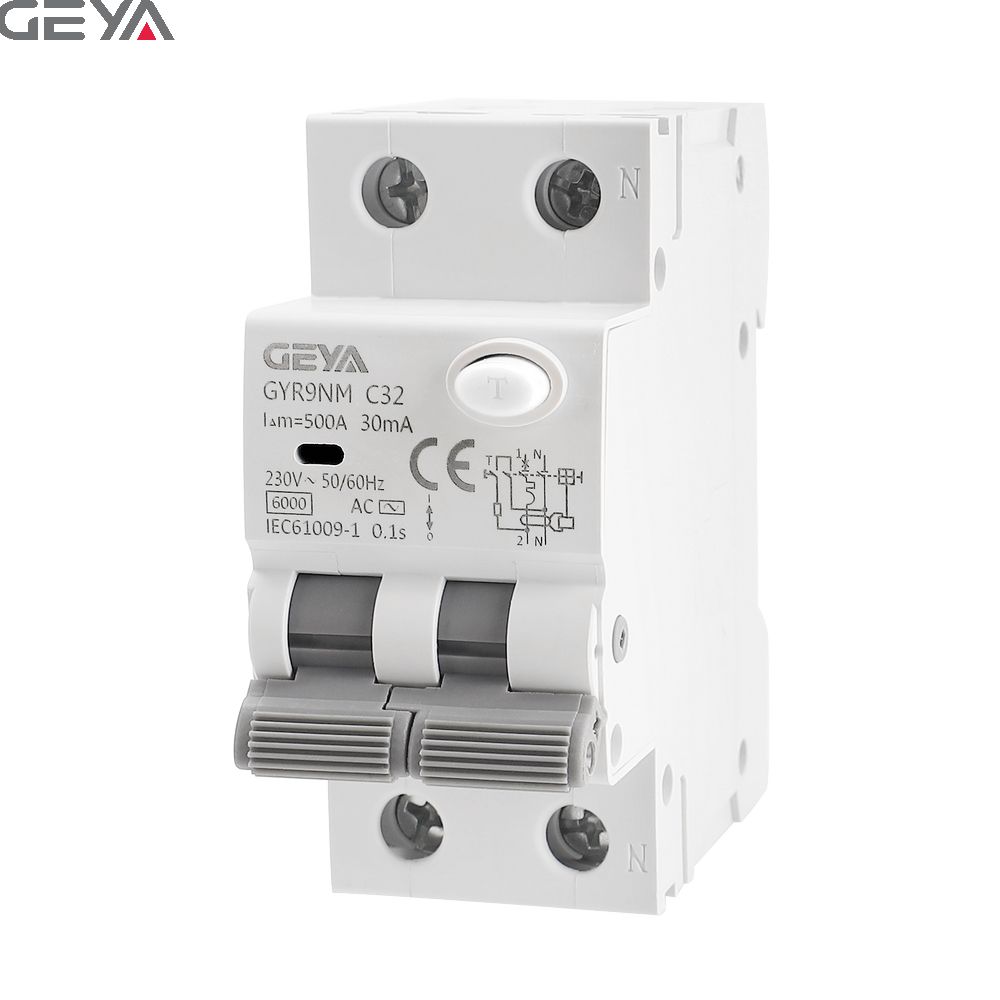
An RCCB isolates earth leakage current exclusively and must be paired with an upstream MCB for short-circuit protection. An RCBO integrates dual trip mechanisms into a single modular DIN-rail housing: a ZSCT for earth leakage detection alongside thermal-magnetic elements for overload and short-circuit fault interruption ($I_{cn}$ up to 10kA).
Selecting the optimal RCD for global procurement requires an intimate understanding of residual wave types. As power electronics, variable frequency drives (VFDs), and solar PV inverters proliferate in commercial and industrial settings, traditional Type AC breakers are increasingly vulnerable to magnetic saturation, rendering them blind to DC residual currents.
| RCD Type Class | Detectable Fault Waveforms | Maximum DC Leakage Tolerance | Primary Industrial & Commercial Applications |
|---|---|---|---|
| Type AC | Pure Sinusoidal Alternating Current (50/60Hz) | 0 mA (Blinds easily under DC component) | Standard resistive loads, tungsten lighting, basic heating elements. |
| Type A | Sinusoidal AC + Pulsating Direct Current | Up to 6 mA smooth DC current | Single-phase inverters, washing machines, IT power supplies, induction hobs. |
| Type F | Type A + Composite High-Frequency Currents | Up to 10 mA smooth DC current | Single-phase variable speed drives, heat pumps, air conditioning equipment. |
| Type B / B+ | Sinusoidal AC, Pulsating DC, & Smooth Pure DC | Full high-frequency & continuous DC protection | EV fast charging stations, Solar PV combined boxes, 3-phase VFDs, Medical MRI equipment. |
Future Procurement Trends in Low-Voltage Protection (2025–2030)
The global market for residual current circuit breakers is undergoing a structural transformation driven by the transition to renewable energy, smart building electrification, and updated international electrical safety mandates. Sourcing managers and electrical wholesalers must adapt their procurement strategies to capture these emerging technological shifts:
1. Surge in Type B & DC-Tolerant Demand
With global EV adoption and rooftop solar installation accelerating, national wiring codes (such as HD 60364-7-722 and BS 7671) enforce strict Type B RCD or RDC-DD (Residual Direct Current Detecting Device) compliance. Wholesalers are shifting inventory away from Type AC toward Type A and Type B models to prevent supply bottlenecks.
2. Smart IoT & Remote Auto-Reclosing
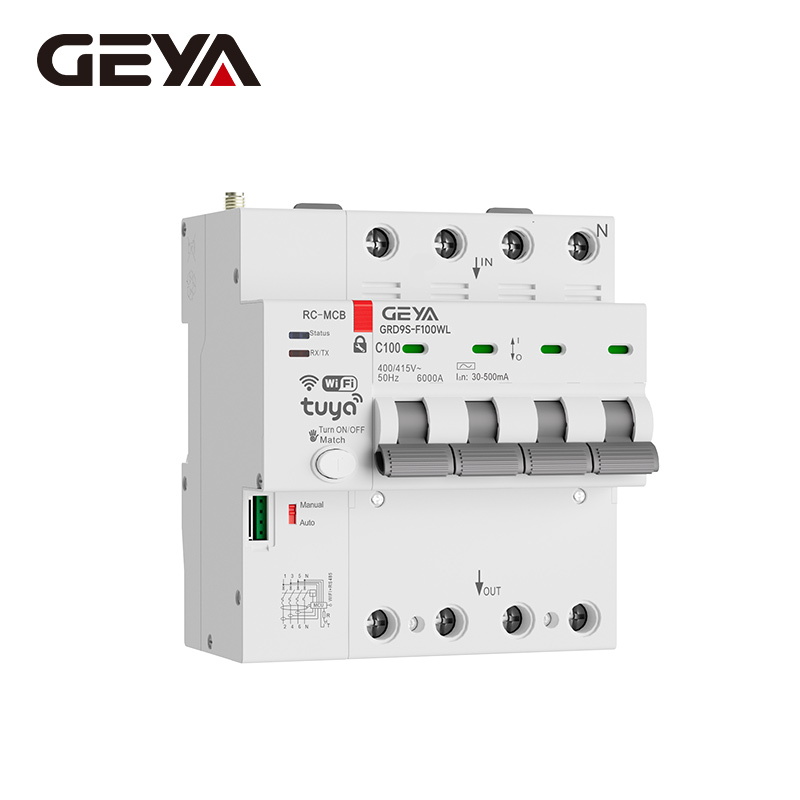
Traditional mechanical RCDs require manual tripping resets on site. Next-generation smart RCBOs incorporate RS485 Modbus, Tuya WiFi, or ZigBee communication alongside motorized reclosers. This allows facility engineers to monitor real-time leakage currents, voltage fluctuations, and power consumption remotely while enabling automatic restoration for non-permanent transient faults.
3. Modular Compactness (1P+N in 1 Module)
Distribution enclosure space is premium real estate. Modern panel builders demand 18mm single-module width 1P+N RCBOs instead of older 36mm 2-pole units. Manufacturers utilizing advanced miniature electromagnetic relays and surface-mount ZSCTs gain significant OEM market share by enabling double the circuit density per enclosure.
RCD Product Evolution & Quality Control Infrastructure
The operational reliability of a residual current breaker depends heavily on manufacturing precision, contact silver-alloy purity, and magnetic core calibration. A minor defect in transformer permeability or a variation in latch mechanical friction can cause nuisance tripping—or worse, a failure to trip during a fatal electric shock event.
Zhejiang Henergy Electrical Co., Ltd., based in Yueqing, Wenzhou—China's low-voltage electrical capital—operates over 10 automated assembly and testing lines spread across a 5,000–10,000 m² modern manufacturing footprint. As an SGS onsite-verified direct manufacturer, quality control is integrated into every phase of production:
- Incoming Raw Material Screening (IQC): Automated permeability testing for toroidal permalloy cores, 99.9% silver-cadmium oxide / silver-tin oxide contact point conductivity validation, and flame-retardant V-0 rating checks on polycarbonate housings.
- Automated Calibration & Tripping Verification (IPQC): Every unit undergoes 100% automated calibration for rated residual operating current ($I_{\Delta n}$) and trip timing at 1x $I_{\Delta n}$, 2x $I_{\Delta n}$, and 5x $I_{\Delta n}$ using high-precision electronic test benches.
- High-Voltage Insulation & Dielectric Strength: Dielectric withstand tests at 2,000V AC for 1 minute to ensure zero breakdown between open contacts and adjacent poles.
- Finished Goods Audit (OQC): Random sampling verification according to AQL 0.65 standards for mechanical endurance (up to 20,000 operations) and thermal-magnetic calibration under extreme temperature ambient conditions (-25°C to +55°C).
Voltage-independent (electromechanical) RCDs derive tripping power directly from the fault leakage vector itself. They remain operational even if the main line neutral wire breaks. Voltage-dependent (electronic) RCDs require line power to operate. Sourcing engineers must verify local regulatory requirements: Western Europe (e.g., Germany, Austria) mandate electromechanical RCDs under IEC 61008-1, while certain Asian and American markets accept electronic units for cost-effective residential distribution.
Why Global Importers Partner with Zhejiang Henergy Electrical Co., Ltd.
SGS Onsite Verified & Certified
Our manufacturing facilities are independently audited on site by SGS Group. Product series carry comprehensive CB, CE, SAA, UL, VDE, and ISO 9001 certifications, ensuring smooth customs clearance and regulatory acceptance in 60+ countries.
12+ Years OEM/ODM Customization
We provide full OEM and ODM services for international electrical brands, including laser-etched private labels, custom terminal configurations, tailored tripping sensitivity (10mA, 30mA, 100mA, 300mA), customized voltage ratings, and localized packaging.
Top Sales Leaderboard Rankings
Recognized on major industrial supplier leaderboards: #2 Rank in Miniature Circuit Breakers, #3 Rank in Automatic Transfer Switches, and #3 Rank in Relays with over 480 successful international export orders fulfilled in the past 6 months.
Frequently Asked Procurement & Engineering Questions
Answers to technical, regulatory, and commercial questions commonly raised by B2B buyers and electrical engineers.
What is the minimum order quantity (MOQ) for factory-direct procurement?
For standard product lines, our MOQs are designed to accommodate both regional wholesalers and project trial orders. Standard RCCBs, RCBOs, ATS switches, and relays start at 10 to 20 pieces per model. Specialized DC MCBs for solar PV start at 50 pieces, while customized smart IoT DIN-rail switches start at 100 pieces. Private-label OEM packaging projects are quoted on a customized volume scale.
How do I select between 30mA, 100mA, and 300mA residual operating current ($I_{\Delta n}$)?
Selection depends entirely on the protection objective dictated by international standards (IEC 60364):
- 10mA / 30mA: Personal protection against direct contact shock in high-risk wet environments (bathrooms, residential socket outlets, outdoor power tools). 30mA is the mandatory limit for human life safety.
- 100mA: Indirect contact protection in larger commercial circuits where normal background earth capacitance creates minor leakage.
- 300mA / 500mA: Fire prevention and equipment protection (IEC 60364-4-42). Placed at main distribution incoming feeds to prevent electrical arcs from igniting combustible building materials without nuisance tripping from cumulative branch leakage.
Can standard AC residual current breakers be used in Solar PV or EV Charging installations?
No. Standard Type AC breakers are strictly prohibited in solar inverter outputs and EV charging stations under IEC 62423. DC smooth leakage current generated by solar inverters or EV battery rectifiers can saturate the magnetic core of a Type AC or Type A ZSCT, blinding the breaker to dangerous ground faults. Solar and EV installations require Type B RCDs or Type A RCDs equipped with RDC-DD 6mA DC detection devices.
What certificates are provided with bulk export orders?
Every commercial shipment includes certified copies of full test reports and certificates matching your specific model ratings. Depending on the product family, approvals include CB Scheme certificates (IEC 61008-1 / IEC 61009-1), CE declarations of conformity, SAA approval certificates for Australia/New Zealand, UL mark certification for North American components, and ISO 9001 plant management certificates.
What Incoterms and international payment options do you support?
We support a full array of flexible trade terms including FOB Ningbo/Shanghai, CFR, CIF, EXW, FCA, CPT, CIP, and DDP (Delivered Duty Paid for seamless door-to-door delivery). Accepted payment channels include Wire Transfer (T/T), Irrevocable L/C at sight, D/P, PayPal, and Western Union in major currencies including USD, EUR, GBP, AUD, CAD, JPY, and CHF.
Partner with a Trusted Residual Current Breaker Manufacturer
Whether you require factory-direct wholesale shipments, specialized Type B/RCBO engineering customization, or OEM private-label branding, our engineering team is ready to assist with full specifications and factory pricing.
Inquire Now