




Engineering Whitepaper: Three-Phase Circuit Breaker Topologies & Protection Mechanics
In low-voltage industrial and commercial power distribution networks (415V/400V/230V AC), three-phase circuit breakers serve as the frontline defense against thermal overloads, short-circuit high-energy fault currents, ground faults, and phase imbalance. As modern industrial infrastructure integrates high-power inductive motor drives, solar PV hybrid inverters, and EV charging station sub-stations, selecting the correct three-phase circuit breaker architecture—whether Miniature Circuit Breakers (MCB), Moulded Case Circuit Breakers (MCCB), or Residual Current Circuit Breakers with Overcurrent Protection (RCBO)—is essential for operational resilience and compliance with IEC/EN 60947-2 and IEC 60898-1 international standards.
1. Breaking Capacity Dynamics: Ultimate ($I_{cu}$) vs. Service ($I_{cs}$) Breaking Capacity
A critical metric evaluated by electrical procurement managers and panel builders is the ultimate short-circuit breaking capacity ($I_{cu}$) versus the service short-circuit breaking capacity ($I_{cs}$). High-end China manufacturers design 3-phase switchgear featuring optimized arc-extinction chutes constructed with silver-tin oxide ($AgSnO_2$) contact points and multi-plate de-ion grid plates.
- $I_{cu}$ (Ultimate Breaking Capacity): The maximum fault current the breaker can clear at nominal voltage without suffering permanent physical destruction, defined under the test sequence O-t-CO (Open - time delay - Close/Open).
- $I_{cs}$ (Service Breaking Capacity): The fault current level the breaker can clear repeatedly (sequence O-t-CO-t-CO) while maintaining full operational functionality without degradation of dielectric performance. Premium industrial MCBs achieve $I_{cs} = 100\% I_{cu}$, ensuring uninterrupted service following major fault clearings.
2. Instantaneous Tripping Curve Selection Matrix
Three-phase miniature circuit breakers rely on dual-element thermal-magnetic trip units. The bimetallic strip handles inverse time-delay thermal overload protection, while the magnetic solenoid triggers instantaneous electromagnetic tripping under short-circuit conditions. Matching the instantaneous trip curve to the load profile prevents unwanted nuisance tripping:
Type B Curve (3 - 5 $I_n$)
Designed for resistive loads, long cable runs, and semiconductor protection where fault currents are low. Ideal for resistive heating systems and domestic distribution.
Type C Curve (5 - 10 $I_n$)
Standard industrial choice for general inductive loads, fluorescent lighting networks, commercial HVAC units, and standard 3-phase machinery circuits.
Type D Curve (10 - 20 $I_n$)
Engineered for extreme high-inrush inductive environments, such as 3-phase induction motors, heavy industrial transformers, UPS systems, and X-ray equipment.
Low-Voltage Circuit Protection Equipment Specifier Matrix
Comparative overview of key low-voltage protection equipment manufactured in Yueqing, China, for global B2B electrical buyers and system integrators:
| Equipment Category | Poles / Topology | Rated Voltage ($U_e$) | Rated Current ($I_n$) | Breaking Capacity | Primary Standards |
|---|---|---|---|---|---|
| Industrial 3-Phase MCB | 3P, 3P+N, 4P | AC 400V / 415V | 1A to 125A | 6kA, 10kA, 15kA ($I_{cu}$) | IEC 60947-2, IEC 60898-1 |
| Commercial RCBO Breaker | 1P+N, 3P+N, 4P | AC 230V to 415V | 6A to 63A (30mA - 300mA) | 6kA, 10kA | IEC 61009-1, CE, SAA |
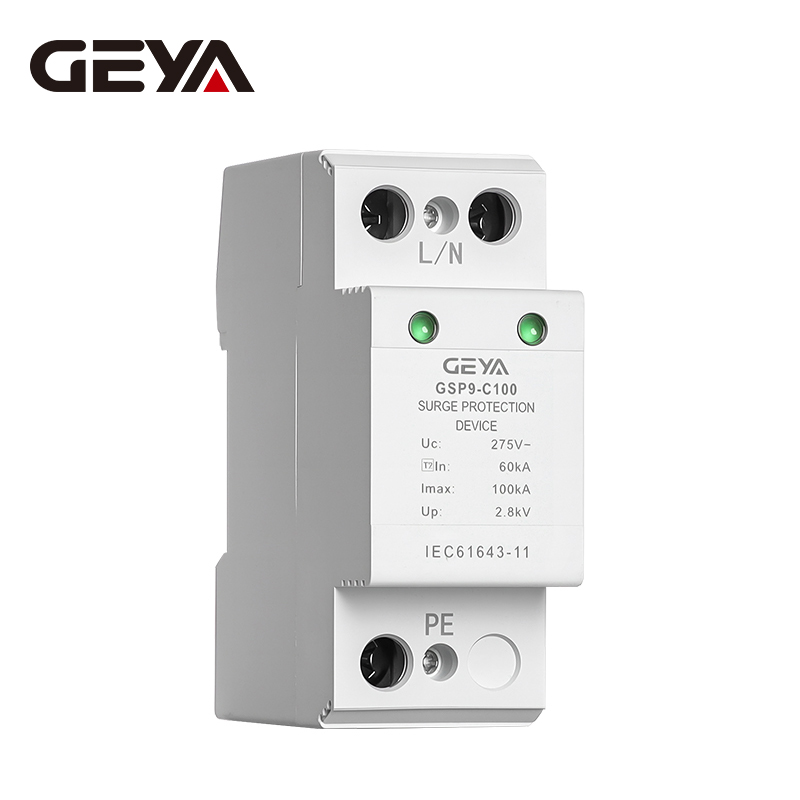
| Solar DC SPD (Type 2) | 2P, 3P (PV String) | 1000V DC / 1500V DC | $I_{n} = 20kA, I_{max} = 40kA$ | $V_{p} \le 3.8kV$ | EN 50539-11, IEC 61643-31 |
| Dual Power Smart ATS | 2P, 3P, 4P | AC 110V to 400V | 16A to 125A (Transfer <50ms) | 10kA / 50Hz/60Hz | IEC 60947-6-1, CB, CE |
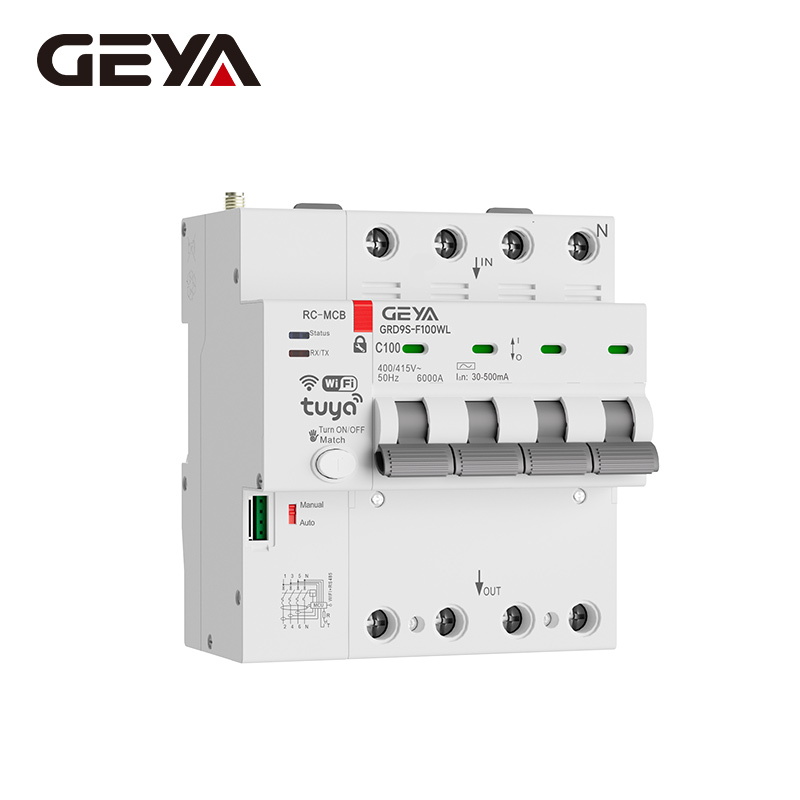
| IoT WiFi Smart MCB | 1P, 2P, 3P, 4P | AC 230V / 415V | 1A to 100A (Adjustable) | 6kA (Remote Monitoring) | IEC 60947-2, Tuya Smart IoT |
Future Procurement & Industry Trends (2025–2030)
The global low-voltage circuit breaker market is undergoing a structural paradigm shift driven by energy transition, commercial building automation, decentralization of solar PV microgrids, and strict energy efficiency mandates. B2B importers, electrical distributors, and OEM buyers must align their supply chain strategies with four dominant technological trends originating from top Chinese manufacturing hubs:
1. IoT & Telemetry Integration
Traditional thermal-magnetic circuit breakers are evolving into intelligent edge nodes. Next-generation 4P WiFi and RS485/Modbus smart breakers integrate embedded current transformers (CTs) and microcontrollers, transmitting real-time voltage, active power consumption, temperature, and leakage current to cloud dashboards (Tuya, Smart Life, MQTT).
2. DC PV High-Voltage Isolation
With commercial solar installations migrating from 1000V DC to 1500V DC architectures, high-voltage DC protection is paramount. DC non-polarized miniature circuit breakers utilize permanent magnetic arc blowouts to extinguish DC electric arcs within milliseconds, protecting battery storage systems and inverter DC combiners.
3. Solid-State Circuit Breakers (SSCB)
Solid-state semiconductor switching technology eliminates mechanical contacts entirely. Utilizing Wide Bandgap (WBG) Silicon Carbide (SiC) and Gallium Nitride (GaN) power electronics, SSCBs clear short circuits in less than 10 microseconds—over 1,000 times faster than mechanical breakers—eliminating arc flashes entirely.
Product Development Trends: Eco-Design & Modular Standardization
Chinese electrical OEM factories are leading product innovation through eco-friendly materials, compact DIN-rail form factors, and modular multi-function accessories:
- V-0 Grade Flame-Retardant Thermoplastics: Modern breaker enclosures utilize recyclable, halogen-free polyamide (PA66) reinforced with glass fiber, achieving UL94 V-0 flame rating and passing 960°C glow-wire thermal testing.
- Compact Width Factor Engineering: Transitioning from traditional 27mm module widths per pole down to 18mm or 17.5mm standard DIN module widths allows panel builders to reduce overall electrical enclosure sizes by up to 35%.
- Integrated Fire Suppression Devices: Combined cabinet aerosol fire extinguishing units automatically actuate upon thermal runway inside distribution boxes, suppressing electrical fires before thermal propagation occurs.
Sourcing & Procurement FAQ: Essential Knowledge for B2B Buyers
Direct answers from experienced application engineers to help procurement managers evaluate product performance, factory capabilities, and international compliance.
1. What is the fundamental difference between 3P and 4P circuit breakers in 3-phase systems?
A 3P circuit breaker provides protection across three phase lines (L1, L2, L3) but leaves the neutral conductor unswitched. A 4P breaker includes a fourth pole designed to switch and isolate the neutral conductor simultaneously. In 3-phase 4-wire networks where neutral isolation is mandatory (such as dual-power generator transfer switches, medical installations, and TT earthing schemes), a 4P breaker prevents circulating earth-fault currents and ensures complete physical isolation.
2. How do ambient panel temperatures affect circuit breaker continuous current ratings?
Standard circuit breakers are calibrated at a reference ambient temperature of 30°C or 40°C in accordance with IEC 60898-1. When installed in high-temperature environments (such as outdoor solar inverter enclosure cabinets reaching 55°C), the bimetallic thermal element expands earlier. A thermal derating multiplier (typically 0.85 to 0.90) must be applied to select the correct nominal current ($I_n$) to avoid premature thermal tripping.
3. Can standard AC miniature circuit breakers be used in high-voltage Solar DC applications?
No, AC breakers should never be substituted into DC circuits above 48V. Unlike AC current, which passes through zero voltage 50 or 60 times per second (aiding arc extinction), DC current maintains a continuous voltage magnitude. Using an AC breaker in a high-voltage DC string (such as 600V–1000V DC) will fail to extinguish the arc during contact opening, causing sustained arc fire and physical destruction. Specialized DC MCBs equipped with permanent arc magnets must be used.
4. What quality compliance certificates are required to clear customs in North America, Europe, and Australia?
For the European Union, CE marking backed by low-voltage directive (LVD) and EMC compliance reports is mandatory, with IEC/EN 60947-2 or IEC 60898-1 test reports issued by accredited labs (TÜV, Intertek, SGS). For Australia and New Zealand, SAA certification (RCM mark) is legally required for low-voltage breakers. In North America, UL 489 (Moulded Case Breakers) or UL 1077 (Supplementary Protectors) approvals are necessary.
5. What are typical Minimum Order Quantities (MOQs) and lead times for custom OEM production?
Standard catalogue models carry low MOQs starting from 10 to 50 units. For custom OEM branding (private-label laser marking, custom color housing molding, and custom retail packaging), MOQs typically start at 500 to 1,000 units per rating curve. Mass production lead time ranges between 15 to 25 business days, supported by complete FOB, CIF, or DDP shipping terms.
Why Partner with China’s Leading Electrical Protection Manufacturer
Located in Yueqing, Wenzhou—China's world-famous low-voltage electrical capital—our manufacturing center brings over 16 years of OEM/ODM engineering authority to international buyers across 60+ countries. Verified onsite by independent inspection authority SGS Group, our integrated manufacturing infrastructure ensures uncompromising quality control from raw materials to finished switchgear.
SGS Onsite Verified Factory
Operating an ISO 9001:2015 certified 5,000–10,000 m² facility with 10+ automated assembly lines and strict 3-stage QC protocols (IQC incoming, IPQC process, OQC final dielectric & trip testing).
Global Standard Certifications
Comprehensive international test reports and certificates including CE, CB Scheme, SAA, UL, and VDE, allowing seamless compliance with regional grid codes and customs requirements.
Turnkey OEM / ODM Solutions
Full engineering customization available: custom rated current ($I_n$), specialized tripping curves, custom brand housing laser engraving, customized packaging, and flexible Incoterms (FOB, CIF, DDP).
Start Sourcing Factory-Direct Low-Voltage Circuit Protection
Connect directly with our senior application engineering team for technical datasheets, CAD drawings, wholesale price quotes, and sample requests.