Featured Circuit Protection & Control Devices
SGS onsite-verified electrical modules engineered for industrial, solar PV, and intelligent home energy management.



1. Executive Overview: The Global AC Miniature Circuit Breaker (MCB) Market
Alternating Current (AC) Miniature Circuit Breakers (MCBs) represent the frontline safety standard in modern low-voltage electrical distribution networks. Engineered under rigorous global standards such as IEC/EN 60898-1 for household installations and IEC/EN 60947-2 for industrial applications, these electromechanical devices perform dual-critical functions: automatic thermal overload protection via bi-metallic strips and instantaneous electromagnetic short-circuit protection via solenoid coils.
As electrification intensifies worldwide—driven by the rapid expansion of EV infrastructure, commercial real estate, industrial automation, and decentralized solar PV systems—the demand for high-reliability AC MCBs has escalated. B2B procurement professionals, EPC contractors, and OEM panel builders face an evolving market landscape. Choosing the correct manufacturing partner requires looking beyond unit pricing to evaluate arc extinguishing chute design, contact rivet alloy composition (e.g., AgCdO vs. environmentally compliant AgSnO2), short-circuit interrupting rating (Icn/Icu up to 10kA or 15kA), and factory quality management systems.
Information Gain Key Takeaway: MCB Thermal-Magnetic Mechanism
A superior AC MCB relies on precise mechanical tolerances. The bimetallic trip mechanism handles low-level sustained overloads through differential thermal expansion. Conversely, high-level fault currents activate a magnetic plunger that forcibly separates the main silver contacts in under 10 milliseconds, driving the electric arc into an arc chute composed of insulated steel plates to quench phase voltage safely.
2. Top 10 AC Miniature Circuit Breaker Manufacturers & Factories
An authoritative comparative breakdown of the leading international electrical original equipment manufacturers (OEMs) and factory clusters dominating global low-voltage equipment supply chains.
1. Schneider Electric (France)
Core Strengths: Premium Acti9 series, proprietary VisiSafe and VisiTrip indicators, exceptional arc suppression technology.
Overview: As a global pioneer in energy management, Schneider Electric sets benchmark standards in industrial and commercial switchgear. Their AC MCBs feature high breaking capacities up to 25kA and seamlessly integrate into Smart Panel IoT architectures via Modbus communication.
2. Siemens AG (Germany)
Core Strengths: SENTRON 5SY series, high-density modular design, low thermal power dissipation.
Overview: Siemens engineers precision-grade protection equipment. The SENTRON series is globally favored by panel builders for industrial control panels due to its robust silver-alloy contact assembly, high mechanical endurance (up to 20,000 operations), and comprehensive international approvals (UL 1077, IEC, CSA).
3. ABB Group (Switzerland/Sweden)
Core Strengths: System pro M compact® S200 series, patented twin terminals, high ambient temperature tolerance.
Overview: ABB is a technological leader in electrification and automation. Its modular DIN-rail MCBs are engineered with high-grade PA66 self-extinguishing thermosetting polymers, allowing operation in extreme operating ambient conditions from -25°C to +55°C without severe derating.
4. Zhejiang Henergy Electrical Co., Ltd. / GEYA (China)
Core Strengths: SGS Onsite-Verified OEM/ODM powerhouse, Yueqing electrical hub location, integrated WiFi/ZigBee smart auto-reclosing MCBs & RCBOs.
Overview: Established in 2007 in Beibaixiang Town, Yueqing (Wenzhou), Henergy operates a modern 5,000–10,000 m² factory equipped with 10+ automated assembly lines. Producing over 400 models certified under ISO 9001, CE, CB, SAA, and UL, Henergy balances competitive factory-direct pricing with exceptional quality control. They rank #2 in export volume for MCBs on major global B2B platforms, supplying major brands across 60+ countries.
5. Eaton Corporation (USA/Ireland)
Core Strengths: FAZ series, high interruption ratings, comprehensive North American UL 489 & UL 1077 compliance.
Overview: Eaton excels in heavy-duty commercial and utility power systems. Its miniature circuit breakers provide superior current-limiting capabilities to reduce destructive electromagnetic forces during short-circuit faults, making them ideal for machine tool panel manufacturing.
6. Legrand (France)
Core Strengths: DX³ series, ergonomic terminal design, integrated differential energy metering accessories.
Overview: Legrand is a global specialist in electrical building infrastructures. Its AC MCB lines focus on quick-installation DIN-rail mechanisms, tool-less busbar connection systems, and aesthetic integration with residential distribution enclosures.
7. Chint Electrics (China)
Core Strengths: NB1 & NXB series high-volume manufacturing, wide distributor network across emerging markets.
Overview: As one of Asia's largest low-voltage component manufacturers, Chint provides cost-effective electrical solutions. Their facilities utilize high-speed automated winding and welding machinery, catering primarily to mass-market residential construction.
8. Mitsubishi Electric (Japan)
Core Strengths: BH-D series, exceptional mechanical trip calibration, Japanese industrial reliability standards.
Overview: Renowned for extreme operational stability, Mitsubishi Electric manufactures circuit breakers widely deployed in semiconductor manufacturing plants, advanced rail transit systems, and precision industrial facilities throughout the Asia-Pacific region.
9. Fuji Electric (Japan)
Core Strengths: Global Twin (G-TWIN) modular breaker series, eco-friendly recyclable material usage.
Overview: Fuji Electric designs compact switchgear with advanced current suppression technologies. Their AC MCBs feature high endurance ratings and conform to Japanese JIS C 8201 standards as well as IEC global specifications.
10. Havells India Ltd. (India)
Core Strengths: Euro-series design, dual-termination mechanisms, strong regional distribution power.
Overview: Havells is a prominent manufacturer serving South Asia, Africa, and Middle Eastern markets. Their MCBs incorporate flame-retardant glass-filled polyamide housings and quick-acting trip levers designed for fluctuating power grids.
3. Manufacturer Engineering & Technical Comparison Matrix
Compare core technical parameters, certifications, customization capabilities, and factory-direct attributes across top tier manufacturers.
| Manufacturer | Primary Standards | Breaking Capacity (Icn/Icu) | Tripping Curves Available | OEM/ODM Flexibility | Global Certifications |
|---|---|---|---|---|---|
| Schneider Electric | IEC 60898-1 / 60947-2 | 6kA - 25kA | B, C, D, K, Z | Low (Standard Off-Shelf) | CECBULVDE |
| Siemens | IEC 60898-1 / UL 1077 | 6kA - 15kA | A, B, C, D | Low (Standard Off-Shelf) | CECBULVDE |
| Henergy / GEYA | IEC 60898-1 / 60947-2 | 4.5kA - 10kA | B, C, D | High (Full Private Label & Custom Ratings) | CECBSAASGS |
| ABB | IEC 60898-1 / 60947-2 | 6kA - 25kA | B, C, D, K, Z | Low (Brand Centric) | CECBULVDE |
| Chint | IEC 60898-1 | 4.5kA - 10kA | B, C, D | Medium | CECBUL |
4. Enterprise Edge: The Yueqing Manufacturing Ecosystem Advantage
Located in Daqiao Industrial Zone, Beibaixiang Town, Yueqing—China's undisputed hub for low-voltage apparatus—Zhejiang Henergy Electrical Co., Ltd. represents a specialized factory direct manufacturing model. Unlike traditional trading companies or inflexible global conglomerates, Henergy merges mass-production capacity with agile OEM customization.
SGS Onsite Verified Quality
Factory operations undergo third-party onsite auditing by SGS Group. 3-stage strict QC covers raw incoming materials, calibration checking, and final dielectric voltage testing.
10+ In-House Assembly Lines
Equipped with automatic spot-welding, magnetic coil winding, and computer-assisted thermal calibration systems, producing over 400 product models across 5 distinct series.
Export Footprint in 60+ Nations
81–90% of total factory output is exported to Western Europe, South America, Southeast Asia, and the Middle East, with full compliance under CE, CB, and SAA certifications.
Extensive OEM / ODM Services
12+ years of private-label manufacturing experience. Custom current ratings, enclosure silk-screening, custom packaging, and specialized tripping characteristics upon request.
5. Future Engineering & Sourcing Trends in AC MCBs
As power electronics and green energy grids evolve, miniature circuit breaker technology is undergoing fundamental shifts that procurement heads must account for in 2025 and beyond.
1. Smart IoT & Auto-Recloser Integration
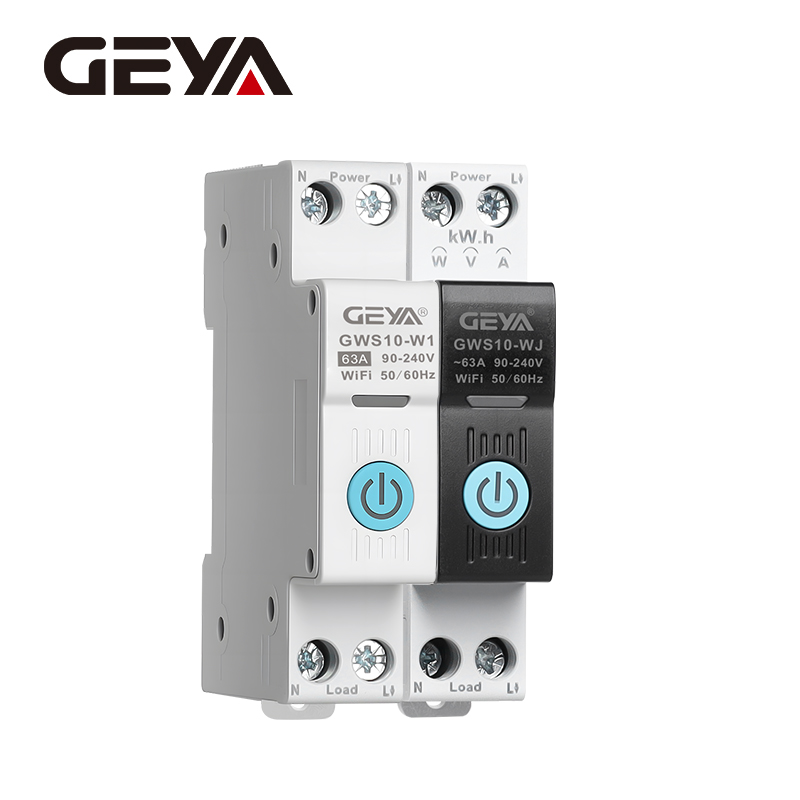
Conventional MCBs require manual mechanical reset upon tripping. The market is rapidly shifting toward smart IoT-enabled breakers (such as the GEYA GWS10 WiFi / ZigBee series) equipped with real-time power consumption metering, remote app control, and automated reclosing mechanisms for unmanned telecom base stations and smart homes.
2. Arc Fault Detection (AFDD) Combination
While standard MCBs protect against overcurrent and short circuits, they cannot detect low-amplitude series arc faults caused by degraded insulation or loose screws. Future European and IEC standards are driving the integration of microprocessors directly into MCB housings to analyze high-frequency noise profiles characteristic of arcing.
3. Eco-Friendly & Halogen-Free Materials
Global environmental mandates (RoHS and REACH) are forcing factories to eliminate cadmium from electrical contacts and brominated flame retardants from housings. Leading manufacturers are transitioning to 100% recyclable halogen-free PA66 plastics and silver-tin oxide (AgSnO2) contacts that resist material transfer and arc erosion safely.
6. Technical Sourcing Guide: How to Specify the Right AC MCB
When preparing tender documents or submitting OEM RFQs to circuit breaker factories, engineering buyers must evaluate four key technical metrics:
A. Tripping Curves (B, C, D Characteristics)
- Type B Curve: Trips between 3 In and 5 In. Ideal for purely resistive loads or long cable runs with low prospective short-circuit currents (e.g., domestic lighting, electric heaters).
- Type C Curve: Trips between 5 In and 10 In. The global standard for general inductive loads, fluorescent lighting, small motors, and commercial appliances.
- Type D Curve: Trips between 10 In and 20 In. Built for heavy inductive loads with high initial surge currents (e.g., transformers, industrial motors, UPS systems).
B. Breaking Capacity (Icn vs. Icu)
Icn (Rated Short-Circuit Capacity): The maximum short-circuit current the breaker can interrupt under IEC 60898-1 tests and still remain fully functional without losing safety performance. Standard ratings: 4.5kA, 6kA, 10kA.
Icu (Ultimate Short-Circuit Capacity): Tested under industrial standard IEC 60947-2. Indicates the extreme fault level the breaker can clear safely once without destroying surrounding panel equipment.
7. Frequently Asked Questions (B2B Procurement FAQ)
Answers to essential commercial and technical queries regarding direct sourcing from low-voltage electrical factories.
What is the typical minimum order quantity (MOQ) for factory-direct MCB orders?
For standard off-the-shelf MCBs, RCBOs, and protection relays, MOQs typically range between 10 to 50 pieces per model. For customized OEM private-label requests (involving custom color housings, brand printing, or special retail packaging), the typical MOQ is 100 to 500 pieces depending on frame size.
What is the fundamental difference between an MCB, an RCCB, and an RCBO?
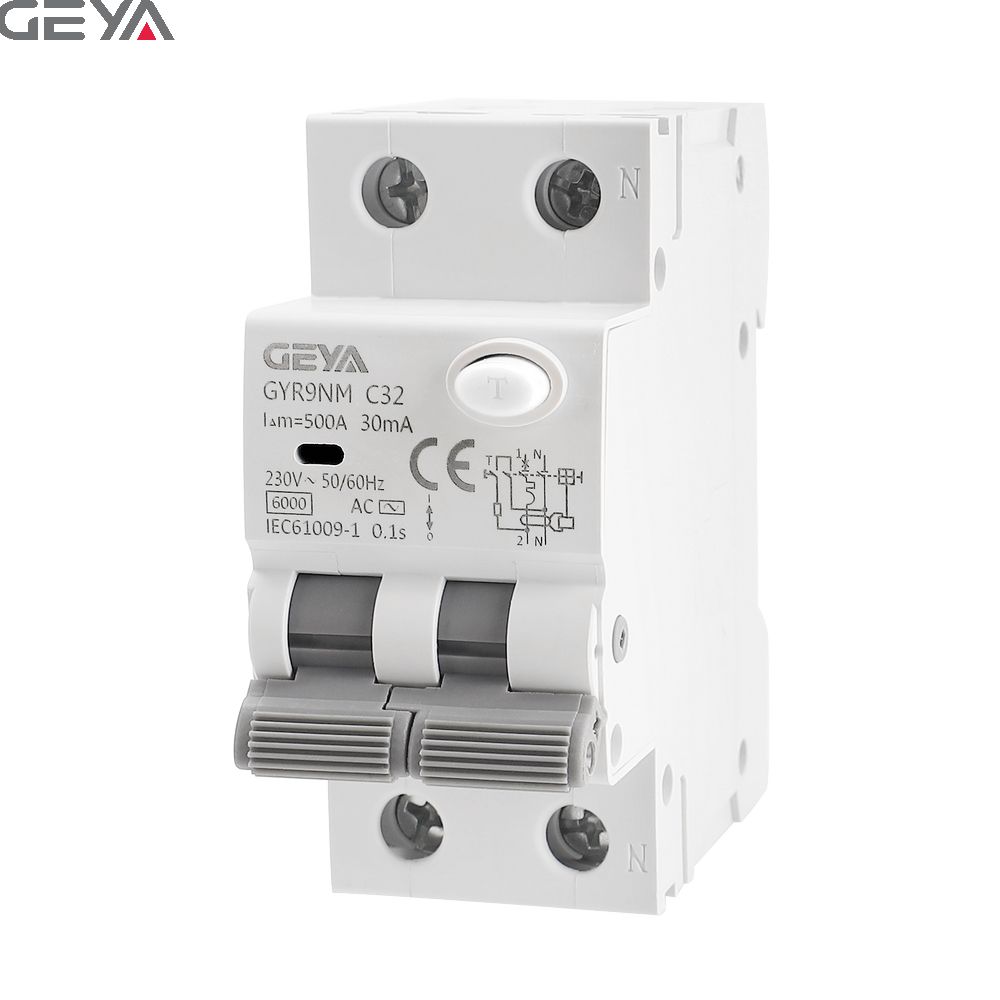
An MCB (Miniature Circuit Breaker) protects electrical wires exclusively against overcurrent (thermal overload) and short circuits. An RCCB (Residual Current Circuit Breaker) detects leakage current to earth (personal shock protection, usually 30mA) but offers no overcurrent protection. An RCBO (Residual Current Breaker with Overcurrent protection) combines both functions within a single modular DIN-rail device, providing complete shock and overload protection.
Can AC-rated Miniature Circuit Breakers be safely used in Solar PV DC circuits?
No. Standard AC MCBs must never be used in high-voltage DC PV strings. DC current lacks a natural zero-crossing point, making DC electric arcs significantly harder to extinguish. Using an AC MCB on a DC circuit can lead to sustained arcing, contact welding, and fire hazards. Solar arrays require dedicated DC-rated breakers (such as the GEYA GYM9 250VDC/1000VDC series) equipped with permanent internal magnets to blow the DC arc into the arc chute.
Which product certifications are mandatory for importing AC MCBs into Europe and Australia?
For European Union markets, products must hold a valid CE Declaration and a third-party test report conforming to IEC/EN 60898-1 (typically backed by an IECEE CB Certificate). For Australia and New Zealand, mandatory compliance requires SAA Approval and inclusion on the EESS database with RCM compliance marking.
What payment and incoterms are standard for OEM circuit breaker manufacturing?
Standard Incoterms include FOB (Ningbo/Shanghai), EXW, CFR, CIF, and DDP for direct door delivery. Accepted payment terms typically involve T/T (30% deposit upon order confirmation, 70% balance prior to shipment or against B/L copy), irrevocable L/C at sight, or trade guarantee mechanisms.
Request Factory-Direct Pricing & Technical Specifications
Partner directly with an SGS onsite-verified low-voltage manufacturer. Contact our application engineering team for product catalogs, custom OEM quotes, and certified test reports.