Featured Circuit Protection & Control Solutions
Explore our precision-engineered Earth Leakage Circuit Breakers (ELCB/RCCB/RCBO), automatic transfer switches, voltage protectors, and industrial modular relays produced in our SGS-verified manufacturing facility.

GEYA GQRR-L0.01G 2/30L Hot Gas Aerosol Automatic Heat Aerosol Fire Extinguishing Device for Distribution Cabinet

GEYA GPS6-VAWiFi 2P 63A AC220V DIN Rail WIFI Smart Reclosing Protector Adjustable Over Under Voltage Current Leakage Protection
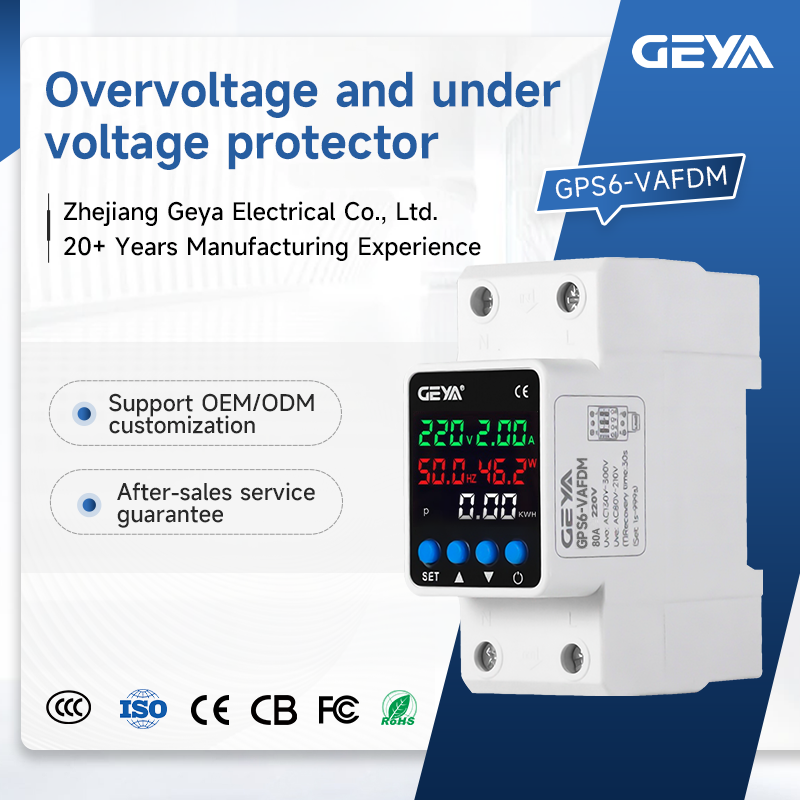
GEYA GPS6-VAFDM 2P 80A 6-in-1 Auto Reconnect Adjustable Over/Under Voltage & Current Protector with Frequency and Power Display

GEYA Custom GPS6-VA5 2P 63A AC220V 40~70Hz Auto Reconnect Adjustable Voltage Current Protector

GEYA Hot Sale GRT8-M2 16A Multi-function Modular Time Relay AC230V or AC/DC12V~240V
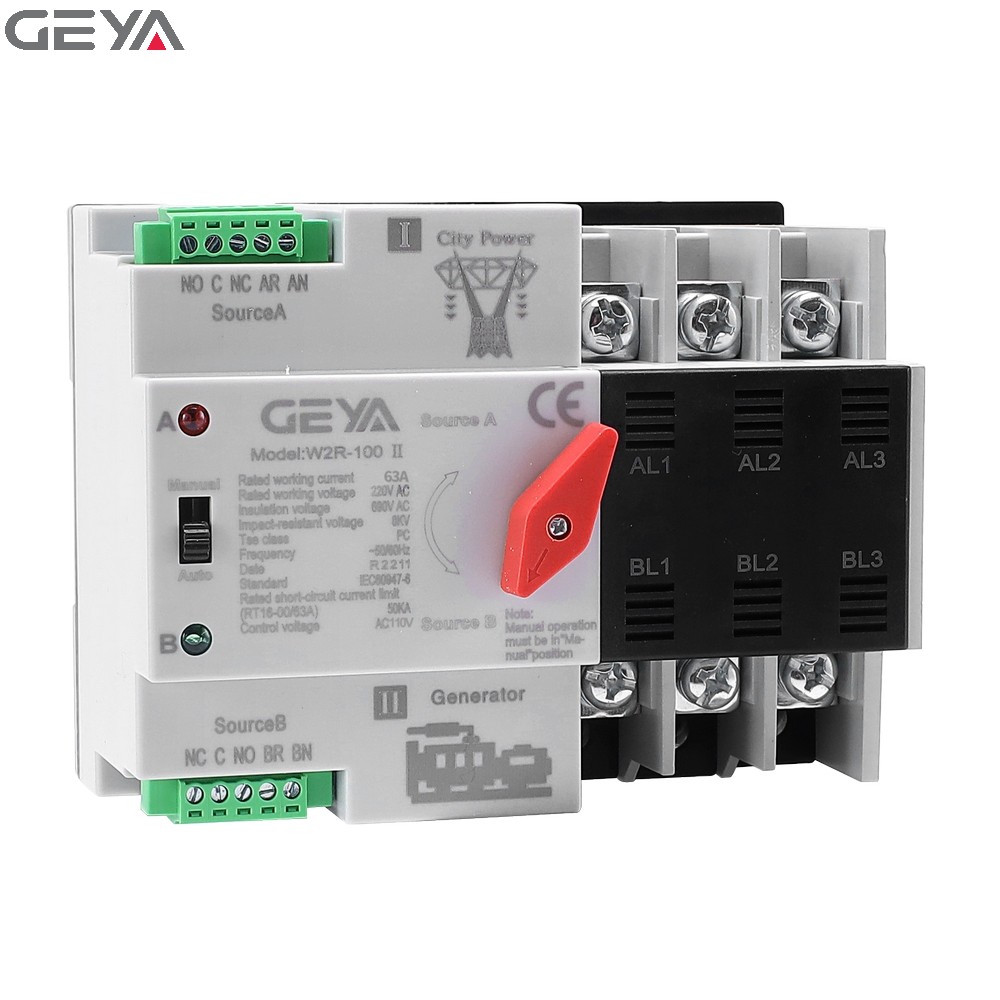
GEYA OEM ODM W2R 110V 3 Phase 63A Automatic Transfer Switch 16-100A Automatic Power Changeover Switch for Generator Controller

GEYA G2R 63A 220V/110V 2P/4P ATS Dinrail Change Over Switch 63A Smart Automat Switch Transfer 63 Amp ATS Dinrail 2 Pole
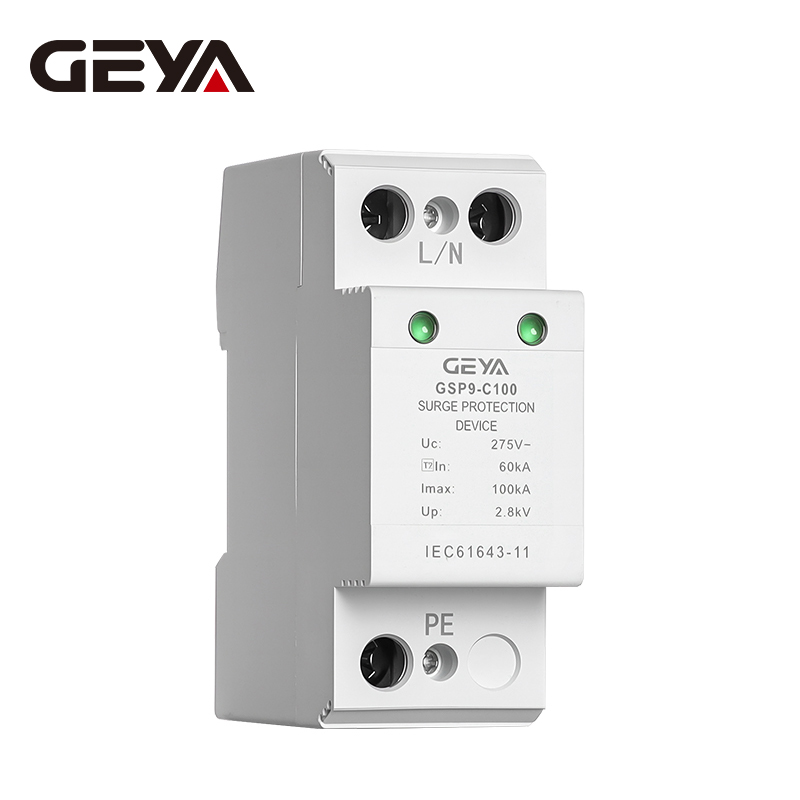
GEYA GSP9-C100 1P/2P/3P/4P 100kA Surge Protective Device 3 Poles AC SPD 275V/320V/385V420V/440V
1. Executive Summary & Market Landscape of ELCB Manufacturing
In modern low-voltage electrical distribution, thermal magnetic overcurrent protection is no longer sufficient on its own. As industrial electrification accelerates alongside the proliferation of non-linear power electronics, solar photovoltaics (PV), and Electric Vehicle (EV) charging infrastructure, residual current protection has evolved into a critical safeguard. Earth Leakage Circuit Breakers (ELCB)—which encompass contemporary Residual Current Circuit Breakers (RCCB) and Residual Current Circuit Breakers with Overcurrent Protection (RCBO)—serve as the primary defense against electrocution, insulation breakdown, and electrically induced structure fires.
For B2B procurement managers, electrical panel builders, OEM equipment manufacturers, and regional importers, navigating the global ecosystem of OEM/ODM Earth Leakage Circuit Breaker factories requires rigorous technical evaluation. The global market is transitioning rapidly from traditional Voltage-Operated ELCBs (which are obsolete under modern standards) to current-operated residual current devices governed by strict IEC/EN standards. Furthermore, regional regulatory shifts (such as the mandatory adoption of Type A and Type B residual current devices in Europe and Australia) have forced factories to redesign internal magnetic structures, zero-sequence current transformers (ZSCT), and electronic trip circuits.
2. Technical Architecture & Selection Framework for ELCB/RCCB/RCBO
Understanding the internal engineering of earth leakage protective devices is essential when specifying private-label OEM components. Earth leakage detection relies on vector summation of current phases flowing through a high-permeability toroidal core (Zero-Sequence Current Transformer). In a balanced fault-free system, the vector sum of currents equals zero. When insulation failure occurs and current leaks to earth, the net flux induces an electromotive force (EMF) in the secondary winding, driving an ultra-sensitive polarized relay to trip the mechanism within milliseconds.
2.1 Classification by Residual Current Waveform (Type AC vs. A vs. F vs. B)
OEM factories must demonstrate advanced calibration equipment to support varying waveform sensitivities. Buyers must match product lines to target end-use applications:
Type AC RCDs
Designed for purely sinusoidal alternating residual currents. Suitable for basic resistive domestic loads (incandescent lighting, standard heaters). Prohibited or restricted in several European jurisdictions due to poor response to rectified DC components.
Type A RCDs
Detects sinusoidal AC and pulsating DC residual currents. Essential for single-phase circuits powering electronic equipment with internal rectifiers, such as washing machines, computer power supplies, and induction cooktops.
Type B RCDs
The premium engineering benchmark. Detects sinusoidal AC, pulsating DC, multi-frequency AC (up to 1kHz), and smooth direct current (DC) leakage up to 6mA+. Mandatory for EV charging stations, variable frequency drives (VFDs), solar inverters, and medical equipment.
2.2 Sensitivity Spectrum & Tripping Speed Dynamics
Rated residual operating current ($I_{\Delta n}$) defines the protective application scope. OEM/ODM factories must precision-tune internal spring tensions and magnetic flux thresholds to meet standard sensitivity values:
- 10mA ($I_{\Delta n}$): High-sensitivity protection for wet environments, hydrotherapy areas, and specialized medical facilities where human skin resistance is drastically lowered.
- 30mA ($I_{\Delta n}$): International gold standard for direct-contact human shock protection. Required to trip within 300ms at $1\times I_{\Delta n}$ and under 40ms at $5\times I_{\Delta n}$ according to IEC 61008-1.
- 100mA / 300mA ($I_{\Delta n}$): Medium sensitivity dedicated to fire prevention ($I_{\Delta n} \le 300\text{mA}$ prevents arcing energy from igniting ambient materials) and indirect contact protection in TT/TN grounding systems.
- 500mA / 1000mA (Selective / Time-Delayed): Used as main distribution breaker headers (Type S) to establish logical selectivity, ensuring branch breakers trip first without blacking out entire facilities.
| Parameter / Feature | RCCB (IEC 61008-1) | RCBO (IEC 61009-1) | Smart Reclosing ELCB |
|---|---|---|---|
| Primary Function | Earth Leakage & Shock Protection | Earth Leakage + Overload + Short Circuit | Leakage Protection + IoT Auto-Reset |
| Poles Available | 2P (1P+N), 4P (3P+N) | 1P+N, 2P, 3P, 3P+N, 4P | 2P, 4P DIN Rail Modular |
| Breaking Capacity ($I_{cn}$) | N/A (Requires backup MCB/Fuse) | 4.5kA, 6kA, 10kA, 15kA | 6kA - 10kA Integrated |
| Typical Rated Current ($I_n$) | 16A, 25A, 40A, 63A, 80A, 100A, 125A | 6A, 10A, 16A, 20A, 32A, 40A, 63A | 16A, 32A, 63A, 80A, 100A (Adjustable) |
| Communication Protocols | Dry Contact Auxiliary (Optional) | Auxiliary Signal Contacts | WiFi, ZigBee, RS485 Modbus, Tuya IoT |
3. Strategic Sourcing & Future OEM/ODM Manufacturing Trends (2025–2030)
The low-voltage manufacturing industry is undergoing a structural transformation driven by decarbonization, smart building automation, and supply chain regionalization. Importers and brands looking to partner with China-based OEM/ODM Earth Leakage Circuit Breaker factories should align their product roadmaps with four major technological trends:
3.1 Acceleration of Smart IoT Earth Leakage Auto-Reclosers
Unattended infrastructure—such as 5G telecom base stations, highway surveillance systems, photovoltaic power plants, and remote cold storage units—cannot tolerate extended downtime caused by transient nuisance tripping (e.g., direct lightning surges or grid switching spikes). Advanced OEM factories are heavily investing in Smart Reclosing Earth Leakage Protectors. These devices automatically analyze circuit health post-trip; if the residual current leakage was transient, the unit safely recloses after a programmable time delay (e.g., 10s, 30s, 60s). If a permanent insulation fault is detected, the unit locks out and transmits real-time telemetry over RS485 or wireless networks to central monitoring platforms.
3.2 Mandatory Shift to Type B RCDs for Energy Transition
With global EV adoption accelerating, EV charger OEMs are legally mandated under IEC 61851-1 to incorporate residual direct current detecting devices (RCD-DD 6mA DC) or full Type B RCCBs/RCBOs. Standard Type AC or Type A breakers blind or saturates their magnetic cores in the presence of continuous DC leakage currents originating from vehicle battery chargers, rendering them inoperative during a real fault. Leading OEM factories in Yueqing have developed ultra-compact 1P+N and 2P Type B RCBOs that fit inside standard DIN-rail enclosures, offering massive commercial opportunities for private-label distributors.
3.3 Material Engineering: Flame Retardancy & Contact Metallurgy
Information Gain research proves that circuit breaker reliability is directly bound to housing raw materials and contact tip composition. Leading factories are abandoning low-cost recycled ABS/PC plastics in favor of high-grade virgin **Polyamide 66 (PA66)** reinforced with glass fiber, yielding UL94 V-0 flame-retardant ratings and glow-wire ignition capability up to 960°C. Furthermore, electrical contacts utilize **Silver Cadmium Oxide (AgCdO)** or environmental **Silver Tin Oxide (AgSnO2)** alloys to withstand severe electrical arc erosion during short-circuit interruptions without welding shut.
4. OEM/ODM Earth Leakage Circuit Breaker Factory Evaluation Criteria
Selecting an OEM supplier in key industrial hubs such as Yueqing, Wenzhou (China’s Electrical Capital) requires evaluating verifiable manufacturing controls rather than relying solely on promotional literature. B2B buyers must audit four technical dimensions during factory assessments:
Factory Verification Checklist for B2B Procurement Teams
- Automated ZSCT Winding & Calibration: Inspect whether the factory uses automated toroidal core winding machines and computer-controlled magnetic permeability testers. Manual winding introduces micro-variations that lead to asymmetrical magnetic fields and false tripping.
- Tripping Curve 100% Automated Testing: Reputable plants employ inline automated test benches that measure trip times across $0.5I_{\Delta n}$, $1I_{\Delta n}$, $2I_{\Delta n}$, and $5I_{\Delta n}$ with calibrated microsecond timers. A full test report should be stored in the factory's MES (Manufacturing Execution System) for lot traceability.
- Short-Circuit Testing & Calibration Rigs: Verify that the factory conducts surge withstand ($8/20\mu s$ pulse) and short-circuit capability validations according to IEC 61008/61009 parameters.
- Third-Party Accreditation & SGS Onsite Audits: Ensure the factory holds ISO 9001 quality management system certification and verified third-party site assessment reports from recognized testing houses such as SGS, TÜV, or Intertek. Certificate copies for CE, CB, SAA, and UL must explicitly list the exact factory model numbers requested.
5. Enterprise Profile & OEM/ODM Advantages: Zhejiang Henergy Electrical Co., Ltd.
Founded in February 2007, Zhejiang Henergy Electrical Co., Ltd. (operating under the global industrial brand Henergy) is an SGS onsite-verified manufacturer headquartered in Daqiao Industrial Zone, Beibaixiang Town, Yueqing, Wenzhou, Zhejiang, China. Spanning over 5,000–10,000 square meters of modern manufacturing space, Henergy has spent nearly two decades specializing in low-voltage circuit protection, power switching, and automation components.
Our product portfolio encompasses over 400 models across 5 core product series: Miniature Circuit Breakers (MCB), Residual Current Devices (RCCB/RCBO), DC Solar Circuit Breakers, Automatic Transfer Switches (ATS), Adjustable Voltage & Current Protectors, and Modular Time Relays. With 81% to 90% of total output exported worldwide, Henergy serves buyers across Western Europe, South Asia, the Middle East, Southeast Asia, South America, and Oceania.
Why Global Importers Partner with Henergy:
- Direct Factory Manufacturing & Control: Complete in-house production lines—including metal stamping, mold injection, automated PCB assembly, coil winding, calibration, and final packaging—eliminating intermediary markups and quality leaks.
- Rigorous 3-Stage Quality Control: Every batch undergoes incoming raw material inspection, automated in-process calibration via 9 specialized testing instruments, and 100% finished-goods electrical safety testing prior to shipment.
- Comprehensive International Compliance: ISO 9001 management certified. Our products maintain authentic CE, CB, SAA, UL, VDE, and CCEE certifications matching target export markets.
- Extensive OEM/ODM Experience: Over 12 years of private-label manufacturing experience. We offer complete custom branding, custom housing colorways, front-panel laser printing, tailored sensitivity calibration, and customized retail or industrial packaging.
- High Market Reputation: Verified by SGS Group on-site. Consistently ranked among the top-selling factory suppliers for Miniature Circuit Breakers (#2), Automatic Transfer Switches (#3), and Relays (#3) on major B2B export platforms, maintaining a 4.8/5 aggregate customer satisfaction rating.
6. Frequently Asked Questions (FAQ) for B2B Sourcing & Technical Engineering
What is the technical difference between an ELCB, an RCCB, and an RCBO?
ELCB (Earth Leakage Circuit Breaker) is an older broad term originally used for voltage-operated leakage breakers. Modern electrical codes have replaced voltage ELCBs with current-operated devices. RCCB (Residual Current Circuit Breaker) senses residual earth leakage current only and does not provide thermal overload or short-circuit protection; it must be paired with an upstream or downstream MCB. RCBO (Residual Current Breaker with Overcurrent) combines earth leakage protection, overload protection, and short-circuit protection inside a single modular DIN-rail housing, saving distribution board space.
What is the Minimum Order Quantity (MOQ) for OEM/ODM private label orders?
Standard factory-direct products start at 10 to 20 pieces per model. For custom OEM private-label branding (including customized front printing, custom logo boxes, and specialized user manuals), MOQs typically start at 100 to 500 units depending on the model complexity. Custom housing colors or tailored trip curves are quoted individually based on tooling requirements.
When should Type B RCCBs/RCBOs be specified instead of Type A?
Type B RCDs must be specified whenever equipment can generate smooth DC residual currents or high-frequency AC leakage above 50/60Hz. Key applications include EV charging stations (IEC 61851-1), solar PV three-phase inverters, variable frequency drives (VFDs) in HVAC and industrial automation, UPS systems, and X-ray medical equipment. Standard Type A RCDs can become saturated by DC currents greater than 6mA, causing them to fail during an earth fault.
How do Henergy ELCB factories prevent nuisance tripping caused by grid switching or lightning surges?
Henergy integrates surge-immune transient filtering networks inside residual current trip circuits. By incorporating metal oxide varistors (MOVs) and capacitive delay circuits, our breakers withstand standard $8/20\mu s$ surge impulses up to 3000A without false tripping, while preserving high-speed millisecond disconnection during true human shock or insulation breakdown events.
Which international standards do your Earth Leakage Circuit Breakers conform to?
Our residual current protective devices are engineered and tested in full compliance with IEC/EN 61008-1 (for RCCBs), IEC/EN 61009-1 (for RCBOs), and IEC 62423 (for Type F and Type B RCDs). Low-voltage components for North American and Australian markets adhere to relevant UL and SAA standards respectively.
Can Henergy supply test certificates and lot inspection documentation with orders?
Yes. Every shipment includes factory batch inspection certificates. Upon request during RFQ submission, we provide full official test reports and certificate copies (CE, CB, SAA, ISO 9001) matching your specific order model numbers for seamless customs clearance and local utility approval.
What delivery Incoterms and payment terms are supported for global trade?
We support standard international commerce terms including FOB, CFR, CIF, EXW, FCA, CPT, CIP, and DDP/DDU. Payment options include T/T (Telegraphic Transfer), L/C (Letter of Credit at sight), D/P, D/A, PayPal, Western Union, and Credit Card in major currencies including USD, EUR, GBP, AUD, CAD, JPY, and CNY.
Partner with a Certified OEM/ODM ELCB Factory
Looking to expand your brand's low-voltage circuit protection catalog or source high-reliability RCCB/RCBO components directly from an SGS-verified manufacturer? Contact our engineering and export team today for technical datasheets, full compliance certificates, and factory-direct pricing.