Custom OEM Solar & Power Protection Solutions
High-reliability low-voltage electrical protection components, verified by SGS and certified under CE, CB, SAA, and ISO 9001 standards.
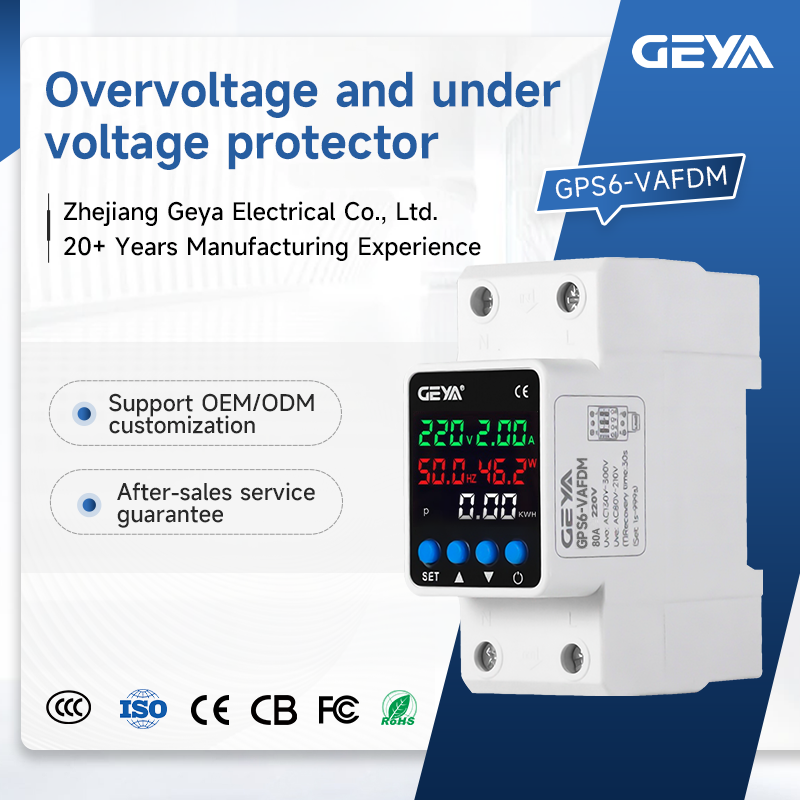


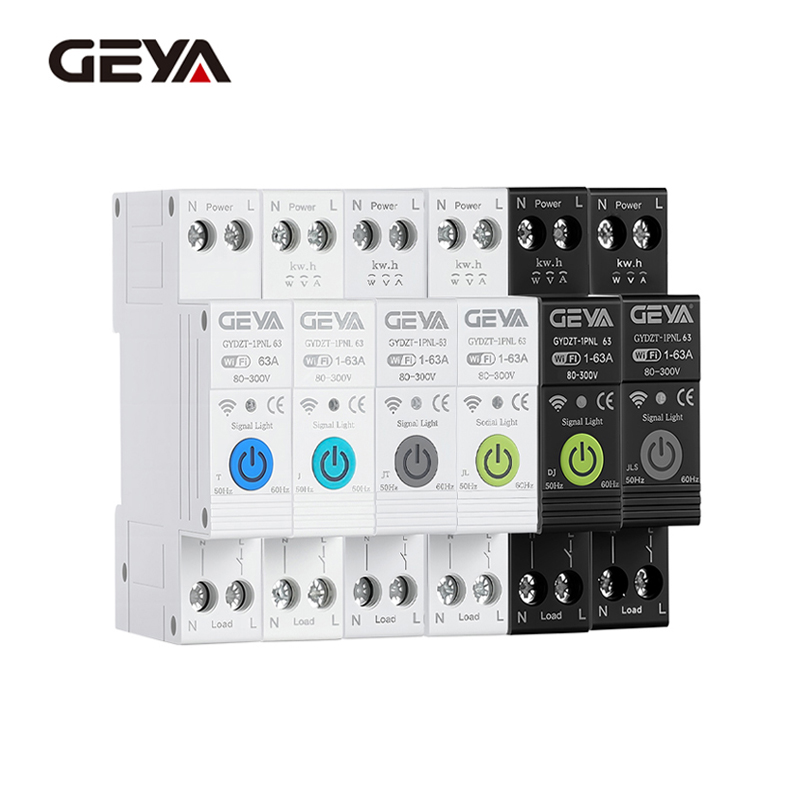
OEM Solar Circuit Breaker Design & Manufacturing Whitepaper
As the global renewable energy transition accelerates toward higher operating voltages—moving from 1000V DC to 1500V DC architecture in commercial, utility, and residential photovoltaic (PV) arrays—the engineering requirements for solar circuit protection devices have undergone a fundamental shift. Standard Alternating Current (AC) miniature circuit breakers (MCBs) cannot safely interrupt Direct Current (DC) arcs due to the absence of natural voltage zero-crossing points. Selecting a qualified custom OEM solar circuit breaker manufacturer is a mission-critical objective for PV inverter manufacturers, solar distribution box builders, and commercial EPC contractors worldwide.
Core Engineering Insight: Direct Current (DC) arcs maintain continuous ionization without periodic zero-voltage crossings. Solar circuit breakers require specialized permanent-magnet arc blowout systems, extended arc chute geometry, and silver-tin-oxide (AgSnO2) contacts to reliably extinguish 250V DC to 1500V DC faults under 100% full-load continuous duty.
Physics of High-Voltage DC Arc Extinguishing Technologies
In standard low-voltage electrical protection, interrupting an AC fault relies on the natural sine wave crossing zero twice per cycle (50Hz/60Hz), allowing thermal de-ionization of the arc gap. DC PV strings, powered by constant solar irradiance or lithium battery energy storage systems (BESS), generate unrelenting electric arcs when contacts split under load. Our custom OEM DC MCB and MCCB series integrate three core physics-driven features to ensure rapid arc interruption:
Permanent Magnet Arc Blowout
Strategically positioned neodymium permanent magnets create a transverse Lorentz magnetic field. Upon contact separation, the magnetic force propels the ionized DC arc sideways into the arc quenching chamber at velocities exceeding 30 m/s.
Multi-Split De-ion Arc Chutes
Equipped with up to 13 nickel-plated steel splitter plates. The high-voltage arc is divided into dozens of short series arcs, rapidly cooling the plasma medium and raising the total arc voltage above the system operating voltage.
AgSnO2 Contact Material Matrix
We utilize silver-tin-oxide (AgSnO2) contact tips instead of traditional AgCdO. AgSnO2 offers exceptional anti-welding properties under high short-circuit inrush currents and resists thermal erosion during repeated DC interruptions.
Standards & Regulatory Compliance Matrix for Global OEM Sourcing
Custom OEM solar circuit breakers must satisfy distinct international standard frameworks depending on the targeted geographical market. Sourcing non-compliant breakers risks catastrophic thermal runaway, field failure liability, and customs impoundment. As an SGS onsite-verified manufacturer, Zhejiang Henergy Electrical Co., Ltd. ensures full compliance with international standards:
| Target Region | Standard Standard | Product Scope | Mandatory OEM Certifications |
|---|---|---|---|
| European Union & Global | IEC / EN 60947-2 | Industrial DC Breakers / Photovoltaic Switches | CE, CB Test Certificate, RoHS, REACH |
| Residential Europe | IEC / EN 60898-2 | AC/DC Miniature Circuit Breakers (MCB) | CE, CB, VDE (Select Models) |
| Australia & New Zealand | AS/NZS IEC 60947.2 / AS 60947.3 | Solar PV DC Isolators & String MCBs | SAA Certification, RCM Mark |
| North America | UL 489B / UL 1077 | Photovoltaic Disconnect & Supplementary Protection | UL Recognized Component / Listed |
Thermal-Magnetic Trip Calibration under Extreme Environmental Conditions
Photovoltaic combiner boxes and string inverters are installed outdoors in harsh climate zones, subject to internal enclosure temperatures ranging from -40°C in arctic winters to +85°C inside direct-sun ambient boxes. Traditional circuit breakers experience premature thermal nuisance tripping when subjected to high ambient heat due to the deflection of the bimetallic strip.
Our OEM custom engineering service offers ambient temperature compensation calibration. By modifying the physical thickness, thermal resistance, and mechanical tension of the bimetallic element, Henergy delivers solar circuit breakers calibrated to hold 100% rated continuous current (In) at specified reference temperatures (e.g., +50°C or +60°C) without un-triggered thermal tripping.
Future Sourcing & Tech Trends in Solar Protection (2025–2030)
The low-voltage solar protection market is evolving rapidly. Procurement managers, system integrators, and electrical brands must align their OEM roadmaps with key emerging technology trends to preserve long-term commercial competitiveness.
1. Smart IoT-Enabled Circuit Breakers
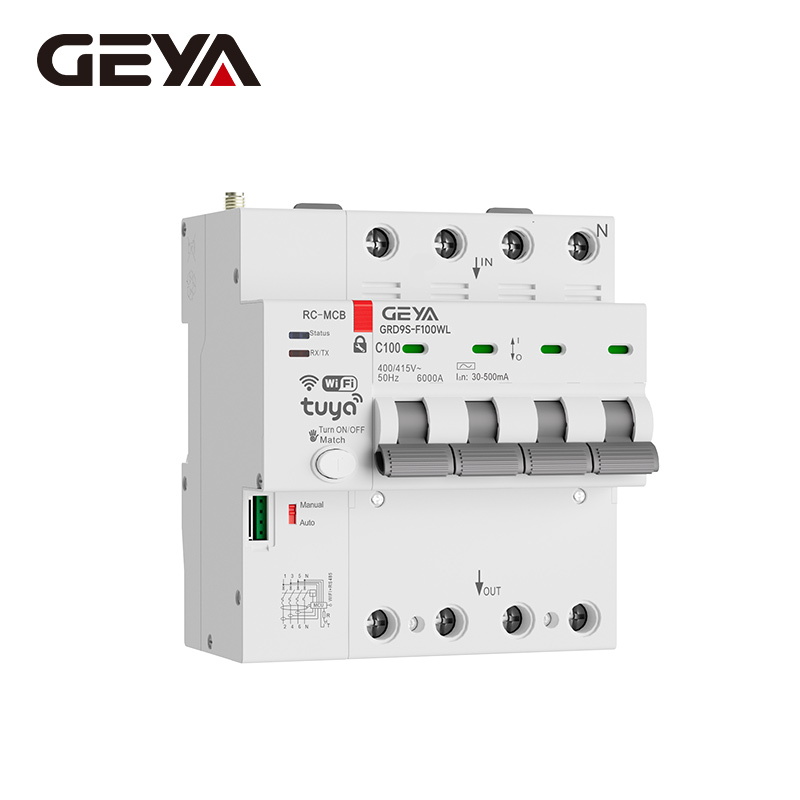
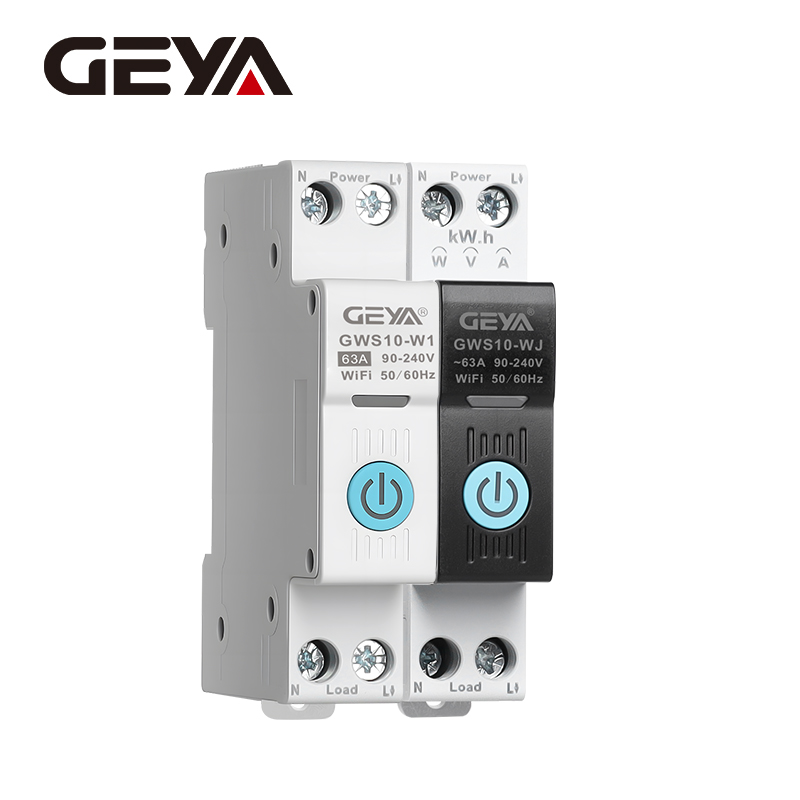
Integration of Tuya WiFi, ZigBee, and RS485 Modbus communications directly inside DIN-rail MCBs. These devices allow real-time power monitoring, remote trip reset, leakage telemetry, and predictive maintenance for unmanned remote solar installations.
2. High-Capacity BESS & Hybrid Storage
As battery energy storage systems (BESS) drop in cost, DC breakers must withstand bidirectional fault currents with extreme short-circuit breaking capacities (Icu up to 25kA at 1000V DC), preventing thermal damage during battery thermal runaway events.
3. Eco-Friendly & Fire Aerosol Safety
Modern distribution boxes are integrating micro hot-gas aerosol fire extinguishing devices alongside breakers (such as our GEYA GQRR series) combined with V0 flame-retardant, halogen-free PA66-GF30 polymer housings for absolute safety.
Why Partner with Zhejiang Henergy Electrical Co., Ltd.
Founded in February 2007 in Yueqing, Wenzhou—the globally recognized capital of China's low-voltage electrical apparatus industry—Zhejiang Henergy Electrical Co., Ltd. operates a modernized 5,000–10,000 m² factory equipped with 10+ automated assembly and calibration lines. Verified onsite by SGS Group, we export 81%–90% of our production output to over 60 countries across Europe, South America, the Middle East, and Southeast Asia.
SGS Onsite Verified
Factory premises, manufacturing capacity, and legal compliance independently audited on-site by SGS Group, ensuring absolute transparency for global procurement.
Full OEM Customization
Custom pad-printed logo, custom rated currents (1A to 125A), tailored voltage ratings (12V to 1500V DC), custom trip curves (B, C, D, K, Z), and branded retail box packaging.
100% Quality Testing
Three-stage quality control system: raw material spectral testing, 100% full-load tripping calibration on 9 automatic test rigs, and post-assembly dielectric withstand testing.
Flexible Incoterms & Logistics
We accept FOB, CFR, CIF, EXW, FCA, DDP, and DDU terms with payment options via T/T, L/C, PayPal, or Credit Card across 9 major international currencies.
Frequently Asked Sourcing & Technical Questions (FAQ)
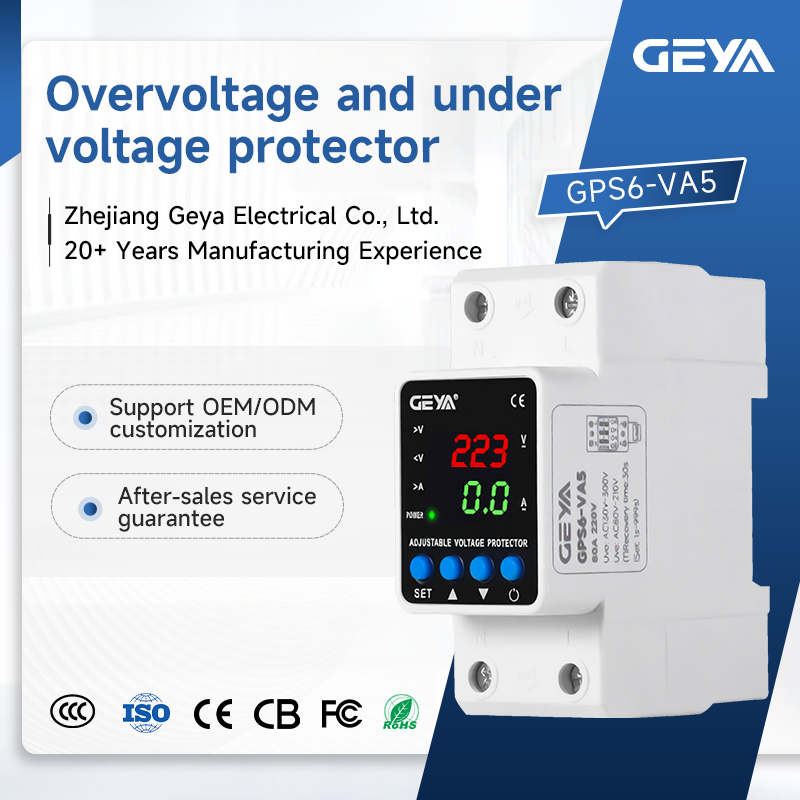
For standard models (e.g., standard DIN-rail MCBs, voltage protectors, and ATS switches), our standard factory MOQ starts at just 10 to 50 pieces per model. For private-label OEM orders involving customized logo printing, unique color housings, or bespoke branded boxes, MOQ typically starts at 100 to 500 pieces depending on customization depth.
No. Standard AC circuit breakers rely on natural zero-voltage sine wave crossings to extinguish electrical arcs. DC current does not have zero-voltage points. Attempting to use AC breakers in DC solar applications will result in sustained internal arc discharge, terminal melting, and severe fire risk. Specialized DC MCBs equipped with arc blowout magnets and extended arc chutes (such as the GEYA GYM9 DC series) are required.
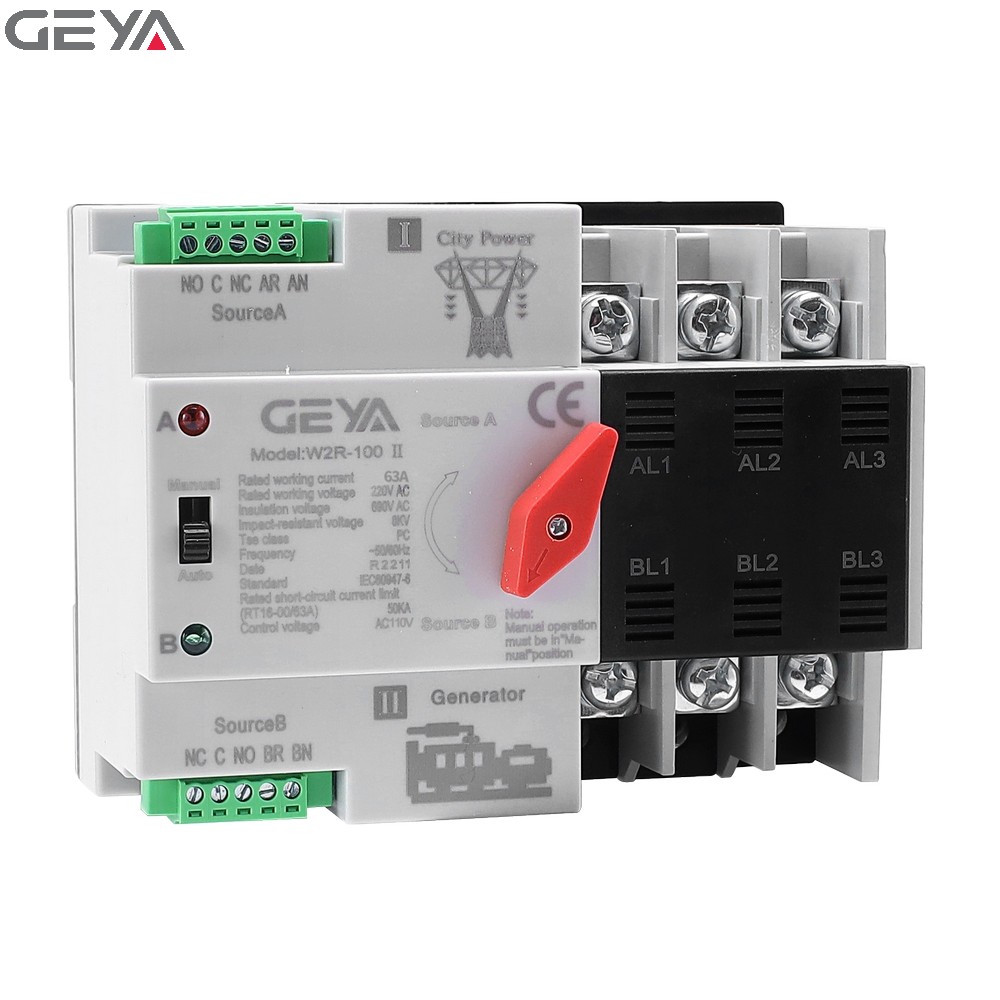
First, identify the system phase configuration: 2-Pole (2P) for single-phase systems switching Line and Neutral, or 4-Pole (4P) for three-phase systems requiring neutral switching. Second, calculate the maximum continuous load current and select an ATS rated at no less than 125% of that continuous load. For grid-to-generator or solar inverter-to-grid switching, ensure the ATS transfer time (e.g., < 50ms) aligns with sensitive electronics requirements.
An MCB (Miniature Circuit Breaker) provides thermal-magnetic protection against cable overload and short circuits. An RCCB (Residual Current Circuit Breaker) detects ground leakage currents (e.g., 30mA for human safety) but offers zero protection against overcurrent. An RCBO combines both functions into a single DIN-rail module, providing overcurrent, short-circuit, and earth leakage protection simultaneously.
Zhejiang Henergy Electrical Co., Ltd. holds ISO 9001 quality management system certification. Depending on product lines, our items feature CE, CB (IECEE scheme), SAA (Australia/New Zealand), UL, and VDE approvals. Full certificate copies, factory audit reports from SGS, and test reports are provided alongside official proforma invoices.
Standard sample orders and small batches ship within 3 to 7 business days. Full container load (FCL) or high-volume OEM orders (10,000+ units) typically require 15 to 25 calendar days for production, quality inspection, and packaging.
Accelerate Your Electrical Sourcing with Factory Direct OEM Solutions
Connect with our engineering and trade support team today. Request customized technical datasheets, full certification copies, and competitive wholesale volume quotations.