Featured Industrial Electrical & ATS Catalog
Direct factory supply from Yueqing electrical cluster. Fully certified CB, CE, SAA, and ISO 9001 compliant low-voltage transfer switches, surge arresters, smart MCBs, and protection relays.



Manufacturing Scale & Global Trade Footprint
Headquartered in Daqiao Industrial Zone, Beibaixiang Town, Yueqing, Wenzhou (Zhejiang, China), Zhejiang Henergy Electrical Co., Ltd. operates state-of-the-art production lines certified for international standard compliance.
SGS Onsite Audited Factory
Verified independently by SGS Group. Our manufacturing workshops, incoming material controls, assembly precision, and dielectric withstand testing facilities satisfy rigorous OEM/ODM buyer requirements.
Rapid Switching & Arc Control
Engineered for seamless power transition between municipal grid and standby generator sets. High contact pressure and silver-alloy contact tips ensure minimal contact resistance and long mechanical lifespans.
Global Regulatory Approvals
Fully certified under ISO 9001 quality management systems. Product series carry CB Scheme test reports, CE marking, SAA Australia safety certificates, UL, VDE, and CCEE compliance documentation.
White Paper: Engineering Standards & Sourcing Automatic Transfer Switches from China
In modern industrial, commercial, and residential electrical distribution infrastructure, power continuity is no longer optional—it is a critical operational baseline. An Automatic Transfer Switch (ATS) acts as the primary safety mechanism that monitors main power utility feeds and automatically shifts electrical loads to a secondary emergency power source (such as a diesel generator set, solar PV energy storage system, or secondary grid feeder) whenever a voltage drop, phase loss, or power outage occurs.
As the global market for low-voltage switchgear expands rapidly—driven by renewable microgrid integration, data center resilience requirements, and remote telecom tower stability—sourcing ATS units directly from qualified China Wholesale Automatic Transfer Switch Factories provides electrical importers, brand distributors, and panel builders with significant cost-performance advantages.
Core Technical Takeaway for B2B Procurement Officers
Selecting the right ATS requires balancing IEC 60947-6-1 product classification (PC Class vs. CB Class), transfer time requirements (milliseconds vs. cycle speed), contact metallurgy (AgCdO vs. AgSnO2), and short-circuit withstand rating ($I_{cw}$). Sourcing directly from Yueqing-based direct manufacturers ensures strict adherence to electrical creepage distances and flame-retardant V0-rated polybutylene terephthalate (PBT) enclosures.
1. Technical Classification: Understanding PC-Class vs. CB-Class ATS Architecture
When reviewing product catalogues from China ATS manufacturers, enterprise buyers must differentiate between the two fundamental switch architectures defined under IEC 60947-6-1 (Low-voltage switchgear and controlgear - Multiple function equipment - Transfer switching equipment):
- PC Class ATS (Pure Switching / Solenoid or Motor Driven): Capable of making and breaking short-circuit currents, but does not provide overcurrent/short-circuit tripping protection for downstream circuits. PC Class switches feature high short-time withstand current ($I_{cw}$) capabilities, zero mechanical latch fatigue, and exceptional switching reliability. They are widely specified in critical infrastructure, medical centers, and hybrid solar storage systems where dedicated circuit breakers handle overcurrent protection separately.
- CB Class ATS (Integrated Circuit Breaker Protection): Equipped with overcurrent release mechanisms. A CB-Class transfer switch consists of two interconnected miniature circuit breakers (MCBs) or molded case circuit breakers (MCCBs) linked through a motorized mechanical interlock mechanism. While providing integrated short-circuit protection, CB-Class switches carry a lower short-time withstand rating compared to PC-Class switches of equivalent ampacity due to internal trip thermal elements.
- CC Class ATS (Contactor Architecture): Built using mechanically interlocked AC contactors. Typically utilized in motor control centers and industrial automation setups where frequent switching operations are expected under AC-33A or AC-33B utilization categories.
| Switching Criteria | PC-Class ATS (Solenoid Drive) | CB-Class ATS (Interlocked Breaker) | CC-Class ATS (Contactor Based) |
|---|---|---|---|
| Primary Purpose | High-speed, high-reliability power transfer | Combined transfer and overload protection | Frequent load switching & motor control |
| Transfer Speed ($t_{s}$) | Ultra-Fast (< 8ms to 30ms) | Standard (50ms to 150ms) | Fast (15ms to 40ms) |
| Short-Time Withstand ($I_{cw}$) | Very High (up to 12kA / 1s) | Limited by Breaker Trip Rating | Moderate (Requires external fuse/MCB) |
| Mechanical Endurance | Up to 10,000 Operations | 4,000 - 6,000 Operations | 100,000+ Operations |
| Primary Application | Data centers, Solar Hybrid, Generators | Residential Panels, Distribution Boxes | Industrial Automation, Pump Controls |
2. Engineering Deep-Dive: Rated Short-Circuit Making ($I_{cm}$) and Transfer Time Dynamics
To evaluate the reliability of a China factory ATS, engineering teams analyze two critical operational metrics during switchgear prototyping:
Transfer Time ($t_{transfer}$): The interval from the disconnection of the main power source (Source A) to the full closure of the alternative power source (Source B). For sensitive electronics and server power supplies (UPS setups), transfer delays exceeding 16 milliseconds can cause equipment power cycling or rebooting. Modern DIN rail dual power ATS units manufactured by leaders like Zhejiang Henergy Electrical employ high-speed double-throw solenoid mechanisms capable of achieving sub-15ms transfer times, preventing IT service interruption.
Contact Arc Extinction & Metallurgy: During high-current switching under heavy inductive loads (such as HVAC compressors or industrial motors), electrical arcs generate severe localized thermal stress exceeding 3,000°C. Quality China wholesale exporters utilize silver-tin oxide ($AgSnO_2$) contact points rather than cheap copper plating. $AgSnO_2$ offers superior anti-welding properties, low material transfer under arc erosion, and environmental compliance with EU RoHS directive standards.
Future Sourcing & Technology Trends in ATS Manufacturing (2025–2030)
As global grid networks shift toward decentralized energy resources (DERs), the requirements for low-voltage automatic transfer switches are evolving rapidly. B2B importers and private-label buyers should align their procurement strategies with four key technical trends currently reshaping Chinese manufacturing lines:
Solar PV & Hybrid Storage Integration
Modern DIN rail ATS units are increasingly designed with dedicated signal lines for hybrid solar inverters. Switches automatically prioritize solar/battery power (DC to AC) during daylight hours, shifting back to the municipal grid only when battery depth-of-discharge (DoD) limits are reached.
Smart IoT Monitoring & Modbus Protocols
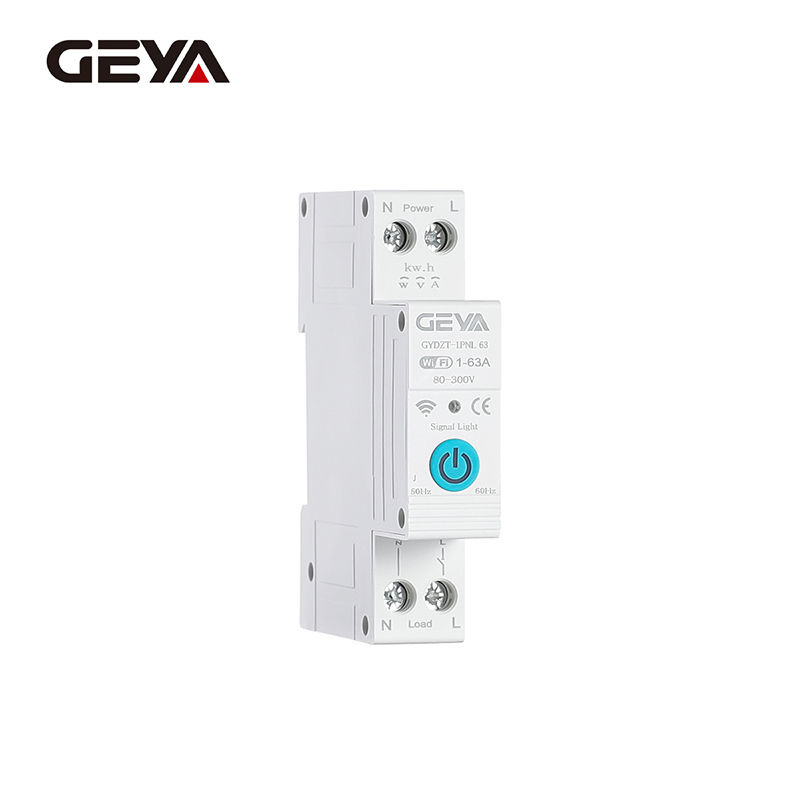
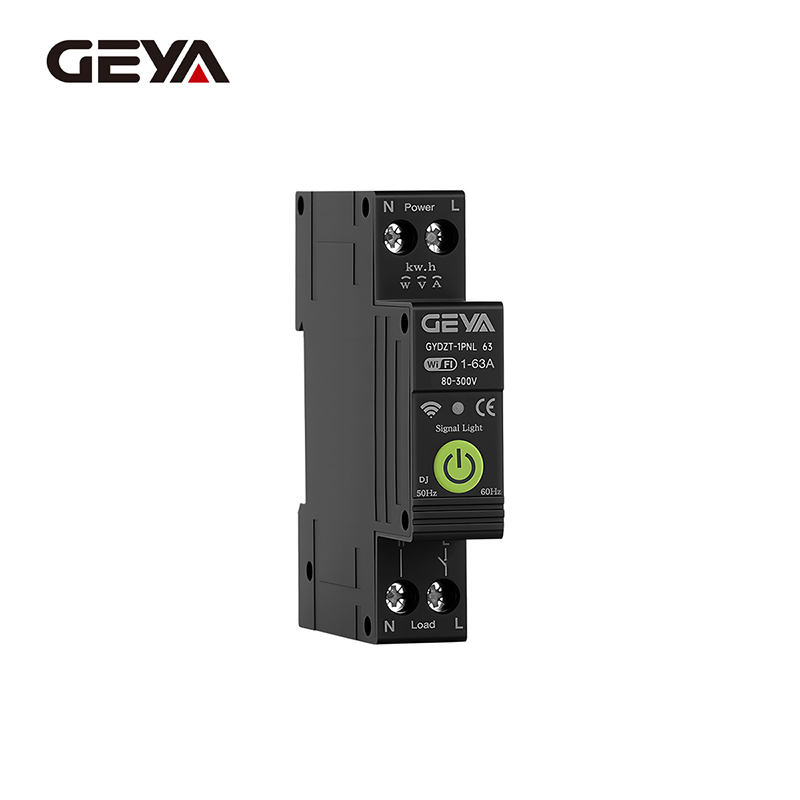
Integrating Wi-Fi (Tuya / Smart Life apps), Zigbee, and RS485 Modbus RTU connectivity directly into DIN-rail MCBs and ATS modules allows commercial facility managers to monitor voltage levels, power consumption (kWh), and remote manual switching from centralized dashboards.
Phase Loss & Voltage Protection Fusion
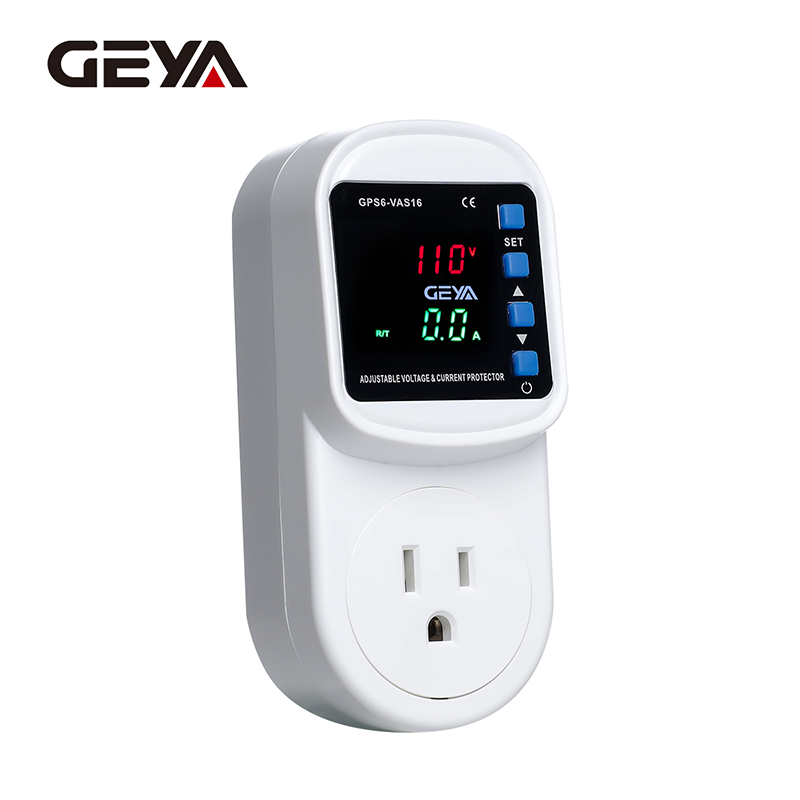
Next-generation ATS modules feature integrated digital displays and microcontrollers that combine automatic transfer switching with adjustable over-voltage, under-voltage, and phase-asymmetry protection, eliminating the need for separate voltage monitoring relays.
3. Quality Assurance Checklist: How to Audit a China ATS Manufacturer
When selecting an OEM/ODM supplier in Yueqing or broader Wenzhou electrical clusters, international buyers should insist on reviewing the following quality compliance parameters prior to issuing a purchase order:
- Temperature Rise Test Reports: Confirm that under 100% rated continuous current ($I_n$), the terminal temperature rise does not exceed 60K (in accordance with IEC 60947-1). Low-quality copper-clad aluminum (CCA) terminals lead to severe thermal deformation under load.
- Dielectric Withstand Voltage Verification: Ensure every unit passes factory hipot testing at 2,000V AC for 1 minute between main poles and control circuits.
- Flammability Class of Polymeric Housing: Flame retardancy must meet UL94-V0 standards to prevent fire propagation within distribution cabinets.
- Third-Party Certification Authenticity: Verify CB Scheme certificates (via IECEE database) and SAA certificates (for Australia/NZ markets) directly against the exporter's registered legal entity name.
Frequently Asked Questions (B2B Buyer FAQ)
Essential procurement, technical specification, and order customization guidance for distributors and OEM engineering partners.
What is the Minimum Order Quantity (MOQ) for wholesale ATS and relay orders?
For standard production models (such as 2P/4P 63A DIN Rail ATS, modular time delay relays, and digital voltage protectors), our standard MOQ starts at 10 to 20 pieces per item code. Specialized DC solar circuit breakers start at 50 pieces, while customized Smart Wi-Fi DIN rail switches carry a baseline MOQ of 100 pieces. Private-label OEM packaging orders are quoted individually based on custom laser marking and artwork design parameters.
How do I select between 2P, 3P, and 4P Automatic Transfer Switches?
Selection depends on your power system wiring configuration. Use 2P ATS for single-phase (Live + Neutral) residential or commercial backup circuits. Specify 4P ATS for three-phase four-wire systems where neutral line switching is mandatory to prevent stray ground currents or isolation faults during generator operation. Use 3P ATS in three-phase three-wire industrial motor networks where neutral connections are omitted.
What OEM and ODM customization services does your factory provide?
Supported by over 12 years of dedicated OEM manufacturing experience for global electrical brands, we offer end-to-end customization: custom rated current branding, corporate logo laser engraving, specialized housing colors, bespoke instruction manual translations, custom outer carton packaging, and hardware circuit tuning (such as adjusting control voltage tolerances for regions with unstable power grids).
What is the difference between an MCB, RCCB, and RCBO in distribution box design?
An MCB (Miniature Circuit Breaker) protects electrical cables purely against thermal overload and high-current short circuits. An RCCB (Residual Current Circuit Breaker) monitors current imbalance to protect human operators from earth leakage shocks (e.g., 30mA threshold), but contains no overcurrent trip mechanism. An RCBO combines both functionalities (overload, short circuit, and earth leakage protection) into a single compact DIN-rail enclosure, delivering comprehensive circuit safety.
Which International Incoterms and Payment terms are accepted for export shipments?
We accommodate a wide array of global trade terms including FOB (Ningbo/Shanghai), CFR, CIF, EXW, FCA, CPT, CIP, and DDP (Delivered Duty Paid for select regions). Accepted payment methods include T/T (Telegraphic Transfer), Irrevocable L/C at sight, D/P, PayPal, and Western Union in major currencies including USD, EUR, GBP, AUD, and CNY.