Featured Low-Voltage Protection Products
Explore our flagship product lines manufactured directly in Yueqing, Wenzhou. Designed to international standards (IEC/EN 60898-1, IEC 60947-2) for global B2B electrical distributors and system integrators.

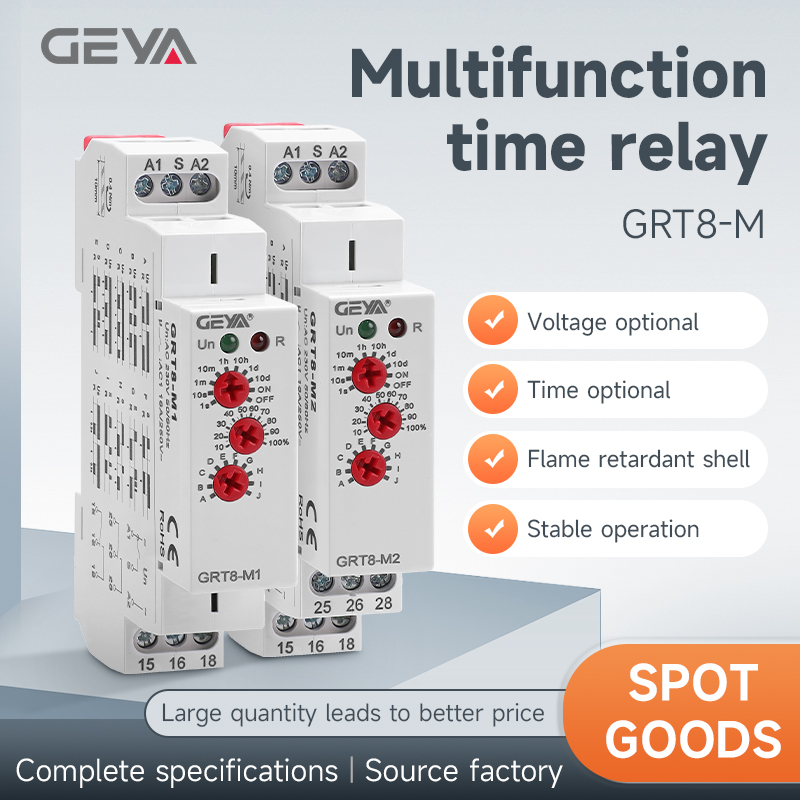
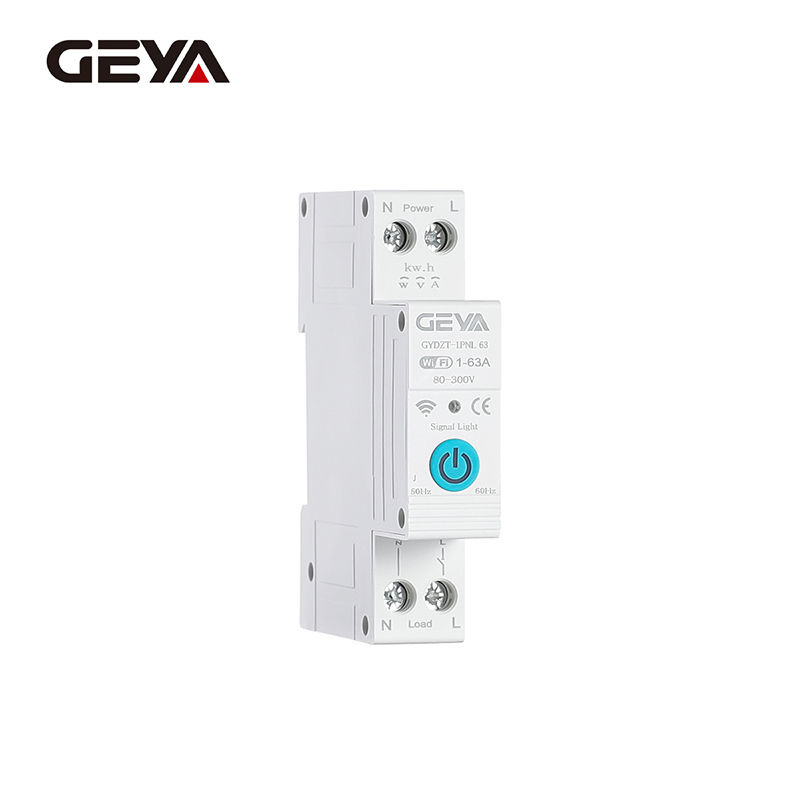


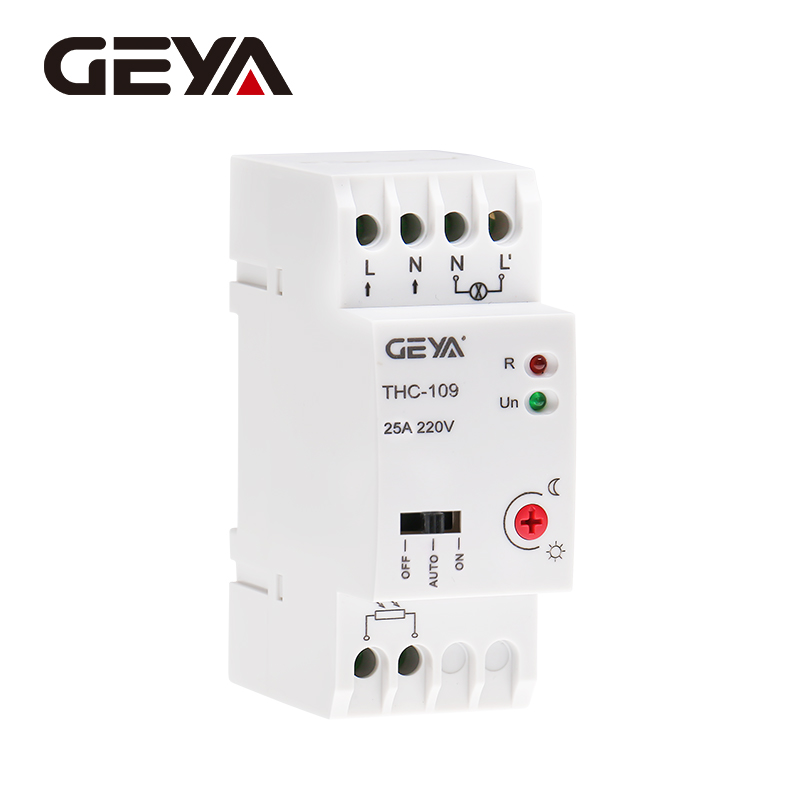
Zhejiang Henergy Electrical Co., Ltd. — Verified Factory Leadership
Founded in February 2007, Zhejiang Henergy Electrical Co., Ltd. (operating under the global trade brand Henergy) stands as a premier manufacturer and OEM supplier of low-voltage circuit protection components. Situated in the Daqiao Industrial Zone, Beibaixiang Town, Yueqing, Wenzhou, Zhejiang — China's world-renowned electrical capital — our factory operates at the epicentre of global electrical device manufacturing.
As an SGS Group onsite-verified manufacturer, Henergy specializes in the full spectrum of circuit safety devices: Miniature Circuit Breakers (MCBs), Residual Current Circuit Breakers with Overcurrent Protection (RCBO), Residual Current Circuit Breakers (RCCB), Molded Case Circuit Breakers (MCCB), AC Contactors, Automatic Transfer Switches (ATS), Voltage/Current Protectors, and Modular Time Delay Relays. Our catalog spans over 400 distinct product models across 100 specialized series.

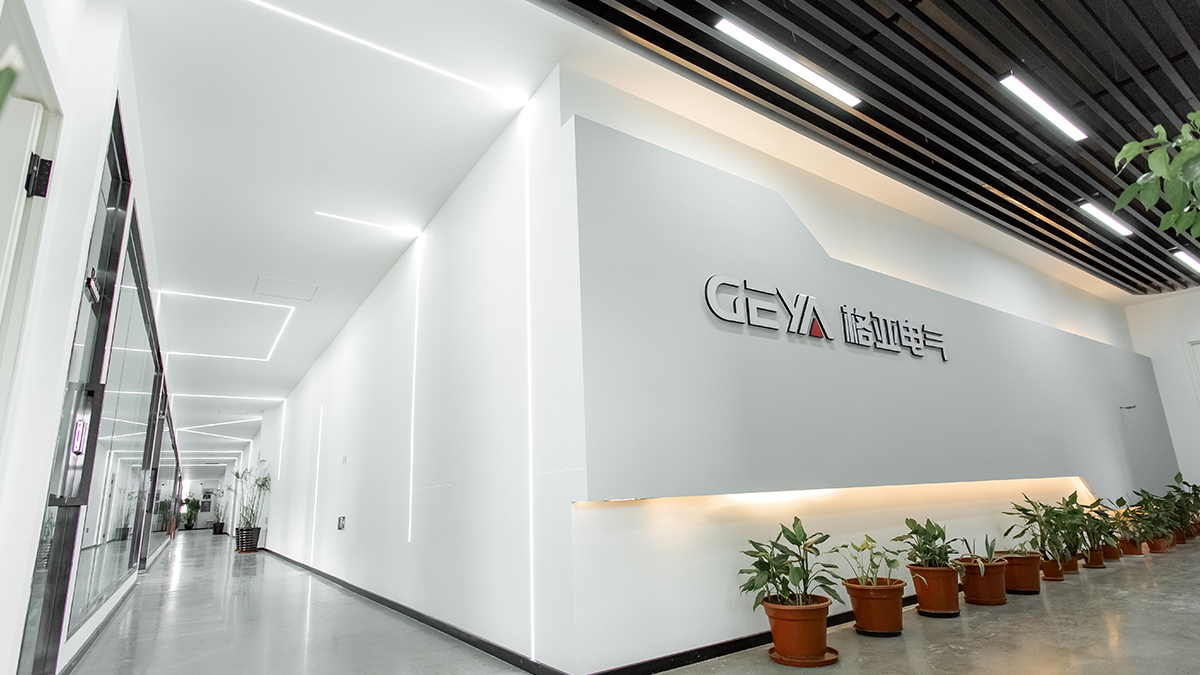

Factory Leadership & Sales Volume Benchmarks
Our commitment to rigorous engineering and vertical supply chain integration has established Henergy as a top-tier factory on verified supplier rankings:
Rank #2 Factory
Miniature Circuit Breakers (MCB) overall sales volume and export capacity leaderboard.
Rank #3 Factory
Automatic Transfer Switches (ATS) dual-power changeover system supplier ranking.
Rank #3 Factory
Modular Time Delay & Voltage Control Relays export volume worldwide.
Industry Whitepaper: Engineering & Sourcing Architecture of Miniature Circuit Breakers
A Miniature Circuit Breaker (MCB) serves as the fundamental protective node in low-voltage electrical distribution networks (under 1000V AC / 1500V DC). Its primary engineering objective is to automatically interrupt electrical flow when an abnormal overcurrent condition—either a sustained overload or a catastrophic short-circuit fault—is detected within an electrical circuit, thereby safeguarding equipment, conductors, and personnel from thermal damage or fire hazards.
1. Internal Electromechanical Mechanics & Tripping Architecture
High-quality MCBs manufactured by top China facilities incorporate a dual-tripping mechanism that balances time-delay thermal response with instantaneous magnetic activation:
- Thermal Overload Mechanism: Consists of a precision-calibrated bimetallic strip composed of two distinct metals with unequal thermal expansion coefficients bonded together. Under prolonged overcurrent conditions, resistance heating causes the bimetal to flex toward a trip latch, physically disengaging the moving contacts. The accuracy of bimetal heat-treatment directly dictates trip curve reliability across ambient operating temperatures (-5°C to +40°C).
- Magnetic Short-Circuit Mechanism: Utilizes a solenoid coil wound around a plunger core. When high-magnitude short-circuit currents surge through the winding, the resulting electromagnetic field instantly forces the plunger forward to hit the trip arm within milliseconds (<10ms response time), arresting peak fault currents before severe electromagnetic forces cause conductor deformation.
- Arc Extinguishing Chamber (Arc Chute): The arc chute is critical for high breaking capacity (6kA to 10kA per IEC 60898-1). When contacts separate under load, an electric arc is formed. The arc is magnetically driven into a series of insulated splitter plates (typically 9 to 13 plates constructed of de-oxidized steel). The chute stretches, cools, and quenches the arc by splitting it into smaller series arcs, rapidly increasing arc voltage above system voltage to clear the fault safely.
- Contact Metallurgy: Moving and stationary contacts utilize Silver-Cadmium Oxide (AgCdO) or eco-friendly Silver-Tin Oxide (AgSnO2) alloys. AgSnO2 provides superior resistance to arc erosion, contact welding, and surface oxidation over thousands of switching operations under inductive loads.
2. Tripping Curve Selection Matrix for B2B Procurement
When procuring MCBs for wholesale distribution or municipal tender projects, selecting the appropriate instantaneous tripping characteristic (Curve B, C, D, K, Z) matching the specific inductive/capacitive profile of the load is paramount:
| Tripping Curve | Magnetic Trip Threshold ($I_n$) | Primary Industrial / Commercial Applications | Inrush Current Tolerance |
|---|---|---|---|
| B Curve | 3 $I_n$ to 5 $I_n$ | Resistive loads: electric heating, domestic lighting, long cable runs with low fault currents. | Low (Sensitive) |
| C Curve | 5 $I_n$ to 10 $I_n$ | General commercial distribution, fluorescent lighting, small appliances, standard office loads. | Moderate (Standard) |
| D Curve | 10 $I_n$ to 20 $I_n$ | Highly inductive loads: heavy electric motors, transformers, industrial machinery, UPS systems. | Very High (Heavy Duty) |
| K Curve | 8 $I_n$ to 12 $I_n$ | Motor protection circuits with high startup current spikes without nuisance tripping. | High (Motor Dedicated) |
| Z Curve | 2 $I_n$ to 3 $I_n$ | Semiconductor protection, sensitive electronic control circuits, medical apparatus. | Ultra-Low (Ultra Sensitive) |
Future Procurement & Technological Trends in Circuit Protection (2025–2030)
As the global power grid transitions toward decentralized renewable energy sources, microgrids, smart homes, and electric vehicle charging infrastructure, the miniature circuit breaker landscape is undergoing rapid technological evolution. Electrical wholesalers and OEM procurement managers must align their supply chains with four dominant market trends over the next decade:
1. IoT-Enabled Smart Breakers & Remote Telemetry
Traditional passive MCBs are being rapidly upgraded to smart, connected circuit breakers incorporating embedded microprocessors, current transformers, and wireless communication protocols (Tuya WiFi, ZigBee, RS485 Modbus). Modern smart breakers allow commercial facility managers and homeowners to track power consumption in real time, set automated time scheduling, remotely trigger circuit shutdown, and receive instant push notifications for overvoltage, ground fault, or over-temperature events.
2. High-Voltage DC Circuit Breakers for PV & Energy Storage (BESS)
The exponential expansion of solar photovoltaic (PV) generation and Battery Energy Storage Systems (BESS) demands specialized DC miniature circuit breakers capable of extinguishing persistent DC electric arcs. Unlike AC current, which crosses zero voltage 100 or 120 times per second, DC voltage maintains a continuous, stable electric arc upon contact separation. Future-proof factories are engineering 250VDC, 600VDC, 1000VDC, and 1500VDC multi-pole DC breakers fitted with permanent magnets inside the arc chute to deflect and extinguish high-voltage DC arcs instantly.
3. Compact Multi-Function Units: RCBO & Arc Fault Detection (AFDD)
Space constraints in modern distribution boards are pushing procurement trends from standalone MCB + RCCB combinations toward single-module (1P+N in 18mm width) compact RCBOs. Furthermore, upcoming regional building codes across North America and Europe increasingly mandate Arc Fault Detection Devices (AFDDs), which utilize digital signal processors to analyze high-frequency arcing patterns that standard thermal-magnetic breakers cannot detect, averting electrical fires before ignition occurs.
Global B2B Sourcing Comparison: Factory Direct vs Trading Vendors
For international importers, brand owners, and electrical wholesalers, sourcing circuit breakers directly from a verified Chinese manufacturer like Zhejiang Henergy Electrical Co., Ltd. provides profound structural cost advantages, custom OEM agility, and total quality traceability compared to trading agents or multi-tiered intermediaries.
| Evaluation Metric | Henergy Factory Direct (Yueqing) | Trading Companies / Middlemen | Legacy Western Premium Brands |
|---|---|---|---|
| Price-to-Performance Ratio | Direct Factory Pricing (30-50% savings) | Intermediate markup (+15% to +35%) | High premium cost due to heavy brand overhead |
| OEM / ODM Customization | Full customization: laser printing, brand color housing, custom packaging & trip curves | Limited to off-the-shelf catalog rebranding | Strictly standard catalog items; zero custom OEM |
| Quality Control & Testing | 3-Stage In-House Inspection (Raw Material, Calibration, 100% Final Test) | Third-party visual check only; no internal lab | Extensive internal lab testing |
| Third-Party Compliance | SGS Onsite Verified, ISO 9001, CE, CB, SAA, RoHS, CCEE certified | Certificates often owned by underlying sub-factories | Fully certified globally |
| MOQ & Production Agility | Flexible B2B MOQ (10 to 50 pcs standard; 100+ smart units) | Variable, dependent on underlying supplier terms | High minimum order values & rigid distribution channels |
Frequently Asked Questions (FAQ) for B2B Importers
What is the Minimum Order Quantity (MOQ) for Henergy MCBs and protection devices?
For standard stocked models including ATS changeover switches, modular relays, and standard miniature circuit breakers, our flexible wholesale MOQ starts at just 10 to 20 pieces per item code. Specialized DC solar circuit breakers start at 50 pieces, while customized smart WiFi/ZigBee DIN-rail switches start at 100 pieces. Full private-label custom branding and OEM packaging projects are quoted individually based on annual volume commitments.
Does Zhejiang Henergy Electrical Co., Ltd. offer full OEM and ODM services?
Yes. Supported by over 12 years of specialized OEM experience and more than 10 dedicated in-house production lines, we provide full OEM/ODM manufacturing. This encompasses customized laser etching of your brand logo, customized plastic housing colors, customized rated operating currents ($I_n$), customized tripping curves (B, C, D), multi-language user instruction manuals, and retail/box packaging tailored to your regional market requirements.
Which international quality certifications do your electrical products hold?
Our complete manufacturing operation is certified under ISO 9001 quality management systems. Individual product ranges carry third-party safety test certificates, including IECEE CB Scheme reports, CE marking (European Union compliance), SAA certification (Australia and New Zealand regulatory compliance), VDE, UL, and CCEE where applicable. Official certificate copies matching your precise purchase order model number are provided prior to shipment for seamless customs clearance.
What is the critical difference between an MCB, an RCCB, and an RCBO?
An MCB (Miniature Circuit Breaker) protects electrical wires against thermal overload and short-circuit faults. An RCCB (Residual Current Circuit Breaker) monitors earth leakage currents to protect human lives against electrical shock (typically 30mA sensitivity) but possesses no built-in overcurrent protection mechanism. An RCBO (Residual Current Breaker with Overcurrent Protection) integrates both functions (short-circuit, overload, and earth leakage protection) into a single compact DIN-rail device, providing complete double-tier protection while optimizing switchboard space.
Why must DC-rated MCBs be used for solar PV arrays instead of standard AC breakers?
Alternating Current (AC) naturally drops to zero voltage 50 or 60 times per cycle, making arc quenching relatively straightforward. Direct Current (DC) maintains a continuous voltage potential without zero-crossing points. If a standard AC breaker is installed in a high-voltage DC solar string (e.g., 600VDC to 1000VDC), the breaker will fail to extinguish the continuous electric arc upon fault separation, leading to contact destruction, plastic housing fire, and dangerous systemic failure. DC-rated breakers incorporate specialized arc-stretching geometry and internal permanent magnets to pull the arc away from contacts instantly.
What delivery terms (Incoterms) and payment methods are accepted?
We support a full spectrum of global shipping terms to accommodate your logistics preferences, including FOB (Free on Board), CFR, CIF, EXW (Ex Works), FCA, CPT, CIP, DDP (Delivered Duty Paid), and DDU. Payment options include Telegraphic Transfer (T/T), Letter of Credit (L/C at sight), D/P, D/A, PayPal, Western Union, and credit cards across major currencies including USD, EUR, GBP, AUD, CAD, JPY, and CNY.
Ready to Source High-Performance Circuit Protection Devices?
Partner directly with Zhejiang Henergy Electrical Co., Ltd.—your SGS onsite-verified factory in Yueqing, China. Request detailed technical specifications, compliance documentation, and competitive wholesale pricing within 24 hours.
Get a Quote