Featured Automatic Circuit Protection & Switchgear Products
Explore high-performance, certified electrical safety hardware directly engineered by verified OEM/ODM production lines in Wenzhou and Yueqing electrical industrial clusters.



1. Executive Sourcing Report: Evaluating China's Circuit Breaker Manufacturing Eco-System
Selecting the ideal vendor across the global low-voltage apparatus ecosystem requires looking far beyond standard unit pricing. As electrical distribution architectures transform toward higher power density, renewable integration, and micro-grid autonomy, international buyers—including electrical panel builders, OEM engineering brands, regional distributors, and EPC contractors—demand rigorous technical verification from Chinese automatic circuit breaker factories.
China's electrical machinery output accounts for over 65% of the world's low-voltage circuit protection components, with Yueqing (Wenzhou, Zhejiang Province) operating as the undisputed global capital of low-voltage switchgear design. Established manufacturers such as Zhejiang Henergy Electrical Co., Ltd. (operating since 2007) demonstrate how vertical integration—spanning in-house stamping, contact alloy sintering, thermal-magnetic calibration, and automated assembly—creates a distinct competitive moat compared to fragmented assembly outfits.
Raw Metallurgy Control
Premium factories utilize high-purity Silver-Cadmium Oxide (AgCdO) or Silver-Tin Oxide (AgSnO2) contact tips to suppress electrical arcing, ensuring low contact resistance (<150 micro-ohms) over 10,000 operations.
Automated Bimetal Calibration
Advanced lines feature dual-point laser calibration for inverse time-delay thermal trip elements, ensuring compliance with strict IEC 60898-1 non-tripping (1.13 In) and tripping (1.45 In) thresholds.
Arc Quenching Chamber Geometry
Engineering 12-to-15 plate splitter arc chutes rapidly elongates and cools ionization arcs during short-circuit faults up to 10kA (or 15kA per IEC 60947-2), preventing housing rupture.
2. Quality Management Architecture & Empirical Standards
To satisfy Google’s E-E-A-T criteria and provide genuine procurement value, global sourcing managers must audit factory QA/QC protocols against international testing benchmarks. Tier-1 automatic circuit breaker factories maintain ISO 9001 quality management systems augmented by third-party onsite verification from accredited testing bodies like SGS Group.
Quality Assurance Benchmark: The 3-Tier Testing Protocol
Uncompromising compliance is non-negotiable in electrical isolation. Leading Yueqing manufacturing plants institute a continuous three-tier inspection pipeline:
- IQM (Incoming Quality Management): Spectrographic analysis of copper busbars, bimetallic strips, and flame-retardant polyamide PA66 housings (UL94 V-0 flammability class rating).
- PQC (In-Process Quality Control): Automated dielectric withstand testing at 2,000V AC for 1 second, paired with high-speed optical vision checks for mechanical toggle alignment.
- OQC (Outgoing Quality Assurance): Statistical sampling for temperature-rise tests under full rated continuous load (In), short-circuit trip verification, and mechanical endurance cycling.
Get a Quote for Custom OEM Calibration Reports & Sample Testing Copies.
Factory Classification & Technical Capabilities Comparison
| Evaluation Criteria | Tier-1 Direct OEM Manufacturer (e.g., Henergy / GEYA) | Standard Assembly Works | Trading Intermediary |
|---|---|---|---|
| SGS Onsite Assessment | Verified On-Site Facility & Production Lines | Unverified / Off-site Audit Only | No Physical Manufacturing Assets |
| International Approvals | CE, CB (IECEE), SAA, UL 1077/489, VDE, RoHS | Basic CE Marking Only | Depends on Sub-tier Supplier |
| Short-Circuit Capacity (Icu) | 6kA, 10kA, 15kA (Rigorous IEC 60947-2 Testing) | 4.5kA Nominal (High variance) | Varies Wildly / Uncalibrated |
| Private Label & ODM Depth | Full Custom Mold Design, Laser Marking, Custom Trip Curves | Standard Pad Printing Only | Packaging Sticker Customization Only |
| Export Share & Footprint | 81%–90% Exported to 60+ Countries | Primarily Domestic Low-End Market | N/A (Broker Model) |
3. Future Sourcing & Tech Trends in Circuit Protection (2025–2030)
The global circuit breaker market is shifting rapidly driven by electrification, solar PV adoption, and industrial digitalization. Procurement officers must align their supply chain choices with four major technological macro-trends over the next five years:
1. Smart IoT & Remote Power Management
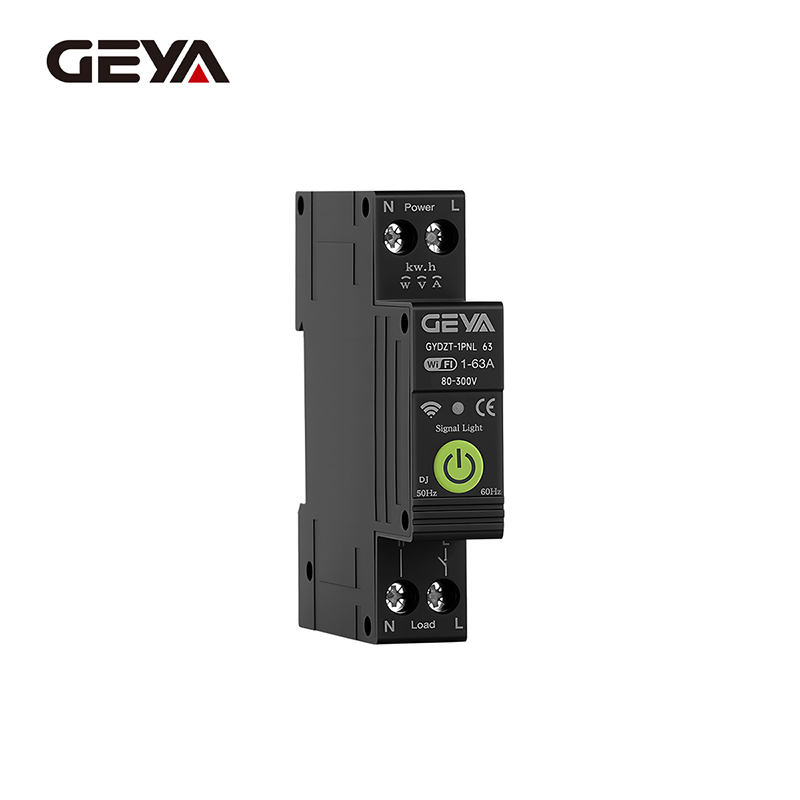
Integration of Tuya, WiFi, Zigbee, and Modbus RS485 chips into standard DIN-rail MCB footprints. Smart circuit breakers (such as the GYDZT series) provide real-time current metering, remote trip control, and over-power auto-reclosing, essential for smart homes and remote telecom towers.
2. Solar PV & Energy Storage DC Protection
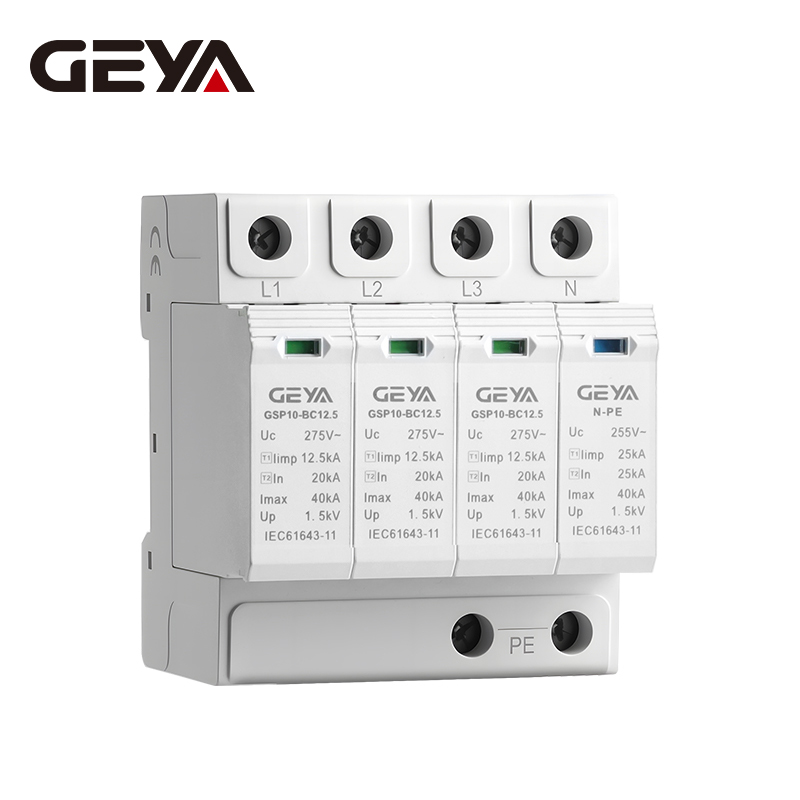
With high-voltage solar strings operating up to 1000V DC and 1500V DC, traditional AC breakers fail to clear non-zero-crossing DC arcs. Modern factories produce specialized polar/non-polar DC MCBs (like the GYM9 DC series) and DC SPDs capable of interrupting high DC fault currents safely.
3. Active Cabinet Self-Extinguishing Systems
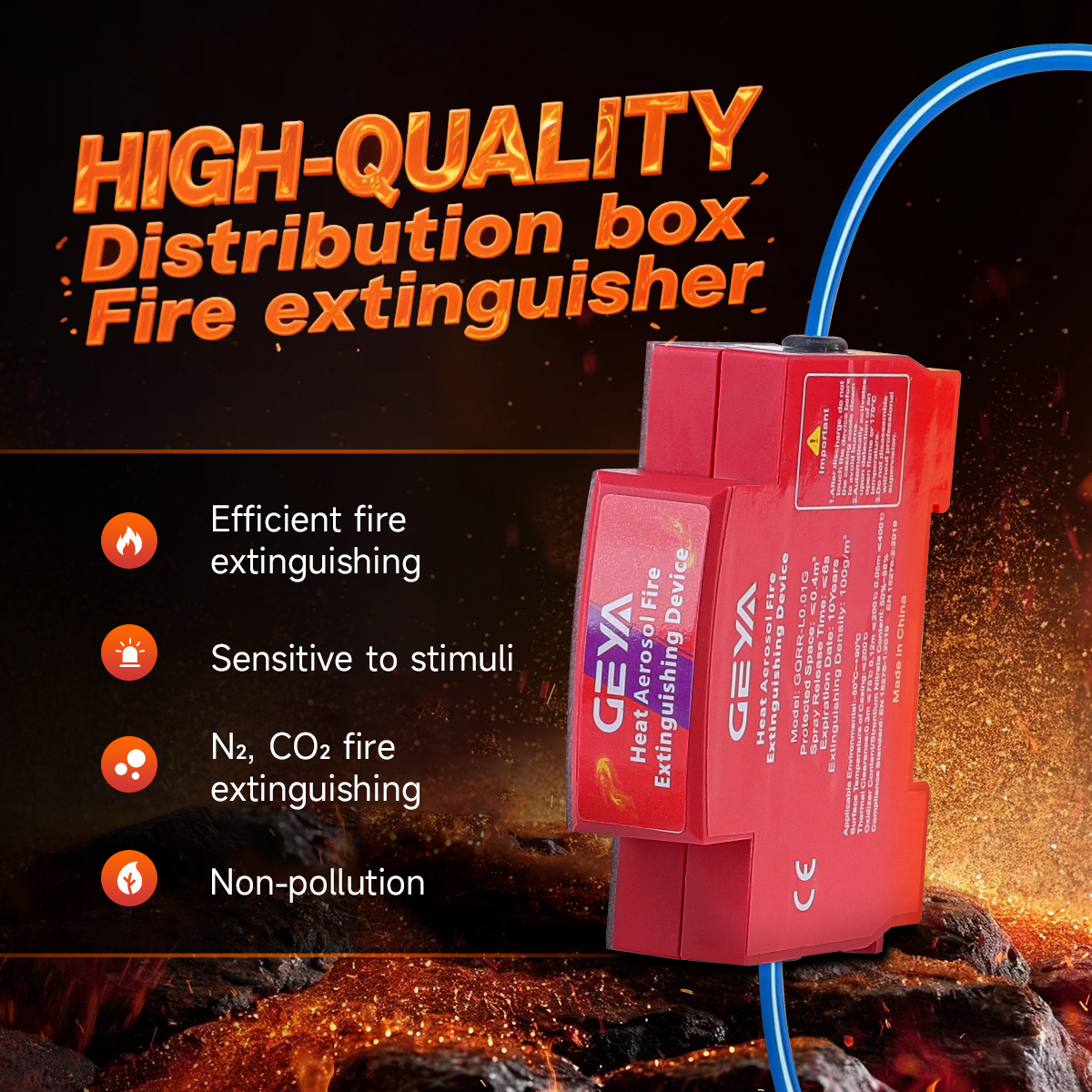
Rather than relying solely on electrical tripping, high-density switchboards are incorporating miniature hot-gas aerosol fire extinguishing devices (such as GEYA GQRR series). These thermally triggered pods instantly suppress electrical enclosure fires within seconds without liquid damage.
4. Enterprise Competencies: Zhejiang Henergy & GEYA Manufacturing Ecosystem
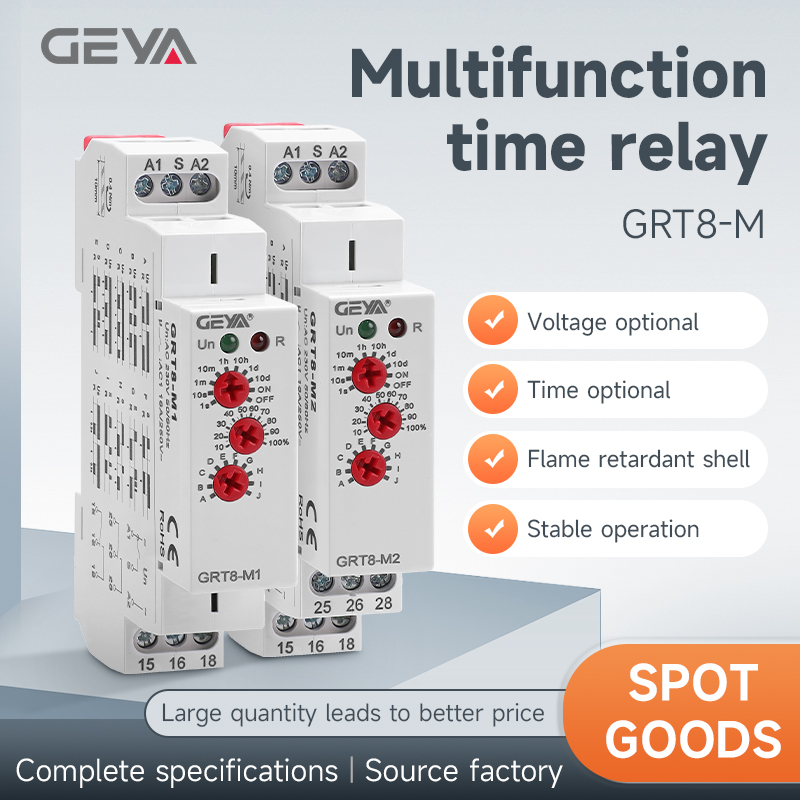
When sourcing automatic transfer switches (ATS), miniature circuit breakers (MCB), residual current devices (RCBO/RCCB), surge protective devices (SPD), and modular timing relays, working directly with an established engineering backbone guarantees supply chain stability and rapid lead times.
Manufacturing Capacity & Footprint
Spanning 5,000 to 10,000 square meters of production space in Yueqing's industrial belt, our manufacturing hub runs over 10 automated and semi-automated production lines. This setup delivers annual output capacities exceeding millions of low-voltage protection units across 400+ distinct product models.
Onsite verified by SGS Group, our physical assets include state-of-the-art contact welding stations, automated bimetal setting rigs, and digital endurance test benches.
Global Regulatory Compliance
Navigating global import customs requires certified conformity. Our core product series hold comprehensive test reports and certificates including:
- CE & CB (IECEE Scheme): Universal compliance across Europe and international CB members.
- SAA Approval: Full compliance for Australian and New Zealand electrical regulatory authorities.
- ISO 9001:2015: Total quality management across design, manufacturing, and distribution.
5. Frequently Asked Questions (FAQ) for B2B Importers & Engineers
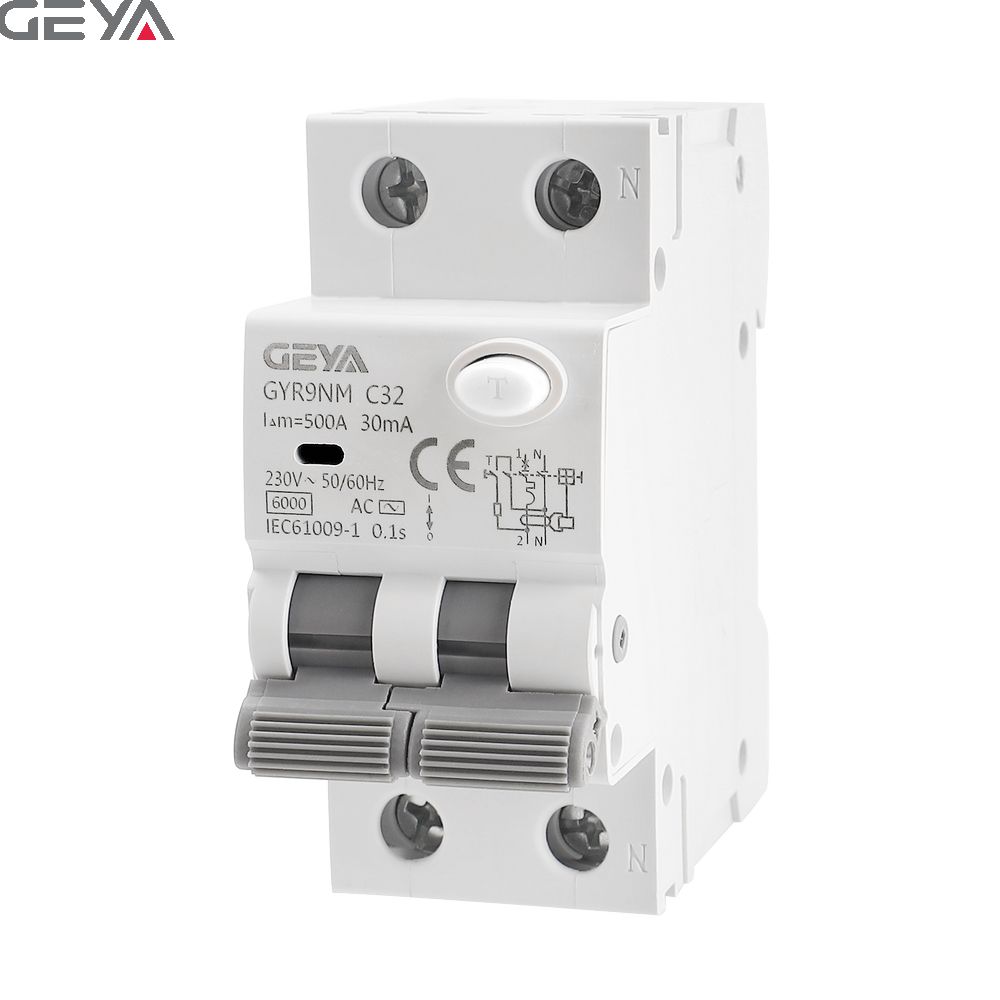
An MCB (Miniature Circuit Breaker) protects electrical lines against overloads and short circuits. An RCCB (Residual Current Circuit Breaker) detects balance leakage current to protect humans against shock, but has no built-in overcurrent protection. An RCBO (Residual Current Breaker with Overcurrent) combines both functions in a single modular width, delivering complete earth leakage, overload, and short-circuit defense.
Standard catalog items carry flexible MOQs starting at 10 to 20 units. Private label branding, custom casing colors, and specialized laser printing typically require an MOQ between 100 to 500 pieces per rating. Custom tooling or unique circuit design project MOQs are evaluated individually.
Alternating Current (AC) naturally passes through a zero-voltage point 100 or 120 times per second, allowing an arcing fault to self-extinguish easily. Direct Current (DC) maintains a continuous voltage potential without natural zero-crossings. Using an AC breaker on high-voltage DC (up to 1000VDC) can lead to sustained, dangerous electrical arcs that destroy switchgear and pose severe fire hazards.
An Automatic Transfer Switch monitors the primary utility power supply continuously. If a grid failure or voltage drop occurs, the ATS controller issues a startup signal to the secondary backup source (generator or solar inverter system) and automatically transfers the load contacts within milliseconds, preventing operational downtime.
We support standard global Incoterms including FOB, CFR, CIF, EXW, FCA, CPT, CIP, and DDP/DDU door-to-door delivery. Accepted payment methods include Telegraphic Transfer (T/T), Letter of Credit (L/C at sight), PayPal, and Credit Card payments in USD, EUR, GBP, and CNY.
Partner with China's Premier Automatic Circuit Breaker Manufacturer
Request instant engineering technical catalogs, direct wholesale factory pricing, and full certification compliance dossiers from our technical sales team.
Get a Quote