8 Products for ATS Wholesale and Power Protection Projects
These are practical product families for importers, panel builders and renewable-energy installers. Product URLs are preserved exactly as supplied; for custom ratings, private-label packaging or mixed-container planning, use the inquiry button.

GEYA Custom GPS6-VA5 2P 63A AC220V 40~70Hz Auto Reconnect Adjustable Voltage Current Protector
2P 63A protection for residential and light-commercial boards where unstable voltage can damage appliances and electronics.

GEYA GSP10-C40PV 2P 40kA 600VDC/800VDC/1000VDC Surge Protection Device PV SPD with Remote Communication
Solar-side surge protection with remote communication for PV combiners, inverters and DC distribution cabinets.
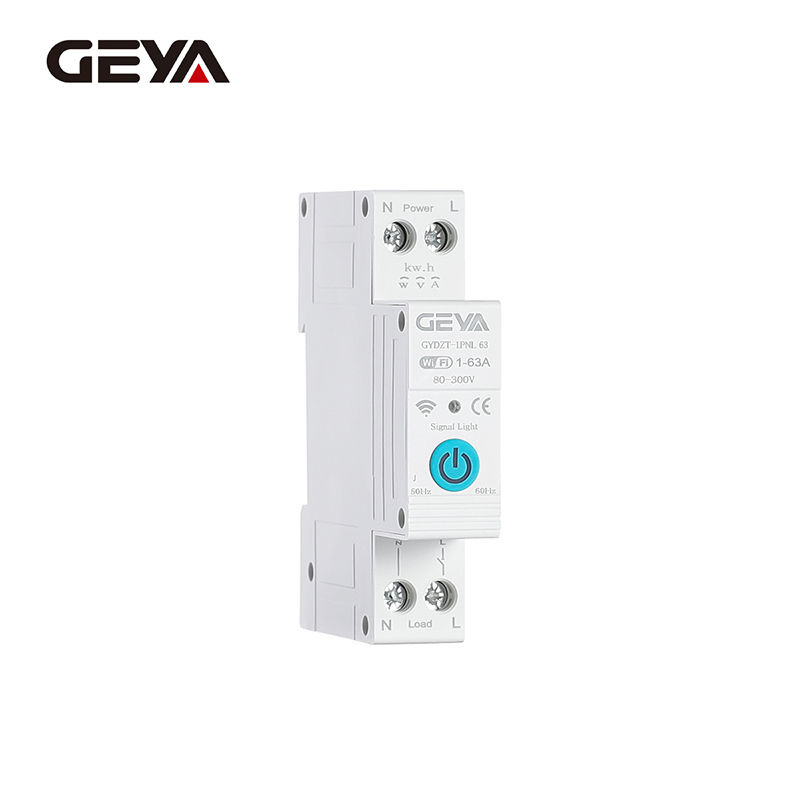
GEYA DIN Rail Wifi Remote Control Timing Switch 1P 63A Smart MCB with Energy Meter and Voltage Protector
Remote load control, scheduling, energy visibility and voltage protection in one DIN-rail module.
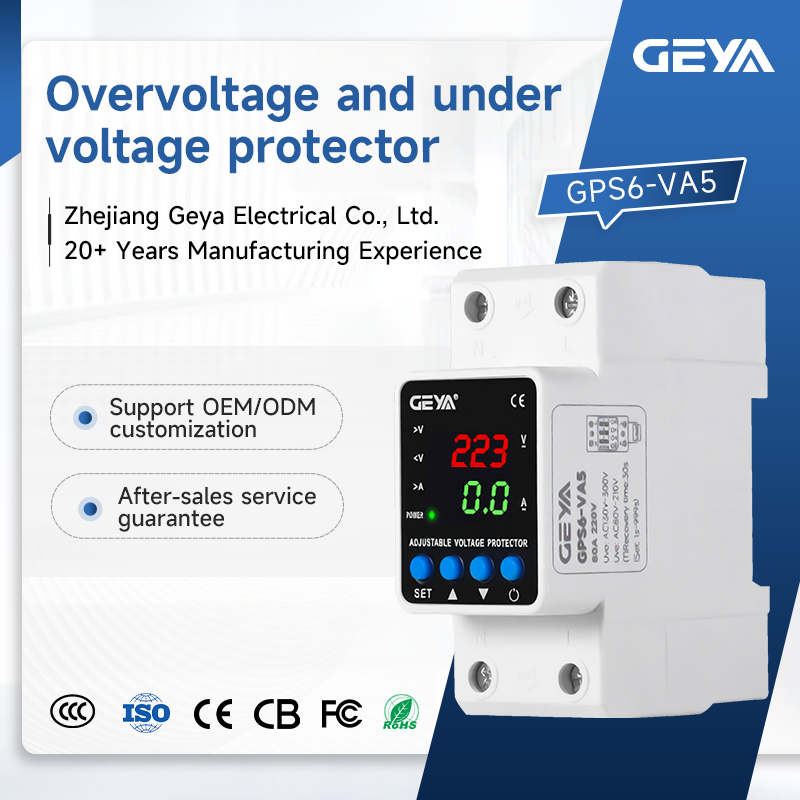
GEYA New Arrival GPS6-VA5 2P 80A AC220V 40-70Hz Auto Reconnect Adjustable Voltage Current Protector for Industrial Electricity
Higher-current protection for industrial single-phase circuits, workshops and equipment panels exposed to grid fluctuation.

GEYA GSP10-BC12.5 40kA AC 385V/275V SPD DIN Rail Pluggable Surge Protector Device with Remote Communication for Distribution Box
Pluggable AC surge protection with remote signaling for distribution boxes, commercial boards and OEM panels.
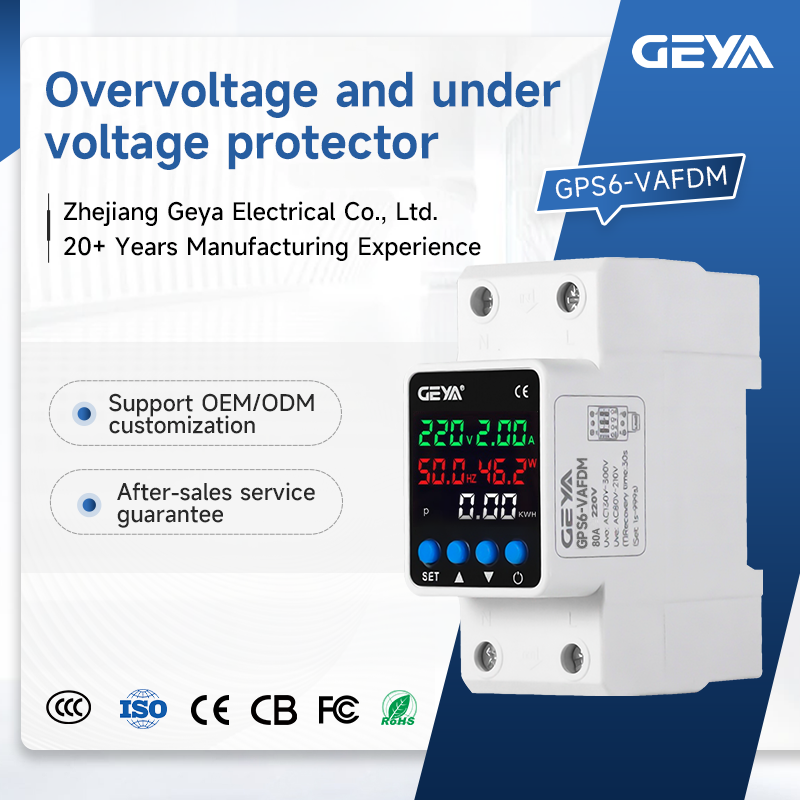
GEYA GPS6-VAFDM 2P 80A 6-in-1 Auto Reconnect Adjustable Over/Under Voltage & Current Protector with Frequency and Power Display
Combines over/under voltage, current protection and frequency/power display for panels needing local visibility.
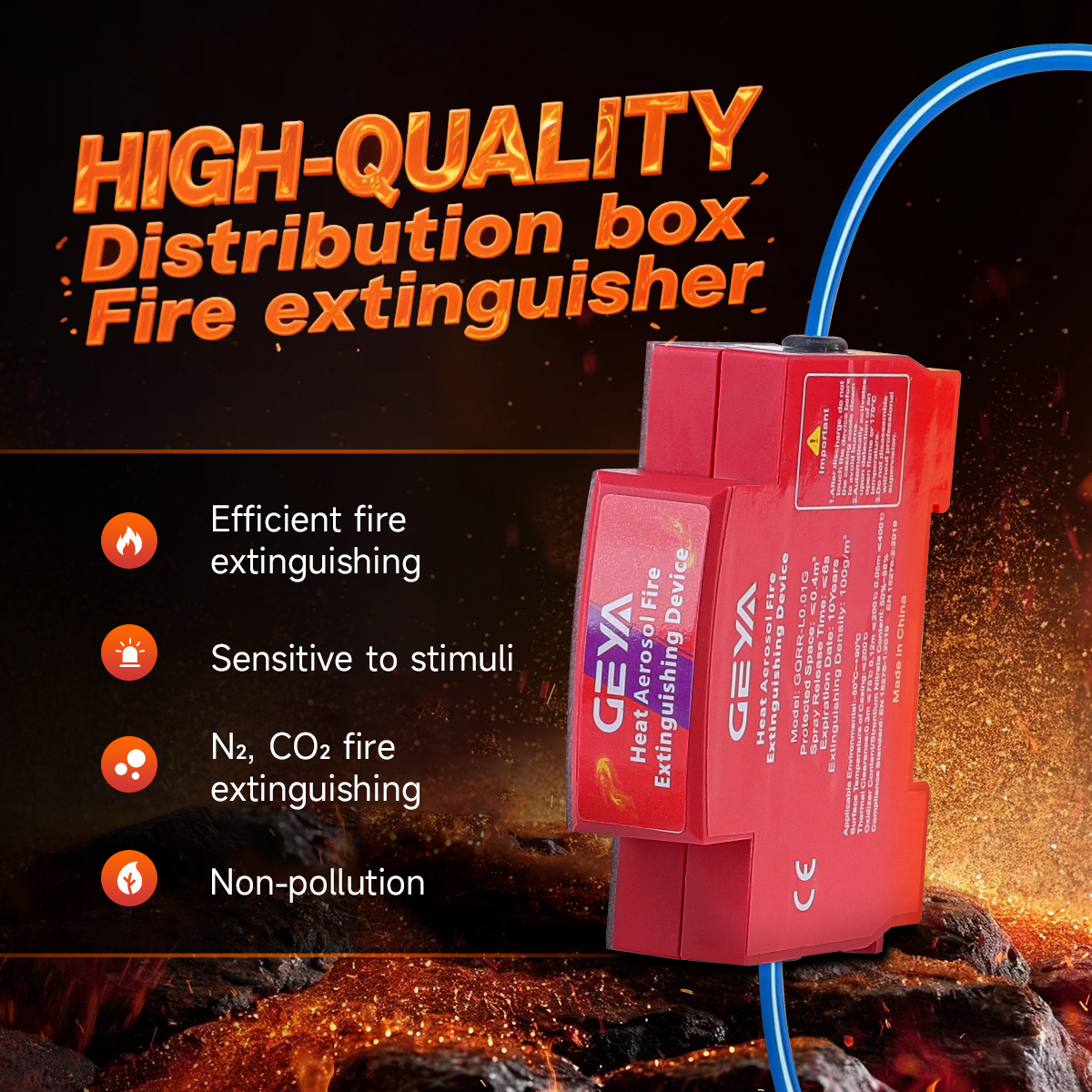
GEYA GQRR-L0.01G 2/50L Hot Gas Aerosol Automatic Heat Aerosol Fire Extinguishing Device for Distribution Cabinet
Supplementary fire-safety device for distribution cabinets, helping reduce damage risk where electrical ignition is a concern.

GEYA G2R 63A 220V/110V 2P/4P ATS Dinrail Change Over Switch 63A Smart Automat Switch Transfer 63 Amp ATS Dinrail 2 Pole
A core DIN-rail changeover switch for grid-to-generator or dual-source backup in compact distribution panels.
Supplier Depth Behind the Product List
Buyers increasingly compare factories by verifiable evidence, not only by catalog breadth. These signals reduce sourcing risk before the first purchase order.
Why CE Certification Matters When Choosing an Automatic Power Transfer Switch Exporter
CE marking is not a single certificate that automatically covers every item in a factory catalog. It is a conformity declaration backed by technical documentation, risk assessment and test evidence for the applicable product and rating.
For an automatic power transfer switch, the practical sourcing question is not simply “Do you have CE?” It is “Does the CE file match this model, this current rating, this pole configuration and this voltage/frequency combination?” A 63A 2P ATS and a 63A 4P ATS may share a family name but have different internal clearances, neutral arrangements, control logic and test evidence. A credible CE certified automatic power transfer switch exporter should be able to supply model-level documentation, not only a generic catalog badge.
At quotation stage, request the exact model name and rating; the reference standard, commonly IEC 60947-6-1 for transfer switching equipment; the test report or certificate scope; terminal and wiring diagrams; utilization and load notes; and the declaration of conformity. This is the difference between buying a commodity switch and buying a documented component that can pass a tender review, customs inspection or electrical inspector’s check.
Application engineering matters just as much. ATS selection affects neutral continuity, generator backfeed risk, transfer time, load tolerance and future serviceability. In markets with unstable grids, voltage and current protectors are often specified alongside the ATS to isolate loads before poor power quality reaches compressors, inverters or control electronics. In solar and hybrid systems, DC-rated protection and surge devices must be matched to the PV string voltage and earthing arrangement. A wholesaler that understands these relationships reduces rework, returns and project delays for its own customers.
| ATS Configuration | Typical System | Neutral Consideration | Buyer Check Before Order |
|---|---|---|---|
| 2P | Single-phase L+N backup or small commercial changeover | Neutral is part of the circuit | Confirm whether the neutral must be switched and whether the generator source is isolated. |
| 3P | Three-phase loads where the neutral is not switched | Neutral remains common | Verify control logic, load balance and any requirement for isolation of all live conductors. |
| 4P | Three-phase plus neutral, or systems requiring full source isolation | Neutral is switched | Specify neutral position, transfer sequence and compatibility with RCD/RCBO upstream. |
| Grid-to-generator | Standby generator, critical panels, telecom or retail backup | Depends on source design | Confirm generator start signal, transfer delay and whether remote monitoring is required. |
| Grid-to-grid | Dual utility feeds or separate distribution sources | Depends on transformer/earthing | Confirm source priority, interlocks, voltage tolerance and phase sequence. |
8 Procurement Checks Before You Approve an ATS Order
Catalog pages often stop at amps and poles. These checks add the application detail that separates a repeatable wholesale program from a one-off low-price purchase.
Model-Level Certificate Scope
Match the declaration and test evidence to the exact current, voltage, poles and frequency. Avoid accepting a family-level certificate without a model list.
Reference Standard
For automatic transfer switching equipment, confirm the applicable standard and the supplier’s test report. Ask how the ATS behaves under inductive loads and short-circuit conditions.
Pole and Neutral Logic
Decide whether the neutral must be switched. A 4P ATS can isolate the neutral, but it must match the upstream RCD/RCBO strategy and local wiring rules.
Continuous Load and Derating
Use the continuous load and ambient conditions, not only the largest label rating. Allow engineering margin and check terminal capacity before locking the BOM.
Source and Control Interface
Grid-to-generator and grid-to-grid systems need different control logic. Confirm generator start output, delay settings, manual override and auxiliary contacts.
Transfer Time and Load Tolerance
Some loads tolerate a short interruption; others require further engineering. State the acceptable transfer time and whether essential loads need an uninterruptible ride-through.
Smart Monitoring and Protocol
WiFi, Tuya or remote communication models can support commissioning and after-sales service, but only if the buyer’s app, gateway and local network requirements are defined.
Traceability and Private Label
Agree on serial labels, packaging, manuals, language, barcode format and certificate copies before production. This is where OEM/ODM supply chains either scale or stall.
Match the Product Mix to the Installation
For wholesale programs, the strongest offer is not one SKU in isolation. It is a coordinated protection chain that helps your customers specify, install and service the system with fewer compatibility questions.
Residential and Small Commercial Backup
Combine a compact G2R DIN-rail ATS with an adjustable voltage/current protector and surge protection for distribution boards.
- Shortlist G2R 63A 2P/4P ATS for small changeover panels
- Add GPS6-VA5 63A protectors for unstable supply
- Use AC SPDs for incoming surge coordination
Industrial and Unstable-Grid Sites
Higher-current protectors and monitoring features help reduce nuisance tripping and equipment damage in workshops and industrial panels.
- Use GPS6-VA5 80A for single-phase industrial circuits
- Specify GPS6-VAFDM for local power and frequency display
- Add pluggable SPDs for distribution-box surge defense
Solar PV and Smart Distribution
Pair DC-rated surge protection with smart DIN-rail control and energy metering for renewable and connected installations.
- GSP10-C40PV for PV-side surge protection
- WiFi smart MCB for scheduling and energy visibility
- Cabinet fire-safety devices for added risk reduction
Future Procurement Trends for ATS Exporters and Wholesalers
Buying behavior is shifting from transactional sourcing to documented, connected and application-led supply. The exporter that prepares for these changes will be easier to keep as a long-term vendor.
Verification-First Sourcing
Importers will ask for certificate scope, test reports, SGS verification and factory evidence earlier in the process. Generic badges will matter less than model-level documents.
Smart and Connected ATS
Remote monitoring, energy data and app-based commissioning are moving from premium features to expected options in commercial and solar backup systems.
Regional Compliance Complexity
Different markets require different voltage, frequency, documentation and packaging. Wholesalers will favor exporters who can localize product information and certificate packs.
Supply Resilience and Mixed Containers
Distributors want fewer suppliers, mixed-category orders and predictable communication. Factory-direct ATS, SPDs, protectors and relays in one shipment can lower total sourcing effort.
Product Development Trends in Automatic Power Transfer Switches
The direction is clear: more protection in less space, clearer commissioning data and stronger compatibility with generators, solar systems and smart distribution boards.
01Compact DIN-Rail Modularization
Panel builders prefer DIN-rail ATS and protection devices that save enclosure space and simplify replacement. Compact modular housings support faster assembly and cleaner wiring.
02Integrated Voltage and Current Protection
Multi-function protectors combine over/under voltage, overcurrent, frequency and power display. This reduces external components and makes settings easier to verify at commissioning.
03Smart Communication and Metering
WiFi, Tuya and remote-communication modules allow installers and facility teams to monitor status and energy. The value is strongest when the app workflow and local network are planned at specification stage.
04DC and Solar-Ready Protection
As hybrid inverters and battery storage expand, DC-rated breakers and PV SPDs become part of the same procurement basket as ATS and distribution protection.
05Higher Safety and Fire Containment
Distribution-cabinet fire-safety devices and better terminal design address real installation risks. Buyers should treat these as complementary safety layers, not substitutes for correct circuit design.
06Serviceability and Clear Documentation
LCD displays, clear markings, multilingual manuals and stable certificate packs reduce after-sales friction. For wholesalers, documentation quality is part of product quality.
Zhejiang Henergy Electrical Co., Ltd.
Zhejiang Henergy Electrical Co., Ltd. was founded in February 2007 in Yueqing, Wenzhou, the industrial cluster where a large share of the world’s low-voltage components are produced. We are a manufacturer, not a reseller. Our portfolio includes more than 400 models across 100 types and 5 series, covering MCB, RCCB/RCBO, MCCB, AC contactors, automatic transfer switches, voltage and current protectors, SPDs, timers and monitoring relays.
For buyers sourcing a CE certified automatic power transfer switch exporter and wholesaler, the relevant advantage is not only product range. It is the ability to combine in-house production discipline, model-level documentation, OEM/ODM flexibility and export communication in one supply relationship. Our factory is SGS onsite-verified, our management system is ISO 9001 certified, and product approvals include CB, CE, UL, VDE, SAA and CCEE depending on the model. Certificate copies are provided for the exact model you order.

Onsite assessed by SGS Group. The original company profile also records a 4.8/5 average buyer rating, a 99.33% inquiry response rate and top-selling factory rankings by sales volume for MCB (#2), automatic transfer switches (#3) and relays (#3).
Production is controlled in-house from incoming material inspection through assembly, calibration and final testing. The original company data lists 10+ production lines, 9 testing instruments operated by certified engineers with 5+ years of expertise, and a three-stage quality process covering on-site material inspection, supplier assessment and finished-product inspection. More than 12 years of OEM experience supports buyer-label production, custom ratings, housing color, front-panel printing, manuals and packaging.

Verified Factory
Onsite assessment by an independent third party supports buyer due diligence.
Quality System
Documented quality management across production and inspection.
OEM / ODM
Private-label, design support and buyer-specific packaging experience.
Export Markets
Experience with Europe, Asia, the Middle East, the Americas and Oceania.



Procurement FAQ for CE Certified ATS Wholesalers
These answers address the questions that most often appear before a first order, sample request or private-label project. For model-specific documents, send the exact rating and target market to our export team.

What is the minimum order quantity for Henergy products?
Most standard ATS, protectors and relays start at 10–20 pieces per model. DC MCBs start at 50 pieces and smart DIN-rail switches at 100 pieces. Private-label and ODM projects are quoted individually because tooling, labeling and packaging affect the batch plan.
Do you offer OEM and ODM manufacturing for ATS and protection devices?
Yes. We provide OEM service, design service and buyer-label production, supported by more than 12 years of OEM experience. Typical customizations include rated current, housing color, front-panel printing, user manuals and retail packaging.
Which certifications do your products hold?
The management system is ISO 9001 certified. Product approvals include CB, CE, UL, VDE, SAA and CCEE depending on the model. Certificate copies and test documentation are provided for the exact model and rating you order; approvals should never be assumed from a generic catalog page alone.
How do I choose the right automatic transfer switch?
Match the poles to the system: 2P for single-phase L+N, 4P for three-phase systems that switch the neutral, and 3P where the neutral is not switched. Size the rated current against the continuous load and ambient conditions, confirm whether the source changes from grid to generator or grid to grid, and choose a WiFi model if remote monitoring is required.
What is the difference between an MCB, RCCB and RCBO?
An MCB protects against overload and short circuit. An RCCB detects earth-leakage current, typically 30mA for personal protection, but does not protect against overcurrent. An RCBO combines both functions in one device. For solar PV strings, a DC-rated MCB must be used because AC breakers are not designed to interrupt DC arcs in the same way.
Which Incoterms and payment methods are accepted?
Accepted terms include FOB, CFR, CIF, EXW, FAS, FCA, CPT, CIP, DDP and DDU. Payment methods include T/T, L/C, D/P, D/A, PayPal, Western Union and credit card in USD, EUR, GBP, AUD, CAD, JPY, HKD, CHF or CNY.
How can I verify CE certification and factory claims for my exact model?
Request the declaration of conformity, model-level certificate or test report, product datasheet, wiring diagram and packaging artwork if applicable. For factory verification, review the SGS onsite assessment and ask for the certificate scope that covers the exact ATS or protection device you plan to import.
What should I include in an RFQ for a fast wholesale quotation?
Send the product model, rated current, poles, voltage, frequency, quantity per model, destination country, required certification, packaging language and any private-label requirements. If the installation is unusual, include the source type, load details and whether remote communication is needed. This allows the export team to quote accurately and flag specification risks before production.
Request a Factory-Direct Quotation for CE-Certified ATS and Protection Devices
Send your target models, ratings, quantities and destination market. Our export team will reply with specifications, certificate scope, packaging options and the next steps for samples or private-label production.
Send an Inquiry