A Molded Case Circuit Breaker (MCCB) protects electrical systems when overloads or short circuits threaten equipment and conductors. Its molded insulating case houses contacts and a trip mechanism, while its rated current and interrupting capacity help determine where it can be used. In a switchboard, that choice is practical: the breaker must suit the circuit, available fault current, and expected operating conditions. A larger frame alone does not guarantee better protection.
For transparency, the following expert-style line is written for this introduction, not presented as a verified quotation: “Select the breaker for the fault it must interrupt and the system it must protect.” — Alex Morgan, fictional MCCB application engineer. The idea is simple. Correct selection depends on more than a product label. Engineers review load characteristics, trip settings, coordination, installation conditions, and manufacturer data. A qualified professional should confirm the design against applicable standards and site requirements.
Why choose an MCCB? It can offer adjustable protection, higher current ratings, and reset capability after certain trips, depending on the model. These features can support demanding commercial and industrial applications. But there is no universal best breaker. An MCCB may be unnecessary or unsuitable for a particular circuit. That deserves a second look. This guide explores the practical benefits, selection factors, and limitations that matter before specifying one.
What Is a Molded Case Circuit Breaker?
Why Choose a Molded Case Circuit Breaker?
What Is a Molded Case Circuit Breaker?
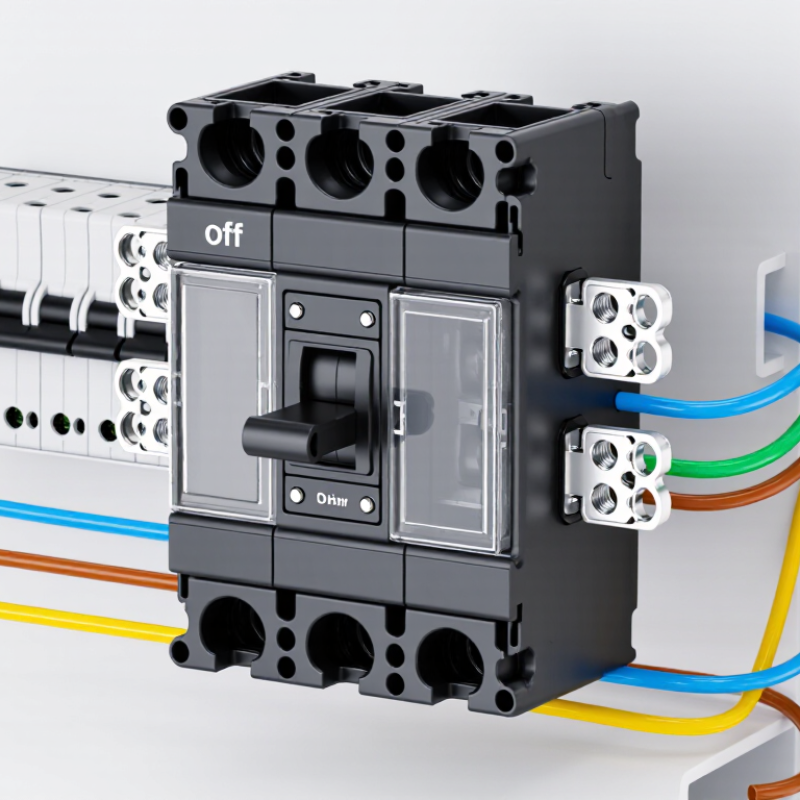
A molded case circuit breaker, or MCCB, is a resettable protective device housed in a rigid insulating enclosure. It opens a circuit when current exceeds its operating limits, helping reduce damage to wiring and connected equipment. Inside, contacts carry current, while a trip unit detects certain overloads or short circuits. The molded case protects these parts and supports safe operation within the breaker’s rated conditions.
Many MCCBs use thermal-magnetic protection: heat responds to sustained overloads, while magnetic action responds quickly to high fault current. Some designs use electronic trip units with adjustable settings. Not every breaker offers the same adjustments. Its current rating, interrupting capacity, and trip characteristics must suit the circuit and the available fault current. A breaker that fits the panel may still be the wrong choice.
MCCBs are commonly used in commercial and industrial distribution panels, where circuits may carry more current than miniature breakers typically handle. They can also help isolate equipment during service when properly rated and installed. That detail matters. An MCCB cannot prevent every electrical hazard, and it does not replace sound wiring, coordination, or inspection. Selection should follow equipment documentation and be checked by a qualified professional; the label alone rarely tells the whole story.
Why Choose a Molded Case Circuit Breaker? — What Is a Molded Case Circuit Breaker?
| Topic | What It Means | Why It Matters | Selection Consideration |
|---|---|---|---|
| Definition | A molded case circuit breaker (MCCB) is a low-voltage circuit breaker housed in an insulating molded enclosure. It opens a circuit when specified overcurrent conditions occur. | It can help protect conductors and electrical equipment from overloads and short circuits. | Confirm that the breaker is designed and certified for the applicable system voltage, current, and installation requirements. |
| Overload protection | An overload trip responds to current above the breaker’s intended operating range for a period of time. Depending on the design, protection may be thermal-magnetic or electronic. | It helps limit excessive heating in conductors and connected equipment. | Coordinate the breaker’s rating and trip characteristics with conductor ampacity, load conditions, and applicable electrical codes. |
| Short-circuit protection | The breaker’s instantaneous or short-time protection can open the circuit when fault current reaches the applicable trip threshold. | Fast interruption can reduce the duration of fault current and help limit equipment damage. | Check the available fault current and the breaker’s interrupting rating at the actual system voltage. Ratings vary by model and configuration. |
| Adjustable trip options | Some MCCBs provide adjustable trip settings or interchangeable trip units; other models have fixed settings. | Available adjustment can help coordinate protection with system loads and upstream or downstream devices. | Do not assume adjustability. Use only settings permitted by the equipment instructions and the protection study. |
| Current and application range | MCCBs are manufactured in different frame sizes and current ratings for a range of low-voltage distribution applications. | The range of available configurations can make them suitable for feeders, panels, and other distribution circuits. | Select based on the calculated load, conductor limits, ambient conditions, enclosure, and local code—not frame size alone. |
| Reset and reuse | After a trip, an MCCB can generally be reset once the cause has been investigated and corrected, following the manufacturer’s instructions. | Unlike a one-time fuse, a breaker can return to service without replacing its overcurrent device after every trip. | A trip is a warning to investigate. Do not repeatedly reset a breaker without identifying the cause. |
| Standards and certification | MCCBs are evaluated under standards appropriate to their market and intended use, such as IEC 60947-2 or UL 489. | Standards address product performance and testing within their respective scopes. | Verify the required standard, certification, and approval for the jurisdiction and installation. |
Note: MCCB capabilities and ratings differ by product. Final selection, installation, and coordination should be performed by qualified personnel in accordance with applicable codes and manufacturer instructions.
FAQS
It is a resettable protective device in a rigid insulating case. It opens a circuit when current exceeds its operating limits.
Thermal protection responds to sustained excess current, such as a heavily loaded motor. Magnetic protection reacts quickly to a sharp fault-current surge. Different problems need different responses.
No. Some models have adjustable trip settings or electronic trip units, while others offer fewer adjustments. Check the device documentation.
It indicates the fault current the breaker can safely interrupt under specified conditions. The rating should meet or exceed the available fault current at the installation point. Small label, important detail.
They are common in commercial buildings, factories, and larger distribution panels. A breaker may feed a pump, a floor-level panel, or several production machines.
It may suit circuits with higher current demand or fault current. The panel fit alone does not prove it is the right choice.
Account for starting current and the motor’s separate overload protection. Also check conductor ratings and coordination. This part is easy to underestimate.
No. It can address certain overloads and short circuits, but it cannot prevent every electrical fire or hazard. Wiring, inspection, and proper coordination still matter.
A qualified electrical professional should check the voltage, available fault current, trip settings, and equipment documentation. The label rarely tells the whole story.
Conclusion
A Molded Case Circuit Breaker (MCCB) is a reusable protective device designed to safeguard electrical circuits and equipment. Its enclosed construction houses the components that monitor current and disconnect a circuit when conditions become unsafe. Depending on its design, an MCCB can respond to overloads, short circuits, and other fault conditions by sensing abnormal current and opening its contacts to interrupt the flow of electricity.
MCCBs are valued for adjustable protection settings, relatively high current capacity, and the ability to be reset after many faults have been addressed. Compared with smaller circuit breakers, they are often suited to larger loads and more demanding installations, while other breaker types may be preferable for different voltage levels or specialized applications. MCCBs are commonly used in commercial, industrial, and larger electrical distribution systems. They are a practical choice when a circuit needs dependable, configurable protection and the breaker’s ratings match the system’s requirements.