0%

China’s Moulded Case Circuit Breaker suppliers serve projects ranging from factory panels to commercial buildings. Choosing one takes more than comparing prices. The IEA’s Electricity 2024 report projects global electricity demand growth averaging about 3.4% annually from 2024 to 2026. More electrical loads make dependable distribution protection increasingly important. Small details matter. A breaker’s rated current, breaking capacity, trip characteristics, and operating environment must suit the installation.

IEC 60947-2 provides a key technical reference for low-voltage circuit breakers. Buyers should request current test reports, certification records, and traceable product specifications, then check that ratings match the intended application. Thomas A. Short, an electrical-distribution author and engineer, offers a useful principle in his technical work: protection should be selected for the system’s actual conditions, not just its catalogue description. That is a paraphrase, not a direct quotation. It is worth remembering, because a polished datasheet cannot reveal every production or service issue. This guide compares leading Chinese suppliers through product range, manufacturing capability, quality evidence, customization, and after-sales support. It also leaves room for a practical caveat: supplier claims deserve independent checking.
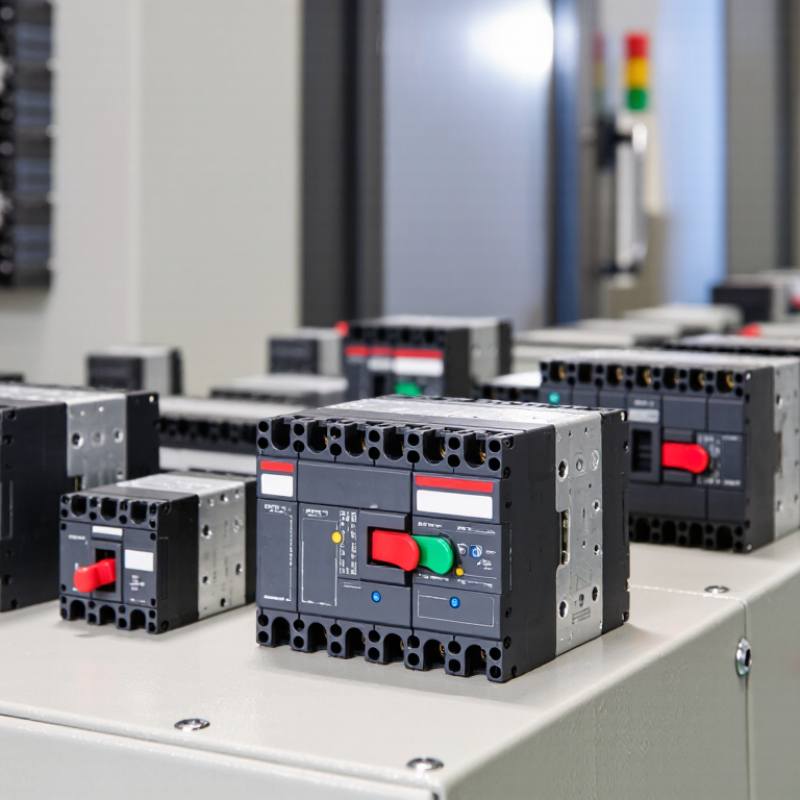
Best Moulded Case Circuit Breaker Suppliers in China?

What Is a Moulded Case Circuit Breaker?

A moulded case circuit breaker (MCCB) is a resettable protective switch used in electrical distribution systems. Its insulated case encloses contacts and a mechanism that opens the circuit when current becomes unsafe. Unlike a small household breaker, an MCCB can handle higher currents and often allows adjustable trip settings. It is commonly installed in panelboards, machinery enclosures, and building power systems.

When an overload persists or a short circuit occurs, the breaker detects excessive current and separates its contacts. An arc-control assembly helps extinguish the electrical arc created during separation. Some models also respond to earth-fault conditions, depending on their design. The breaker can usually be reset after the fault is identified and corrected. Resetting alone is not a repair.

Selecting an MCCB means checking rated current, voltage, interrupting capacity, pole count, and trip characteristics against the installation. For example, a motor may draw a brief starting current, so an unsuitable setting could cause unwanted trips. Coordination with upstream and downstream protection also matters. Ratings and test conditions should be verified from reliable technical documentation; appearance alone tells little. Even a well-specified breaker cannot compensate for loose terminals or poor maintenance.

What Is a Moulded Case Circuit Breaker (MCCB)?

An MCCB is a resettable low-voltage circuit breaker that protects electrical circuits from overloads and short circuits. The chart shows illustrative rated-current bands commonly found across applications; exact ratings vary by design and product.

Typical rated-current ranges (A). These bands are indicative, not a universal classification.

How China’s MCCB Supplier Market Is Organized

Best Moulded Case Circuit Breaker Suppliers in China?

China’s MCCB supplier market is not one uniform block. It includes manufacturers focused on high-volume production, factories offering customized specifications, and trading companies coordinating export orders. Some suppliers make key components in-house; others rely on external partners. That difference can affect lead times, quality control, and how clearly a factory answers technical questions.

Production and export activity often gathers around electrical manufacturing regions, where component makers, testing services, and logistics providers operate nearby. For buyers, this can mean more options and faster sampling. It can also make supplier labels confusing. A company described as a manufacturer may outsource important production steps. Ask who assembles the breaker, where testing takes place, and whether batch records can be traced.

Compare suppliers by application fit, not catalog size alone. Check rated current, breaking capacity, operating conditions, and compatibility with the intended panel. Request current test documentation and confirm that the offered model matches the tested configuration. A sample helps, but it cannot prove consistent production by itself. This map is useful, not perfect. Market categories overlap, and a polished factory visit may leave unanswered questions. Verify details through documents, direct technical discussion, and repeat-order performance.

Key Factors for Evaluating Chinese MCCB Suppliers

When evaluating Chinese MCCB suppliers, look beyond price and catalogue ratings. The IEA’s Electricity 2024 report forecasts global electricity demand growth averaging 3.4% per year in 2024–2026, up from 2.2% in 2023. More demand makes consistent protection performance essential. Ask suppliers for test records showing rated voltage, breaking capacity, trip characteristics, and temperature-rise results. Check that the tested model matches the product you plan to buy.

Evidence matters. IEC 60947-2 sets requirements for low-voltage circuit breakers, including MCCBs. Request current certificates and confirm their scope, issuing body, and model numbers. Then compare trip curves against your intended load; a curve that looks suitable on paper may behave differently under real operating conditions. Small details count.

Audit the factory, or use an independent inspector. Look for traceable batch numbers, calibrated test equipment, and recorded checks on contact resistance and operating mechanisms. Ask for sample units from regular production, not specially prepared samples. I would not treat a polished test sheet as proof. It is easy to overlook gaps when a supplier responds quickly and confidently. Cross-check documents with physical samples and an accredited laboratory where needed.

Best Moulded Case Circuit Breaker Suppliers in China? - Key Factors for Evaluating Chinese MCCB Suppliers

Use this framework to compare suppliers. The weights are suggested evaluation criteria, not ratings of individual manufacturers.

Evaluation factor Suggested weight What to evaluate Evidence to request
Standards and certification 20% Confirm that the proposed MCCB models meet the requirements for the destination market. IEC 60947-2 covers low-voltage circuit-breakers; China’s GB/T 14048.2 covers low-voltage circuit-breakers as well. Applicable approvals depend on the product and market. Current certificates and test reports matching the exact model, rated values, manufacturing site, and intended market. Verify certificate scope and validity with the issuing body where possible.
Product range and specification fit 15% Check whether the supplier offers the required frame sizes, pole configurations, rated currents, rated operational voltages, breaking capacities, and trip-unit options for the project. Model-specific datasheets, selection tables, dimensional drawings, and a written confirmation that the requested combination is available and tested.
Testing and quality control 15% Assess how the supplier controls incoming materials, assembly, calibration, routine testing, traceability, and corrective actions. Confirm that declared performance is supported by appropriate tests. Quality-system certificates where applicable, sample inspection records, routine-test procedures, traceability examples, and third-party or accredited-laboratory reports for relevant type tests.
Technical support and application knowledge 10% Evaluate the supplier’s ability to answer questions about protection settings, coordination, accessories, installation conditions, and product selection for the intended application. Response to a representative technical inquiry, selection guidance, installation instructions, and access to qualified technical contacts.
Manufacturing capability and process control 10% Determine whether production capacity, equipment, process controls, and inspection resources can support the order quantity and required consistency. A factory audit or documented production overview, process flow, capacity information, and records showing how nonconforming products are handled.
Customization and configuration control 10% Check whether requested accessories, terminal arrangements, labels, packaging, or other permitted options can be supplied without compromising certified product configurations. Approved configuration drawings, change-control procedures, sample labels, and written confirmation of any effect on certification or lead time.
Delivery and supply continuity 10% Compare quoted lead times, order planning, export packing, shipment documentation, and the supplier’s approach to delays or component shortages. A written delivery schedule, packaging specification, sample shipping documents, and a clear process for communicating schedule changes.
Warranty and after-sales service 5% Review warranty coverage, claim requirements, response process, spare-parts availability, and the division of responsibility for diagnosis and replacement. Written warranty terms, claim procedure, service contact details, and any stated exclusions or return conditions.
Commercial clarity and documentation 5% Compare quotations for consistent technical scope, payment terms, packaging, delivery terms, and the completeness of product documentation. Itemized quotation, confirmed model list, commercial terms, installation and maintenance manuals, and product identification details.
Total 100% Score each supplier against the same project requirements and verify critical claims against model-specific documentation.

Note: Standards, certification requirements, and acceptance criteria can vary by product configuration and destination market. Confirm applicable requirements before purchase.

Leading Chinese MCCB Suppliers and Their Capabilities

Leading Chinese MCCB suppliers differ in more than production volume. Strong manufacturers can support mould design, contact assembly, trip-unit calibration, and routine electrical testing. Their product ranges may cover varied frame sizes, rated currents, and breaking capacities. Details matter. A breaker for a compact control cabinet has different demands from one protecting a large distribution panel.

When evaluating suppliers, request datasheets that state operating voltage, trip characteristics, and tested short-circuit performance. Ask how samples are inspected and how production changes are recorded. Test reports, traceable batch numbers, and clear technical responses help buyers assess reliability. Factory visits can add useful context: observe assembly stations, calibration equipment, and finished-product checks. A catalog alone is not enough.

Some suppliers also offer customization, export packaging, and engineering support for project-specific requirements. Confirm these capabilities with written specifications and sample evaluations rather than assumptions. No supplier is perfect. I would not treat a large product range as proof of consistent quality; documentation and repeatable test results deserve closer attention. Small gaps in drawings or response times can reveal where extra clarification is needed before an order proceeds.

How to Choose an MCCB Supplier for Your Application

Best Moulded Case Circuit Breaker Suppliers in China?

How to Choose an MCCB Supplier for Your Application

Choosing an MCCB supplier starts with the circuit, not the catalogue. Confirm the system voltage, rated current, number of poles, and available short-circuit current. Then check that the breaker’s breaking capacity suits the fault level at its installation point. A 250 A rating alone tells you little. Details matter.

Ask for clear technical datasheets, routine inspection records, and relevant test documentation. Check whether the supplier can explain trip settings and coordination with upstream or downstream protection. If the breaker will sit in a hot cabinet or dusty workshop, discuss those conditions before ordering. A neat brochure is not proof. Request a sample when practical, and inspect its terminals, markings, and operating mechanism.

Reliable supply also depends on communication. Ask about production lead times, batch traceability, spare parts, and how technical questions are handled after delivery. Small details count. A low quotation may look attractive, but compare the exact specifications and included services. I would be cautious about accepting a broad claim of “customization” without drawings or written limits. The right supplier should help you verify fit for your application, while leaving final selection and installation to qualified electrical professionals.

FAQS

What does an MCCB do?

It opens a circuit when current becomes unsafe. Its insulated case contains contacts and an operating mechanism. It can usually be reset after the fault is identified and corrected. Resetting is not a repair.

How is an MCCB different from a small household breaker?

An MCCB typically handles higher currents and may offer adjustable trip settings. Its suitability still depends on the installation. Bigger is not automatically better.

Which details matter when selecting an MCCB?

Check rated current, voltage, pole count, breaking capacity, and trip characteristics. A 250 A rating alone tells you little. The breaker must match the circuit and its available fault current.

Why should trip settings suit the equipment?

Some motors draw brief starting current. An unsuitable setting could cause unwanted trips. Check coordination with upstream and downstream protection, too.

What should buyers ask an MCCB supplier?

Ask who assembles the breaker and where testing takes place. Request current test documents, inspection records, and batch traceability details. Clear answers matter.

Does an MCCB sample prove consistent production quality?

No. A sample can help you inspect terminals, markings, and the operating mechanism. It cannot prove every production batch matches. I would not treat one sample as proof.

What should be checked for hot or dusty installations?

Describe the cabinet temperature and workshop conditions before ordering. Confirm the offered model suits them. A neat brochure is not enough.

What else should buyers verify before placing an order?

Compare exact specifications, lead times, spare parts, and after-delivery technical support. Confirm the model matches its test documentation. A polished factory visit can still leave gaps. Final selection and installation belong with qualified electrical professionals.

Conclusion

A Moulded Case Circuit Breaker (MCCB) protects electrical circuits from overloads and short circuits, while also providing a practical means of isolation. China’s MCCB supplier market includes manufacturers with different product ranges, production capacities, engineering expertise, and service models. Understanding these differences can help buyers compare suppliers more effectively and identify options suited to their technical and commercial needs.

When evaluating suppliers, consider product ratings and certifications, quality control, customization capabilities, delivery reliability, technical support, and long-term service. Leading suppliers may specialize in different applications, from standard distribution systems to more demanding industrial installations, so capabilities should be assessed against the intended use. The right choice depends on matching the breaker’s performance requirements, operating environment, project scale, and budget with a supplier’s demonstrated ability to provide consistent products and dependable support.

Charlotte Grace

Charlotte Grace

Charlotte Grace is a professional marketing specialist who combines a strong understanding of the company’s products with a clear, practical approach to communication. Through regular contributions to the company website, Charlotte creates informative blog articles that explain product features,......